A proton beam is a directed stream of protons—positively charged subatomic particles—accelerated to high energies. In medicine, proton beams are a cornerstone of radiation therapy for cancer, offering a way to deliver a lethal dose of radiation to a tumor while sparing surrounding healthy tissue. The key advantage lies in the Bragg peak: protons deposit most of their energy at a specific depth, determined by their velocity, allowing clinicians to target tumors with surgical precision. Beyond therapy, proton beams are also powerful research tools, used to probe the structure of matter, generate secondary particles like neutrons or gamma rays, and even study fundamental physics. The ability to control and monitor these beams is critical, as even slight deviations can compromise treatment or experimental results.
History
The concept of using protons for therapy was first proposed by Robert R. Wilson in 1946, and the first patient was treated with a proton beam at the Lawrence Berkeley National Laboratory in 1954.
How it works
Protons are generated from a hydrogen source, stripped of their electrons, and then accelerated by electric fields in a cyclotron or synchrotron. The resulting beam is shaped and directed by magnetic fields to the target. In therapy, the beam's energy is tuned so that the Bragg peak falls within the tumor. To ensure accuracy, real-time monitoring is essential: detectors can track the beam's position and intensity, and techniques like positron emission tomography (PET) can visualize the beam's path by detecting gamma rays emitted when the protons interact with tissue. In research, the beam is directed at targets to induce nuclear reactions, producing secondary particles that are studied to understand nuclear forces or to generate medical isotopes.
In practice
Proton beams are used in cancer treatment centers worldwide, and in research facilities like CERN to study particle physics and generate spallation neutrons for materials science.
Fun fact
Proton therapy can deliver a radiation dose to a tumor with such precision that the dose drops to nearly zero just a few millimeters beyond the target, a feat impossible with conventional X-rays.
On a scorching afternoon, a stifling haze hangs over the city, and not a single cloud is on the horizon. Usually, in such weather, all you can do is wait for nature to take pity and send some cool relief. But what if shade and rain could be switched on schedule, like a light in a room?
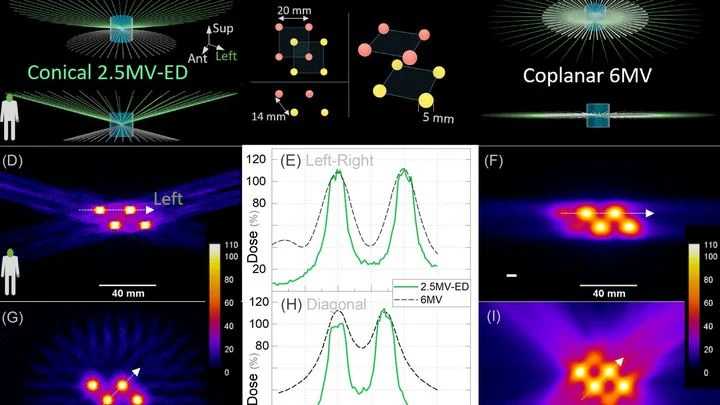
A garden hose shoots a thin, powerful jet. If you sweep it across the yard, you can water the whole bed without flooding the path. That's roughly how the new approach to treating deep tumors works: instead of a broad radiation field, you take a narrow beam of electrons accelerated to nearly the speed of light and scan it across the tumor like a jet of water.
When a carbon ion beam enters the body, it doesn't release energy all at once but rather at the end of its path, like a runner who gives their all on the final stretch. Doctors need to know this finish point to avoid damaging healthy tissue. But how can you look inside the body without making an incision?
The radioactive isotope terbium-149 acts like a tiny homing bomb: it latches onto cancer cells and detonates with alpha particles that destroy the tumor from within, barely touching healthy tissue. But this bomb has a quirk: it also glows with positrons, and that glow can be captured by a special camera.
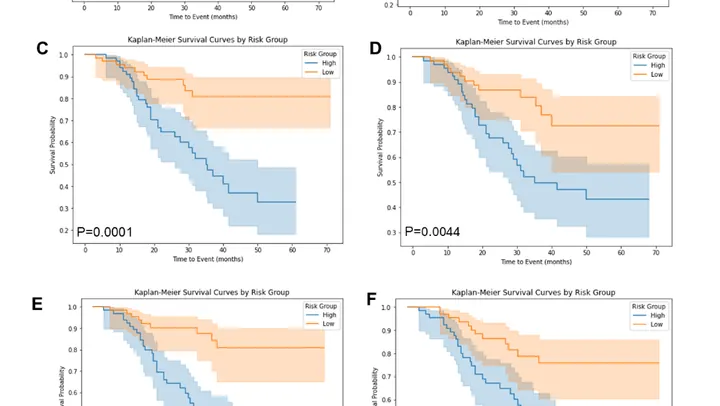
PET/CT is like a map where cancer cells light up as bright spots. But what if the map is blank and the disease is still hiding somewhere? In 132 men with recurrent prostate cancer, doctors found no glowing lesions, but they decided to study the texture of the scan itself, like an experienced tracker noticing bent grass where an animal has passed.
A beam of carbon ions strikes the tumor precisely, like a surgeon who can only see the skin. Inside the body, the beam stops, and exactly where used to be a mystery. Now, helium is mixed into the same beam: it passes through the body like an X-ray, and its trail shows where the carbon went.
Radiation therapy is like shooting at a small target with a very large-caliber rifle: even a precise shot hits a large area around it. The thickness of the 'trace'—called the penumbra — is 2–3 millimeters in standard machines. For a tumor in the lung, that's not a big deal, but next to a nerve or a blood vessel, those millimeters decide whether a person stays healthy.
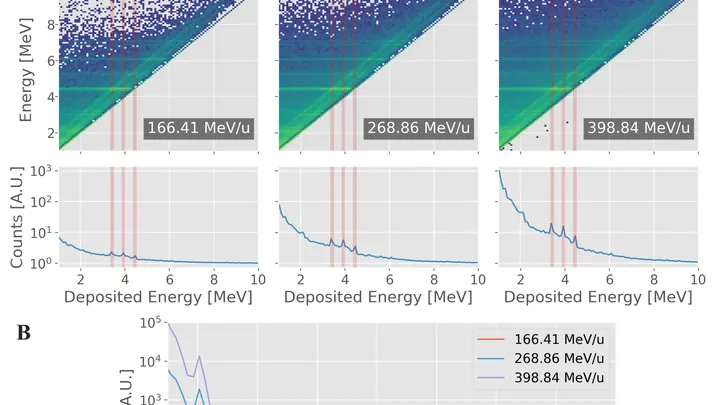
When a proton beam enters a patient's body, it slows down and generates a stream of neutrons, like a pebble thrown into water scattering droplets. Doctors use these neutrons to check at what depth the protons stopped, ensuring the irradiation hits the tumor precisely and spares healthy tissue.
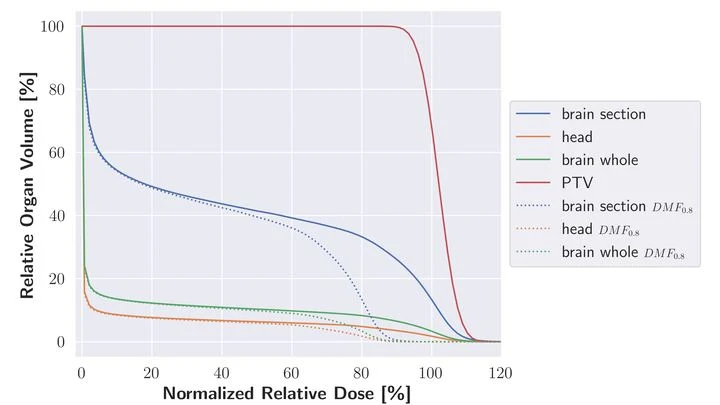
Treating cancer with a proton beam is a bit like archery: you need to hit the bull's-eye without hitting anything else. Protons release their energy at the end of their path, so healthy tissues are largely spared. But to make the shot safe, every treatment plan is checked in advance — measuring the dose the tumor will get and what the surrounding organs will receive.
Four cesium atoms hang in vacuum, held by laser tweezers like beads on an invisible thread. Around them is a ring resonator, a closed loop of mirrors where light circulates without obstacles. When a probe beam strikes this tiny chain, something strange happens: the atoms scatter light not uniformly in all directions, but predominantly in one direction.