A Second for a Qubit in a Crystal express
Holding a phone number in your head while people shout and slam doors around you is nearly impossible. That's roughly the life of a quantum bit, a qubit, in an ordinary material: the nuclei of neighboring atoms, like tiny magnets, constantly jostle it and erase information. To keep a qubit from forgetting, you need to find it a quiet spot.
That refuge turned out to be cerium oxide — a powder resembling white clay. It has very few atoms with magnetic nuclei, so the noise nearly falls silent. When you add the rare metal erbium to this powder (just a few atoms per billion), you get an ideal medium: an erbium qubit can store a quantum state for a whole second. For comparison, in that time light travels to the Moon and back.
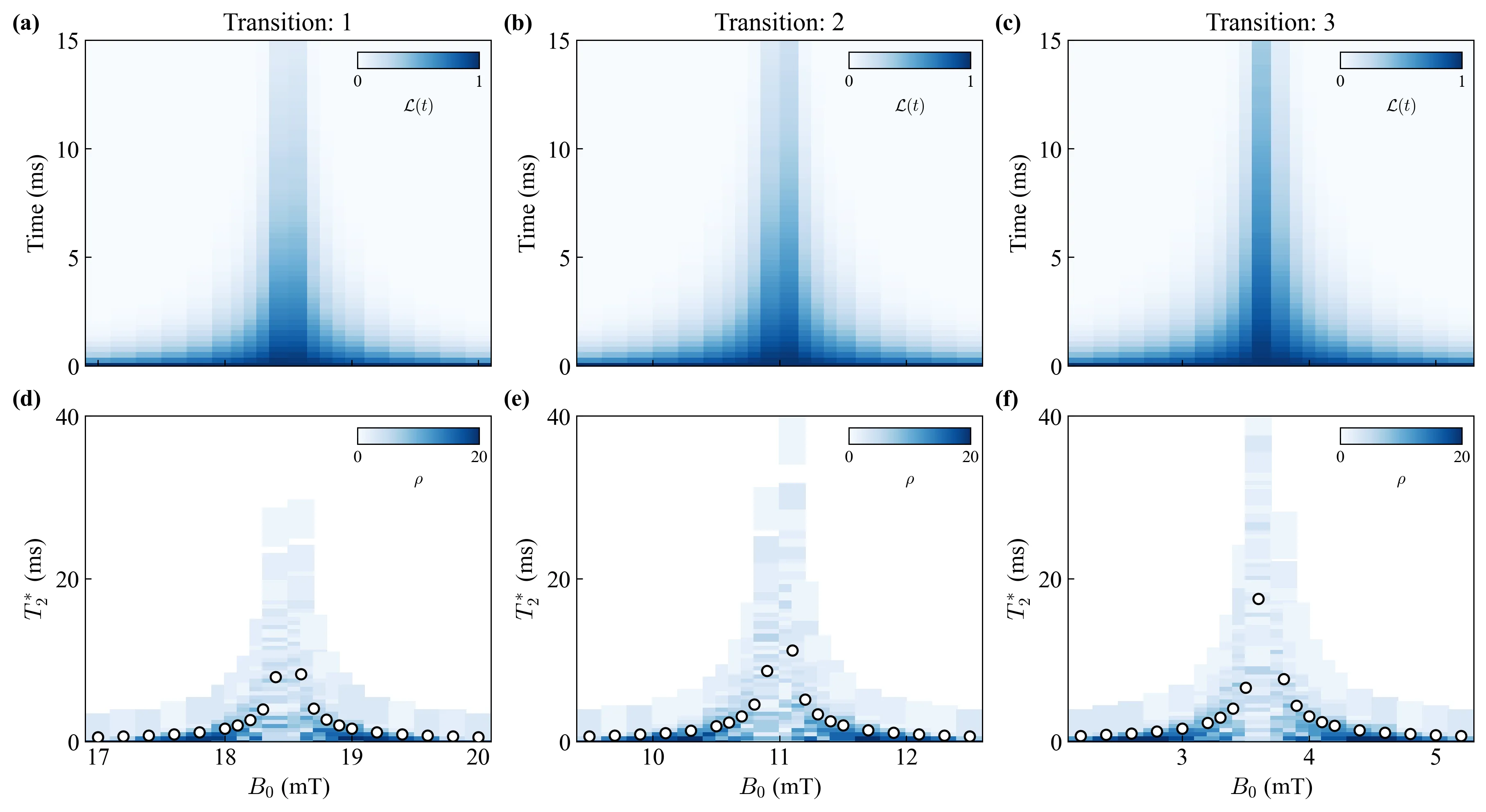
But there's a trick. Scientists found special points — called "clock transitions"—where the qubit becomes deaf to the magnetic chatter of its surroundings. At these points, and at temperatures below one kelvin (colder than outer space), the lifetime skyrockets. And if you use a clever trick, a series of rapid pulses that flip the qubit in sync with the noise, you can suppress the noise even further.
The good news: cerium oxide plays nicely with the silicon chips that underpin all modern electronics. That means quantum memory could be embedded directly into familiar circuits. A tiny crystal grown on silicon stores entangled states while light in a neighboring fiber carries them across a quantum network. A quiet corner for the qubit has been found — now it's up to the engineers.
Original abstract
as written by the authors arXiv:2605.07332
Rare-earth-ion-doped crystals has emerged as a promising platform for quantum technologies, owing to their narrow telecom-band optical emission, long spin memory, and compatibility with silicon integrated photonic architectures. However, the realization of scalable quantum devices requires host materials with intrinsically dilute spin environments to suppress decoherence. In this context, erbium (Er$$^{3+}$$) doped cerium oxide (CeO$$_2$$) is an attractive candidate due to the ultra-low concentration of nuclear spins in the host matrix and its compatibility with silicon-based technologies. Here we perform a comprehensive investigation of the coherence properties of Er$$^{3+}$$ electron spin qubit in CeO$$_2$$ via semiclassical as well as detailed cluster correlation expansion simulations. By systematically exploring magnetic field strength, pulse sequences, erbium concentration, and spin temperature, we identify regimes where decoherence from the spin bath is strongly suppressed. Our investigations illustrate that at dilute doping concentration (of the order of 10 ppb) and sub-Kelvin temperatures, operation near clock transitions enables Hahn-echo coherence times to approach the second timescale even at natural isotopic abundance. Importantly, from a practical standpoint, coherence times on the order of $$\sim 10$$ ms are expected even at liquid helium temperature (about 2 K) for similar concentrations. Moreover, we demonstrate that an additional enhancement can be obtained with conventional multi-$$\pi$$-pulse dynamical decoupling protocols. Thus, our findings establish Er$$^{3+}$$ doped CeO$$_2$$ as a front-runner for realizing spin qubits, quantum memories, and integrated quantum networks.
Erbium is the very element that boosts signals in the fiber-optic cables running along the ocean floor. Now it might also serve the quantum internet: this time as a guardian of information.
In Hannu Rajaniemi's novel The Quantum Thief, human memories are stored in quantum states and "rebooted" after death — roughly the kind of durable memory erbium crystals promise.