How to See Beneath Enceladus's Ice express
Enceladus is a tiny moon of Saturn, covered in a thick crust of ice. Beneath it sloshes a salty ocean, and deep down, a hot, porous core may be at work, like a sponge soaked with water and heat. But how do you see through tens of kilometers of ice? No need to drill: you can use an electromagnetic "echo."
A person with a metal detector walks along a beach. The device sends out a signal and, from the response, figures out what's hidden in the sand — a coin or a rusty pipe. Same here: the magnetic fields of Saturn and Enceladus itself penetrate the moon through and through. As they encounter different layers (ice, water, porous rock) the field changes. These changes can be picked up by instruments on an orbiter or on the surface.
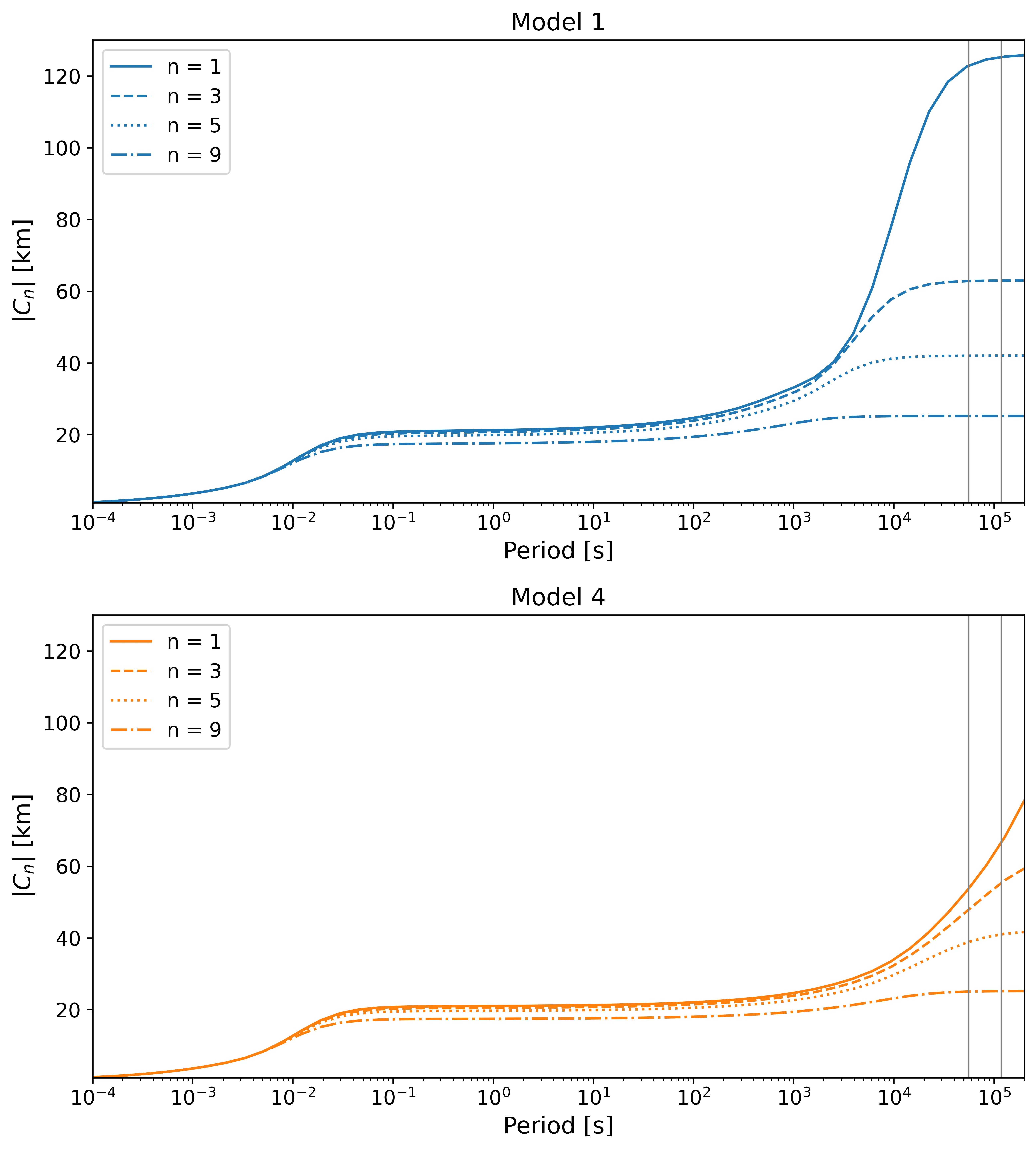
The authors modeled how irregularities in the ice shell, thickening and depressions, distort the magnetic field. It turned out that these distortions are clearly visible if the ocean is salty enough. Their absence, on the other hand, would point to a more uniform shell or fresh water. To catch such weak signals, you'd need a spacecraft in a low polar orbit. And a lander with a broadband sensor could measure the response at different frequencies and "see" not only the ocean but also the core: its porosity, moisture, and temperature.
So, without touching the water, you can learn its taste, and understand how deep beneath the ice potential life might be hidden.
Original abstract
as written by the authors arXiv:2605.09052
Electromagnetic (EM) sounding can constrain the electrical structure of Enceladus and, in turn, the salinity of its ocean and the porosity, fluid content, and thermal state of its hydrothermally active core. Here, we assess the feasibility of EM sounding at Enceladus using both global (orbiter) and local (lander) EM induction transfer functions. We provide a physical framework for modeling EM induction for 1-D and 3-D subsurface conductivity models and discuss how transfer functions can be estimated from global or local measurements of the magnetic and electric fields. We simulate 3-D induction effects arising from variations in ice-shell thickness. The magnitude of these effects in the magnetic field correlates with the ice-shell thickness at the surface and is strongly dependent on the ocean's conductivity. These magnetic variations, if observed, would favor a moderately to highly conductive ocean, providing lower bounds on salinity and volatile content. The absence of these effects indicates a thicker, more homogeneous ice shell and/or a lower-conductivity ocean. Given plausible magnitudes, a polar-orbiting mission with low-altitude measurements will be required to detect these effects. In summary, an orbiter will constrain global ocean conductivity using long-period induction and possibly map the ice thickness variations. The detailed EM sounding of both the hydrosphere and the core can be achieved by a lander-based broadband EM sounding at periods $$\approx 10^1-10^5$$ s to probe ocean salinity and thickness, as well as core properties including porosity, fluid content, and temperature.
Enceladus erupts geysers hundreds of kilometers into space — NASA's Cassini probe flew through them and detected water, salts, and organic molecules.
In Arthur C. Clarke's novel "2061: Odyssey Three," icy moons hide oceans, but they are explored by direct submersion — not by remote sensing.