Magnetic Mirrors in Galaxy Clusters express
A crowd is trapped in a narrow corridor between two rows of mirrors. Every now and then, someone shoves the wall hard, and a rumble rolls down the corridor — similarly, in the plasma of galaxy clusters, whistler waves and ion-cyclotron waves appear. They are created by charged particles caught in magnetic wells (regions with weakened fields where particles bounce back as if off mirrors).
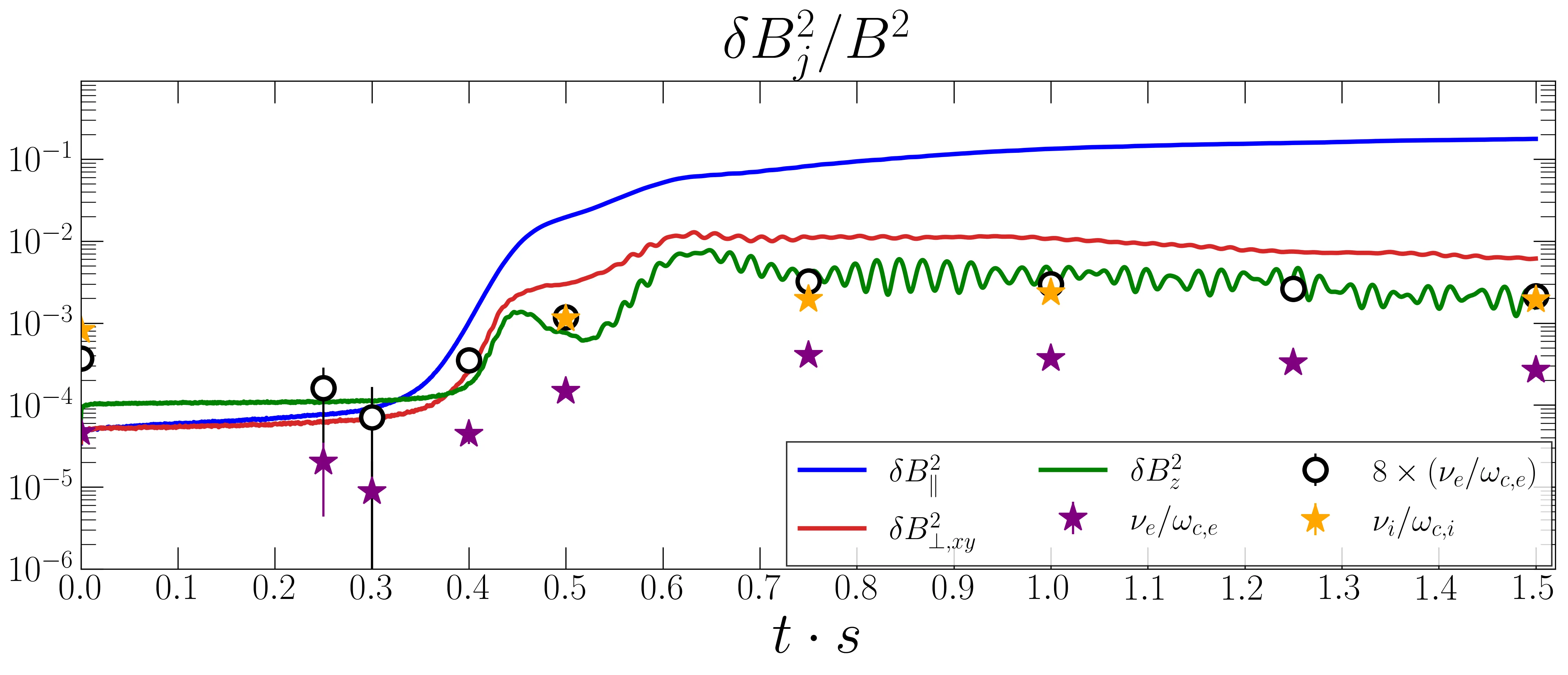
Scientists built a computer simulation in which particles move in a frozen electromagnetic field taken from a more detailed calculation. It turned out that the secondary waves act like wardens who don't lock up but, on the contrary, help the escapees. They scatter the prisoners, and they leave the magnetic wells faster. The stronger the waves, the more often particles break free — the link between wave amplitude and escape rate turned out to be almost direct, as predicted by simplified theory.
This discovery is important for understanding how heat and matter are distributed in the largest structures of the universe. If particles stay trapped too long, the gas doesn't mix and cools unevenly. That means galaxy clusters evolve differently than we thought. Now it's clear that tiny key-waves unlock giant magnetic locks.
Whistler waves in plasma are named so because their frequency falls in the audio range, and if we could hear them, they would sound like a whistle.
In Stanislaw Lem's novel 'Solaris', the planet's ocean produced mysterious wave structures — much like the plasma in our simulation gives rise to secondary waves that change the fate of particles.