How Confirmation Bias Helps You Think Faster express
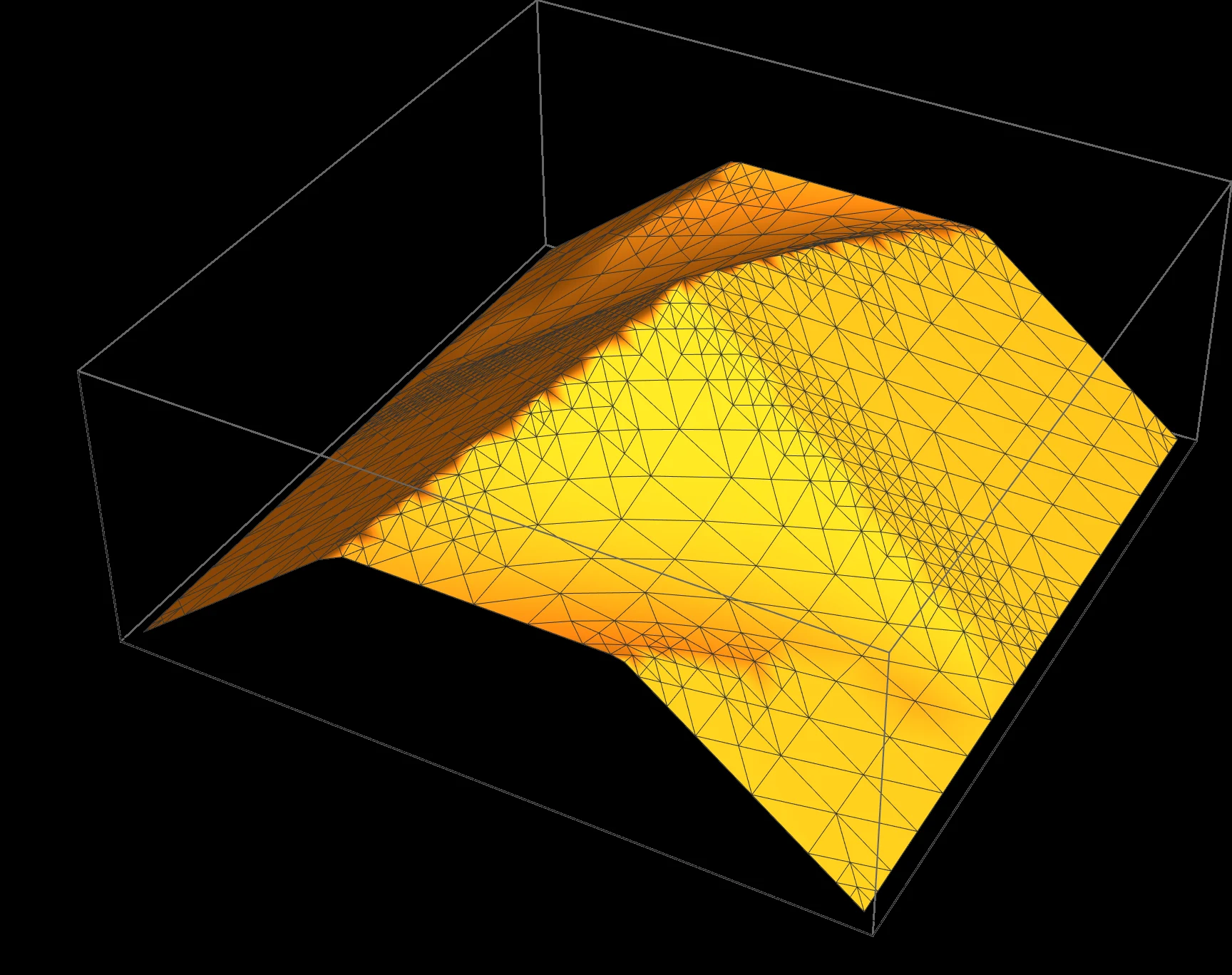
We're used to thinking that noticing only confirmations of our guesses is a mistake. But recent calculations, inspired by wave behavior, flip that view. It turns out that the habit of seeking the familiar is the best way to reduce information noise (scientists call it entropy). Even John von Neumann showed that probabilities can behave not like percentages, but like overlapping waves.
Our mind is like a river that deepens its channel with each flow. Water follows the path of least resistance, and the sun lights only familiar shores. Without this strategy, we'd have to process hundreds of times more data to avoid drowning in information noise. It's not a weakness, but a natural conservation of energy. This is how nature helps us find a path to meaning in chaos.
Original abstract
as written by the authors arXiv:2606.23325
In this paper, the phenomenon generally classified as confirmation bias is formulated on the space of square-root probabilities (or equivalently, using the structures of quantum probability). In this framework, observations are modelled by matrices, rather than random variables on a probability space. In the problem of binary hypothesis testing, an optimal evidence choice minimises the expected error probability. We show that the resulting optimal choice of evidence leads to a confirmation bias, thus revealing a surprising aspect of rationality that encompasses confirmation bias. Specifically, in sequential evidence sampling, the implicit optimality leads to two remarkable evolutionary advantages, namely, (a) the decision maker requires only the smallest memory capacity, and (b) the error probability can be reduced exponentially in sample size. A complementary approach based on the framework of active inference -- where the decision maker seeks evidence that provides maximum information -- is then considered. The resulting optimal evidence is shown to agree with the one obtained by minimising error probability. Our framework provides an easy-to-implement protocol for an active quantum inference, whereby the optimal evidence choice for making an inference is sought over the space of matrices.
In quantum probability, chances don't add up like percentages, but like waves: they can amplify or cancel each other out.