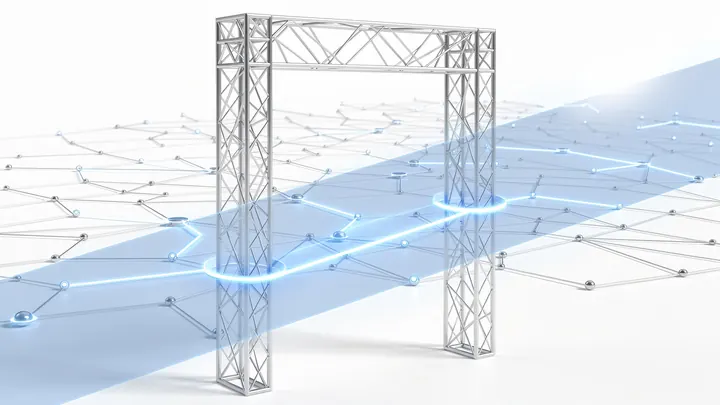
The concept explains the transition from theory to practice. It helps researchers identify potential flaws or limitations early, saving time and resources. A successful proof of concept does not guarantee commercial success, but it provides a foundation for further development. In academic settings, proof-of-concept studies are often published to share knowledge and invite collaboration.
History
The term 'proof of concept' has been used in engineering and business since at least the 1970s, but the practice is much older. In physics, early examples include Michael Faraday's demonstrations of electromagnetic induction in 1831, which were proofs of concept for electric generators, and the first laser built by Theodore Maiman in 1960, which proved that stimulated emission could be harnessed.
How it works
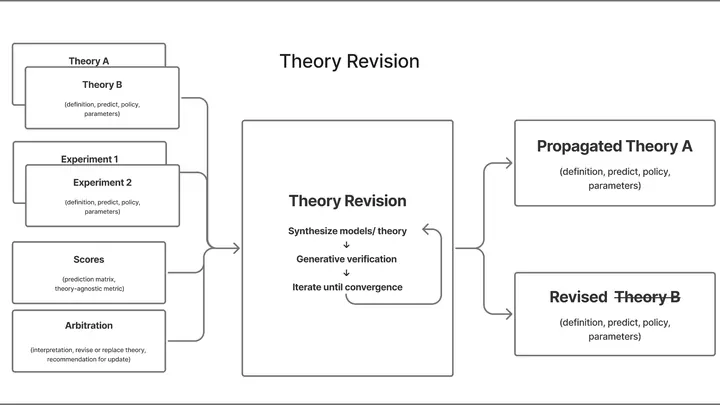
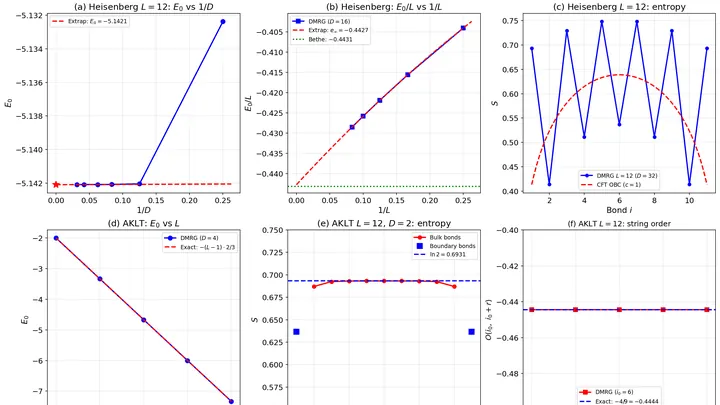
The process typically involves defining a clear hypothesis or goal, designing a minimal experiment or model to test it, and measuring whether the outcome matches expectations. For hardware, this might mean building a simplified version of a device using off-the-shelf components. For software, it could involve writing a small program to simulate a physical process. The key is to isolate the core idea and test it under controlled conditions, often with limited resources. If the proof of concept succeeds, it can be refined and scaled up; if it fails, the approach may need to be revised.
In practice
Proof-of-concept studies are ubiquitous in physics research, from testing new materials for batteries to demonstrating quantum entanglement in laboratory settings. They are also used in industry to validate new technologies before mass production.
Fun fact
The first proof of concept for the atomic bomb was the Trinity test in 1945, which demonstrated that a nuclear chain reaction could be controlled and sustained, leading to the development of nuclear weapons and later nuclear power.
Assessing image quality is a job for a meticulous inspector with a toolbox. The IQA-T1 neural network acts exactly like that: it doesn't just stare at the picture, but applies either a spectroscope or a light meter.
A child builds a simple game in Scratch: a character appears in the center and instantly jumps to a corner. The first move happens between frames — no one sees it. Removing that command is safe. But how does an automatic optimization optimizer know that? Today, the Scratch repository holds tens of millions of projects written by young authors.
A closed loop: the machine proposes an idea, tests it on people, sees the failures, and spawns a new, more accurate guess. That's how AutoCog works — an automatic cognitive scientist. Previously, in the science of thinking (cognitive science), the hardest part, coming up with a theory, was done only by humans.
We're used to thinking that noticing only confirmations of our guesses is a mistake. But recent calculations, inspired by wave behavior, flip that view. It turns out that the habit of seeking the familiar is the best way to reduce information noise (scientists call it entropy).
A translator who has never been in a meeting translates literally, and loses half the meaning. They don't know that the boss's nod means "do it like last time," and the phrase "well, we'll see" is a polite refusal. That's how a language model that writes code from a scientific paper works: it can read the equations, but not the unspoken agreements.
A medicinal chemist is like a detective searching for the right compound among millions of suspects. Modern neural networks speed up the search but behave like a witness who says "it's him" and refuses to elaborate. In pharma, such secrecy is dangerous: a spurious correlation could send a toxic compound to the next stage of trials.
Silicon is like a universal building block: it goes into the chips in your phone, solar panels, and lasers. But if you squeeze it with immense force, the atoms rearrange into new patterns: these forms are called allotropes. One of them, Si-XIII, was first spotted more than twenty years ago, but its exact pattern remained a mystery.
In 1988, the surface temperature of the Pacific Ocean began to change long before meteorologists declared the onset of El Niño. Points on the map scattered along the equator started behaving in concert: if water warmed in one place, it did so in a neighboring one too.