Planetary Collisions and Their Hydrogen Coat express
In a single star system, two teams of planets orbit. Some follow neat paths, like figure skaters on an ice rink, avoiding collisions. Others crowd together, their trajectories cross, and sooner or later a cosmic accident occurs — a giant impact.
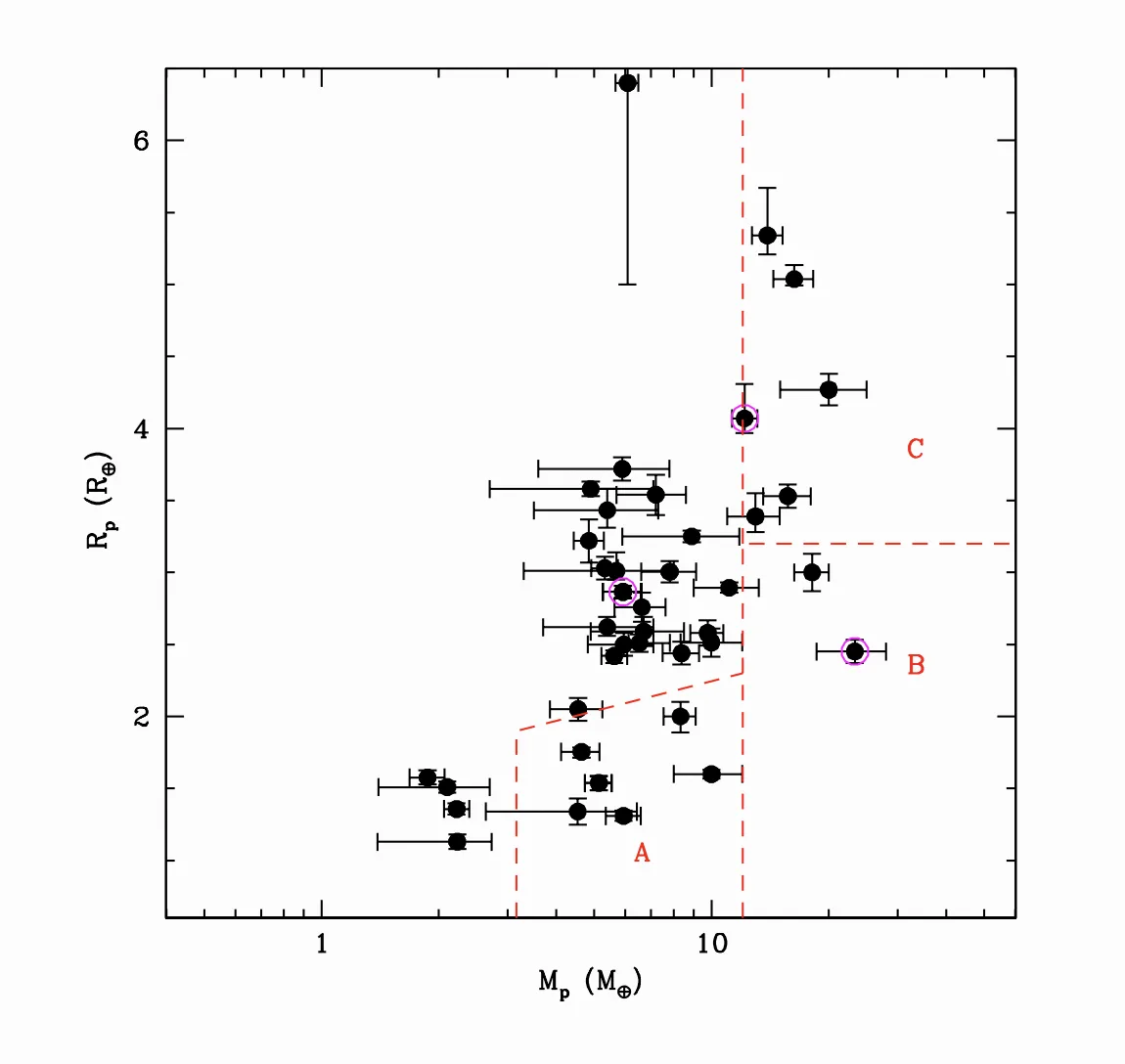
A team of astronomers decided to check what planets that survived catastrophic mergers actually look like. They analyzed data on systems with multiple planets, focusing on their positions relative to orbital resonances (when the orbital periods of two planets are in a simple integer ratio, e.g., 2:1). Planets near resonances most likely have not experienced strong kicks since birth. Those whose orbits are far from resonance, however, have a high probability of having undergone a collision. Comparing the masses and sizes of these two groups, the scientists found a curious pattern.
The 'impacted' planets indeed turned out to be more massive on average — as if after the crash they gathered debris and became heavier. But the most unexpected finding: their hydrogen fraction (the light gas that forms the bulk of giant planet atmospheres) did not decrease. This contradicts simple logic — the impact should have stripped the gas 'coat'. The explanation may be that collisions occur very early, when the disk around the star is still rich in gas and dust. The remnants of the shattered planets, like a sponge, soak up this gas again, building a new envelope. So planetary catastrophes are not the end of the story but just an episode in the system's turbulent youth.
Original abstract
as written by the authors arXiv:2607.19632
We study the mass-radius relationship of planets in multiplanet systems as a function of their dynamical architecture. We isolate those planets whose proximity to resonance indicates that they have not undergone significant dynamical instability since formation, and therefore have not experienced a late giant impact with another planet. We compare the properties of these planets to those whose orbital architectures suggest a high probability of having experienced a giant impact. We find that planets that are likely to have experienced an impact are, on average, more massive than those that did not -- consistent with prior claims. However, we find that the Hydrogen envelope mass fractions of these planets are no smaller than those of planets that did not experience collisions. Taken together, these findings suggest that dynamical evolution and planetary collisions are an integral part of the evolution of compact planetary systems, but that they must occur early enough that collisional remnants are still able to recapture gaseous envelopes from the dissipating protoplanetary disk.
The Solar System also bears traces of an ancient giant impact: one hypothesis holds that the Moon was born from debris ejected when the protoplanet Theia struck the young Earth.
In Arthur C. Clarke's novel 'Rendezvous with Rama', the colonization of debris from a destroyed planet is described — perhaps this is what the future holds for some exoplanetary systems.