Quantum Shadow of a Classical Marvel express
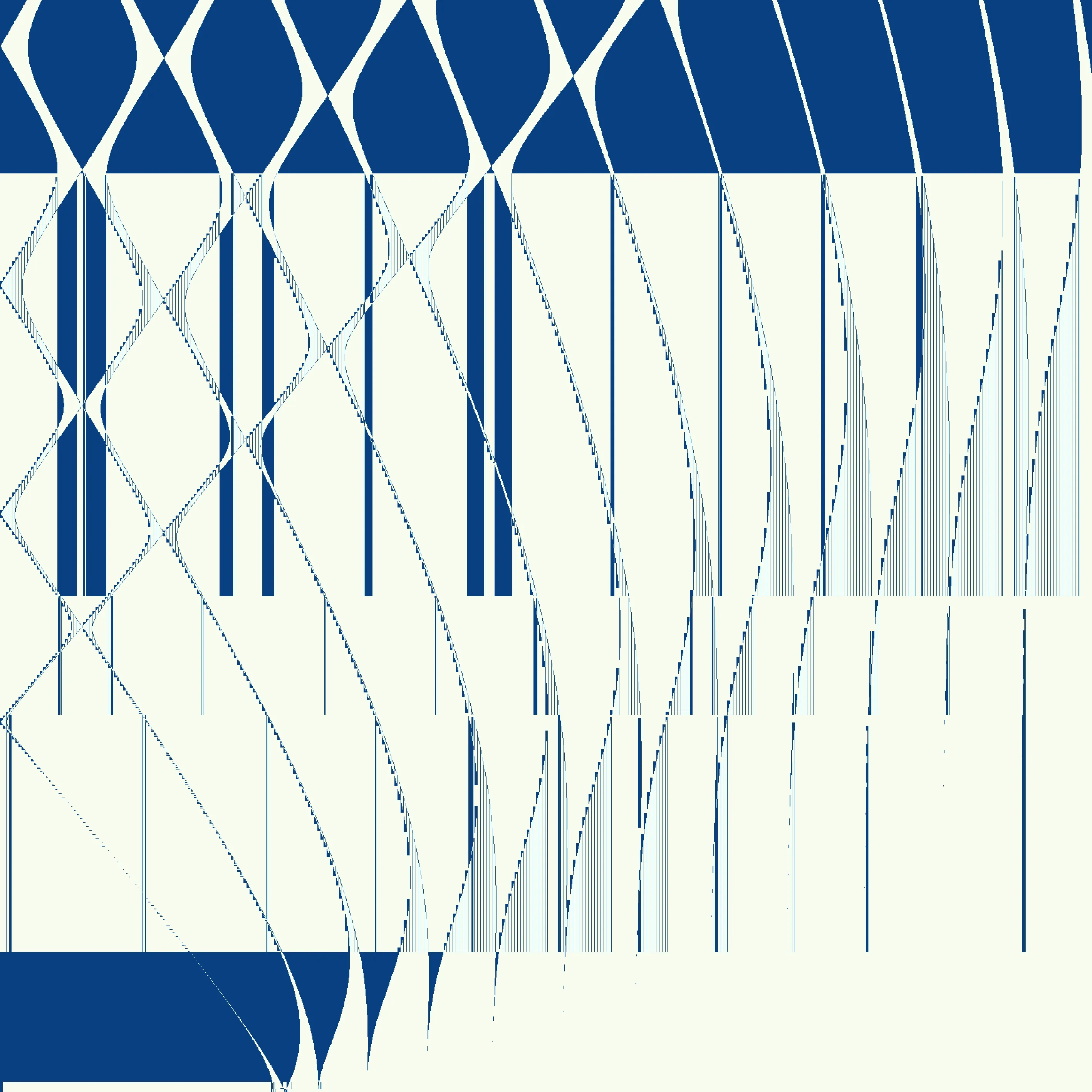
The Josephson junction is a bridge made of superconductor, separated by an ultra-thin insulating layer. Current flows through it even without voltage. But when the current becomes too large, the bridge starts to oscillate, and even steps, Shapiro steps, appear on the voltage graph. Between these steps hide invisible gaps where the system behaves strangely. Previously, they were considered just a mathematical curiosity.
The authors of the work saw a deep connection in this curiosity. They showed that classical 'duck' trajectories (canards) are shadows of quantum transitions called instantons. An instanton is an instantaneous event that carries the system from one state to another, as if a particle briefly passed through a wall. In the classical world, this looks like a smooth but very tricky bend in the trajectory.
The researchers tested their idea on the equations of the damped Josephson junction. Analytical calculations matched numerical simulations. Thus, classical strangeness gained a quantum pedigree. A bridge between two worlds has been built.
Original abstract
as written by the authors arXiv:2608.00579v1
We bridge two sides of singular perturbation theory: the classical theory of slow-fast systems and the semi-classical approach to quantum mechanical systems. For a specific but physically important class of dynamical systems, we show that purely classical and exotic objects, so-called canard solutions, are shadows of instantons in the corresponding quantum system. We demonstrate that canard solutions exist in a domain of parameter space whose boundaries are determined by an instanton action. We illustrate our statements analytically for the relevant example, the overdamped Josephson junction, and confirm them numerically. For the Josephson junction, the canard window is the exponentially narrow gap between consecutive Shapiro steps.
The word 'canard' (duck) in mathematics appeared due to a French newspaper canard — an implausible story. This is how solutions that look implausible but exist were named.