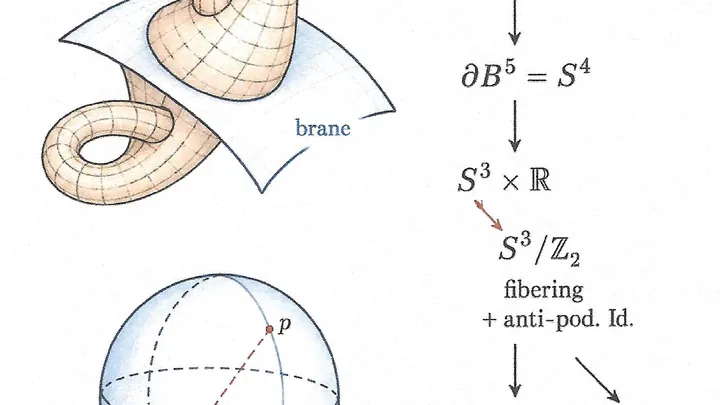
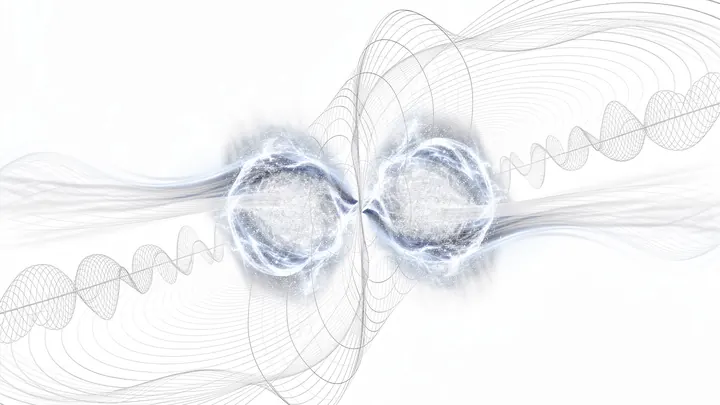
A gravitationalinstanton is a smooth, non-singular solution to the Euclidean Einstein equations—that is, the equations of general relativity with time treated as an imaginary coordinate. These solutions represent 'tunneling' events in quantum gravity, where the universe or a black hole can transition between different configurations. They are the gravitational analog of instantons in particle physics, which describe quantum tunneling between vacuum states. Gravitational instantons are crucial for calculating probabilities of processes like black hole pair creation or the birth of the universe from nothing.
History
The concept was introduced by Stephen Hawking and Gary Gibbons in the late 1970s, building on earlier work by Hawking on black hole thermodynamics. The term 'gravitationalinstanton' was coined by Hawking in 1977.
How it works
In Euclidean quantum gravity, one performs a path integral over all possible spacetimegeometries, but with time rotated to imaginary values. Gravitational instantons are saddle points of this path integral—classical solutions that dominate the sum. They have finite action and are typically compact or asymptotically flat. For example, the Euclidean Schwarzschild solution describes a black hole in thermal equilibrium, and its instanton action gives the black hole's entropy. More complex instantons, like the Taub-NUT or Eguchi-Hanson metrics, have non-trivial topology and contribute to processes like the decay of a false vacuum.
The Euclidean Schwarzschild instanton has a topology of S² × R², and its action is directly proportional to the black hole's entropy, a key insight linking gravity and thermodynamics.
The quantum world is like a kitchen where particles suddenly appear out of "nothing." But you need a chef — a classical field acting as an external source. Glauber's theorem, long known in optics, has now been generalized: it shows exactly how the field "cooks up" particles, be they photons or gravitons.
The neck of an hourglass is the narrowest point where grains of sand change sides. In quantum gravity, there is a similar object: an instanton (an instantaneous solution connecting two states of space). It acts like a tunnel through which the geometry of the universe flows from one form to another.
The Josephson junction is a bridge made of superconductor, separated by an ultra-thin insulating layer. Current flows through it even without voltage. But when the current becomes too large, the bridge starts to oscillate, and even steps, Shapiro steps, appear on the voltage graph. Between these steps hide invisible gaps where the system behaves strangely.
$$10^{-35}$$ seconds. A tiny instant during which the Universe manages to expand by a factor of $$10^{26}$$. Immediately after, it goes through thousands of rapid transformations — like a ball bouncing along a chain of tunnels. This cascade is the essence of chain inflation, first proposed by Alan Guth.
Usually, a black hole is described as a frozen frame: there's mass, there's charge, and it's all static. But real objects live in time. They radiate, lose energy, and change.
An eardrum at the very edge of a waterfall. Sound behaves strangely here: echoes don't multiply: they fade. That's exactly what gravitational waves look like at the horizon of a black hole — the boundary beyond which even light disappears.
Spring scales in a shop show weight simply: the load presses on a spring, it compresses, and the needle moves along the scale. The relation between force and compression is direct, like Hooke's law. Now imagine a scale with a tricky platform: the force is transmitted through levers, and the reading depends not only on the weight but also on how the platform itself bends.
A pair of black holes circles in a dance, gradually drawing closer. They lose energy and spin — a process known as angular momentum radiation. In standard Einstein theory, only gravitational waves carry away angular momentum.
In classical theory, a black hole is where matter collapses to a point of infinite density. Such a 'singularity' looks like an error in the equations: nature hardly tolerates infinities. Many physicists seek ways to 'smooth out' this flaw, and one idea is to modify the theory of gravity itself at small distances.
In cricket, there's a special delivery — the googly. The ball spins in a way that deceives the batsman. Physics had its own googly: for nearly half a century, mathematicians couldn't make twistor theory work with real gravity. It described 'nice' fields perfectly, where everything twists in one direction. But as soon as an 'awkward' component appeared, the machinery broke down.
In the first moments after the Big Bang, the universe expanded at a terrifying rate. This process is called inflation, and it smoothed out all the wrinkles, making the cosmos homogeneous. But what started inflation itself?
A false vacuum is not just a supercooled liquid, but a quantum hologram, ready to spring to life under the right projection. Its decay is described by the tunneling of a quantum field from a metastable minimum, and the classic calculation via Euclidean instantons is as elegant as a still life under spotlights.
A translator who translates not words but the very structure of a conversation runs into trouble when the chat moves beyond a quiet room. In a familiar simulation on a spatial lattice, everything follows a strict script. But the moment the interlocutors find themselves in a noisy square, where sound is distorted by echoes and the crowd keeps changing direction, the script falls apart.
A builder checks the strength of an arch not by running through all possible shapes in their head, but by mentally nudging it and seeing how much force is expended. That's essentially how the principle of virtual work works in mechanics. The authors of a new study have applied this approach to the very geometry of spacetime.
They constructed a covariant framework of virtual work for the metric.
When a grain of sand falls on a table, its impact is predictable. But if you squeezed it down to the size of an atomic nucleus, the familiar laws of gravity would break down — the force of gravity would grow without bound.
In the classical picture of the world, gravity is the smooth bending of space and time. But at the microscopic level, where quantum mechanics rules, these bends should turn into a grainy ripple. The particles of such a ripple are called gravitons. The trouble is that straightforward calculations with gravitons always run into infinities — the theory loses its meaning.
A black hole is not just a dark spot in space. It is a region where gravity compresses matter so intensely that even light cannot escape. Among all possible black holes, one stands out — the rotating Kerr black hole. Its description was long thought to be tied to Einstein's equations, like a recipe tied to a specific cookbook.
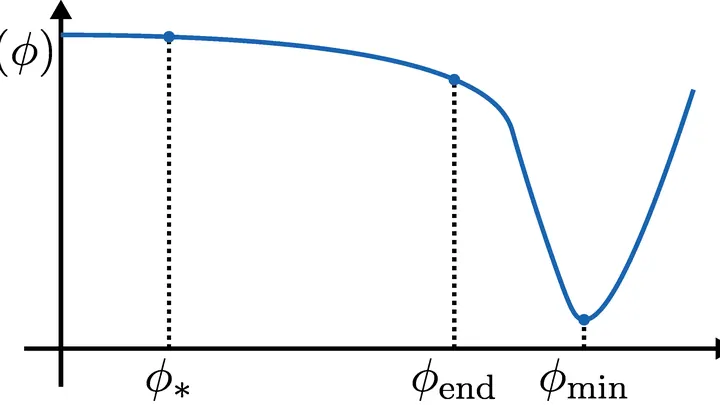
Inflation is the ultra-fast expansion of the universe in its first moments. It was driven by a field resembling a ball rolling down a hill. But there could have been a second, almost imperceptible ball nearby. The authors of this work considered exactly that scenario: a light spectator field (the axion), frozen at the top of its potential.
An orchestra plays out of tune, and the sound seems like chaos. But if you record all the notes and analyze them mathematically, you can reconstruct the shape of the concert hall — where the walls are, how high the ceiling is. Roughly in this way, physicists propose to derive gravity from quantum theory.
In everyday life, space and time are the stage on which events unfold.
Two massive spheres slowly drift apart in empty space. From the standpoint of ordinary mechanics, nothing special is happening. But Einstein's equations say otherwise: accelerating masses stir spacetime itself, and from them spread gravitational waves — ripples that stretch and squeeze everything in their path.
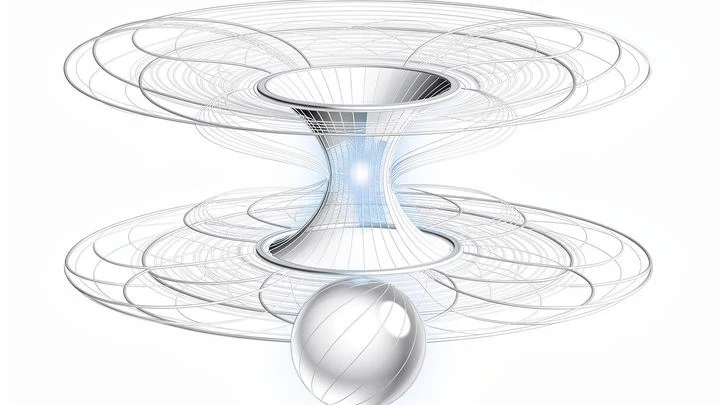
A wormhole is a hypothetical tunnel in curved spacetime connecting two distant regions of the universe and potentially shortening the journey between them.
A taut sheet wrinkles. If you tug a corner, a smooth wave runs across; if you sharply bunch the fabric, a sharp crease forms. Space and time in Einstein's equations behave much the same way. Gravitational waves resemble the gentle ripples of the sheet, while shock fronts are like stiff folds where matter's properties change abruptly.
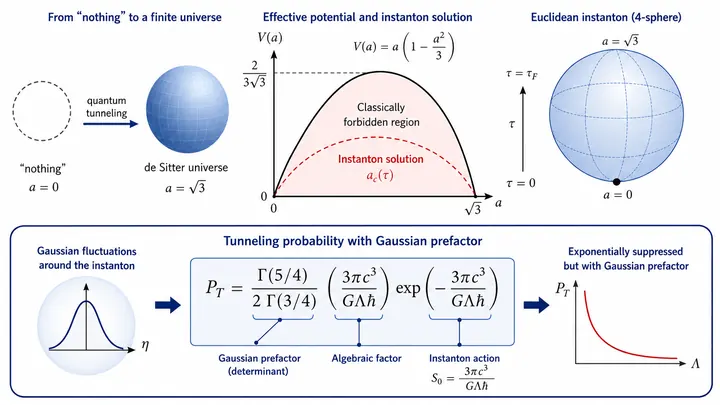
Quantum nothingness resembles water in a pot just before boiling. From time to time, a bubble spontaneously swells up — but not of steam, but of an entire universe. Such a bubble doesn't collapse; instead, it inflates into spacetime, triggering its own Big Bang. The only question is how often this happens.
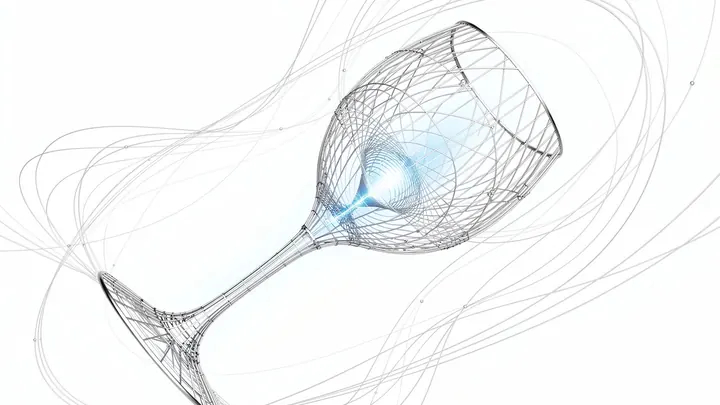
First thing that comes to mind when thinking about the birth of the Universe is an explosion. But modern cosmology paints a more refined picture: birth through the neck of a wine glass. This geometry is not a sommelier's fantasy, but a rigorous form of Euclidean wormhole that connects two anti-de Sitter worlds.
A guitar string decides for itself how tightly to stretch when a musician plays a chord in different octaves. That's roughly the picture physicists paint when they try to unite gravity, the weakest but most pervasive force, with the quirky laws of the microcosm.
Cosmology has long sought a loophole behind the Big Bang. Inflation, proposed by Alan Guth, stretches and smooths out primordial inhomogeneities, but what lit the fuse itself?
An ordinary kettle: you heat it up — temperature rises, molecular chaos grows, and steam shoots out. But in the lab, they've created a peculiar "kettle"—an analog black hole made from superconducting circuits cooled to the extreme.
A mathematical doughnut, a torus, sits on the boundary of a three-dimensional world where gravity acts. You can crumple and stretch it, and physicists decided to see how it behaves. Inside this world, space can be flat like a table, expanding like a soap bubble, or curved like a saddle. The doughnut boundary refused to stay smooth.
In physics, there's an old ache. General relativity paints the beginning of the universe as a point — a singularity where equations break down and volume shrinks to zero. Quantum mechanics hints that at the most critical moment, something goes differently than classical physics predicts.
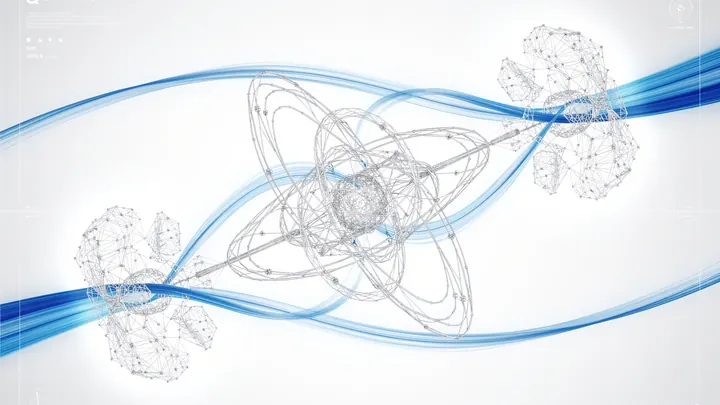
A massive nanodiamond inside a quantum interferometer splits in two, pulling itself into two realities. Its gravity — tiny, almost imperceptible — stirs the quantum field of the vacuum, giving rise to coherent clouds of gravitons. These are the gravitational shadows cast by each position of the mass.
Water boils in a pot, and bubbles rise from the bottom. They grow, float up, and pop, and the water remains water. Something similar, physicists have found, can happen to space itself — if it contains dark energy (the mysterious force accelerating the expansion of the universe).
In such an eternally inflating universe, black holes are sometimes born.
A rubber band stretched in different directions behaves differently from a whole sheet of paper. If you pull on an edge, the deformation does not spread evenly but seems to linger in certain spots.
A crowd of people suddenly starts moving as one. In physics, this happens with atomic spins — tiny magnetic arrows. When many spins come together and interact through a shared medium, they form one big magnet, or a macrospin. This macrospin doesn't just point in one direction; it can get stuck in several positions, like an ice cube that refuses to melt even when it's warm.
The equations of Einstein and the model of Lemaître led to the conclusion that the Universe began from an infinitely dense point — the singularity of the Big Bang. At that point, familiar physics broke down, leaving the mystery of the first moment.
For a long time, cosmologists could not peer beyond the starting point — the infinitely dense singularity of the Big Bang, where the equations of general relativity by Einstein lose their predictive power.
The birth of the Universe is usually associated with the Big Bang — a point of infinite density. But at that point, the laws of physics break down, which bothers scientists. Stephen Hawking and James Hartle back in the 1980s proposed a different view: time has no boundary, like the surface of a globe.
Modern telescopes see distant galaxies flying apart faster and faster. The cause is called dark energy, but its nature has been a mystery. On top of that, calculations of the expansion rate in the early and late Universe don't match. The answer might lie in an event much like a falling pencil.
Typically, a black hole is a region from which nothing returns. But an exact solution to Einstein's equations, combining a solitary Schwarzschild hole with the Lemaître expansion of the universe, paints a different picture.
Two vessels of water at different temperatures are separated by a thin partition. As long as the partition is intact, each vessel lives its own life: in one, the water is hot; in the other, it's icy. But once the partition is removed, the temperatures begin to equalize, and eventually both vessels reach the same state.