A Light Filter That Doesn't Lose the Details express
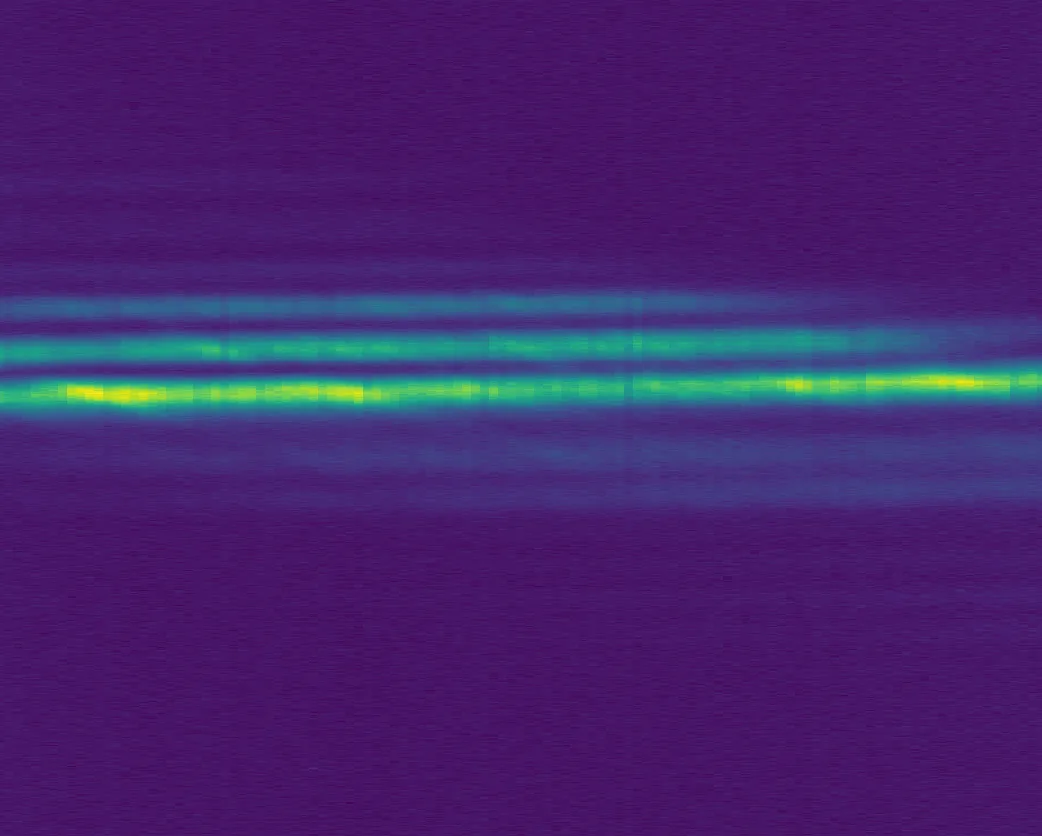
A short flash of light is like a musical phrase: you can distinguish individual notes if you listen very carefully. But in the quantum world, these 'notes'—temporal modes — are squeezed down to picoseconds, and ordinary optics can barely tell them apart. The scientists built a device that acts like a musical filter: it lets through only one selected note from a chord, not by muffling the others, but simply by not letting them pass.
This filter, a quantum pulse gate, is made from an ultra-thin film of lithium niobate, a material that changes the properties of light passing through it. Inside the gate, a weak signal beam and a stronger pump beam travel together. When they meet at just the right moment, a third beam is born at the sum frequency, but only for the 'note' that was selected. All of this happens in a tiny waveguide narrower than a human hair, where light is confined so tightly that the interaction is greatly enhanced.
The selection accuracy for temporal modes was about 97%—the light that passes through the gate contains almost no contamination from neighboring 'notes.' This is crucial for quantum networks, where each photon carries its own bit of information, and they must not be confused. Previously, similar gates required bulky lasers and worked only in narrow ranges. The new thin-film version promises to be compact and flexible, like a microchip.
The thin film of lithium niobate used in the gate is about one-hundredth the thickness of a human hair, yet it can control light more precisely than the bulky crystals of the past.
In Hannu Rajaniemi's novel 'The Quantum Thief,' information is transmitted using quantum states, and such gates could become part of the 'spin-networks' that separate other people's memories.