Swimming Bacteria Steer Salt Crystal Growth express
A drop of saltwater dries on a table. The salt doesn't settle just anywhere: crystals first appear at the rim, forming a ring, like coffee grounds at the bottom of a cup. Everyone who has seen the stain left by a dried droplet knows this behavior. But what if the droplet contains swimming bacteria? Random motions of microorganisms can flip the familiar picture.
The researchers took E. coli, a well-known motile bacterium, and added it to a salt solution. In droplets with few bacteria, the cells gathered at the edges, as expected. But when bacteria were more numerous, they spread evenly across the drop. And the salt behaved even more interestingly: besides the ring at the periphery, crystals appeared in the center, and the more bacteria, the more such islands formed. Meanwhile, the rim crystals stretched into bizarre branched shapes.
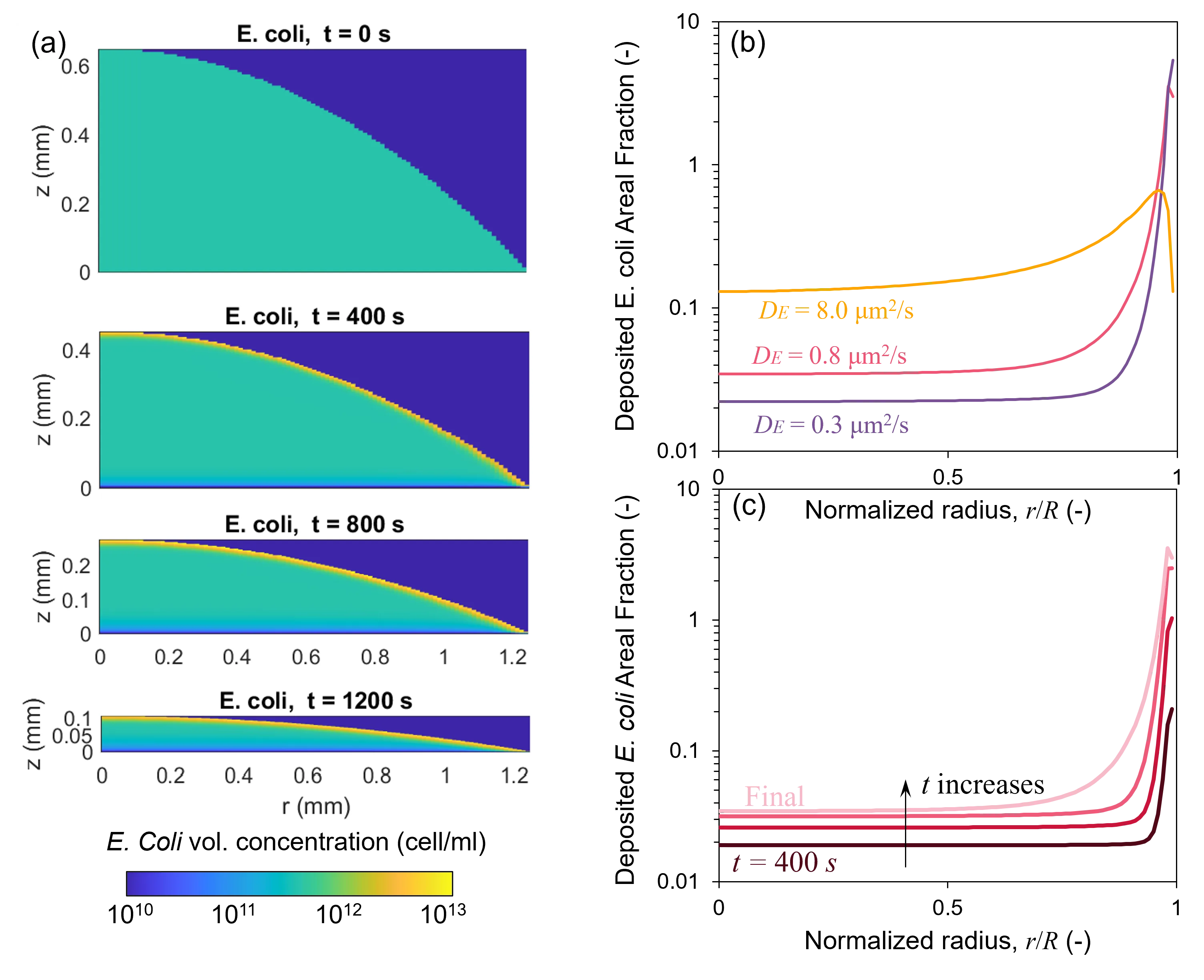
To understand the mechanism, the scientists built a mathematical model. They accounted for how the liquid flows inside the droplet during evaporation, how bacteria move, and how salt is transported and deposited. It turned out that early in evaporation, bacterial motility lets them swim against the current that carries everything to the edge. The bacteria manage to reach the center and anchor there. Later, as the droplet shrinks, these anchored cells become points around which salt begins to crystallize. Thus, the living motion of microorganisms reshapes lifeless crystals.
This work is a step toward controlling crystallization with living organisms. Such an ability could be useful, for example, in oil recovery, where salts clog rock pores, or in microfluidic devices where precise deposition of substances is needed. Swimming bacteria could become not just passengers in a droplet but active participants in the process.
E. coli swims at speeds up to 30 micrometers per second — in an hour it covers a distance 10 times its body length, which for a human would be like swimming 180 meters in an hour.
The idea of living beings controlling crystal growth echoes Kurt Vonnegut's novel Cat's Cradle, where a fictional form of ice, "ice-nine," alters the properties of matter.