Counting Protein Jitters in Seconds express
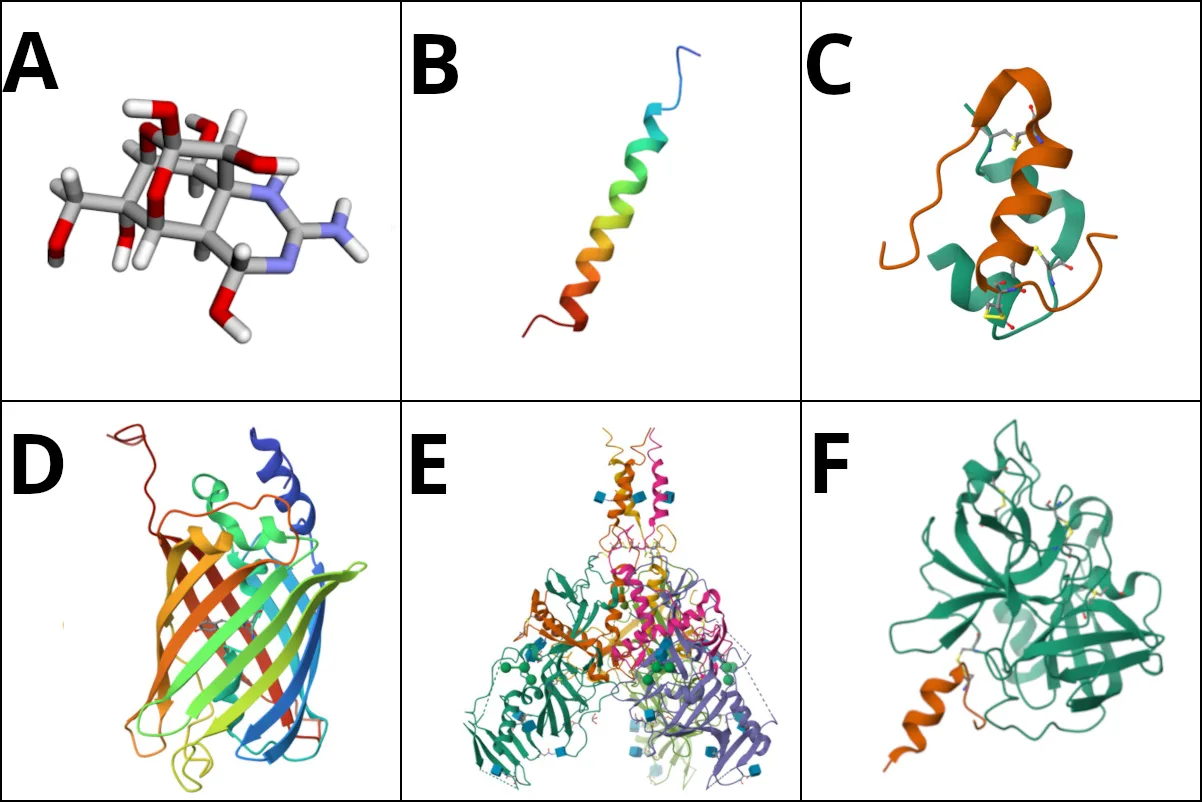
A protein in a cell doesn't hang motionless like a mannequin in a store window. Its atoms are constantly jiggling, stretching, and bending, like a plucked guitar string that keeps vibrating after you strum it. To understand how a protein works, you need to know how tightly each part holds onto its neighbors. Physicists call this the 'matrix of second derivatives of energy'—but it's easier to think of it as a map of springs between atoms: where the spring is stiff, and where it's loose.
Until now, computing such a map for a large molecule required supercomputers and took hours or days. The new program learns from examples of small molecules — individual amino acids, the building blocks of proteins, like pieces of a construction set. Then it transfers that knowledge to a protein with thousands of atoms and produces the spring map in seconds. What's more, it works in a convenient coordinate system (not relative to the lab walls, but relative to the molecule itself) so the result doesn't change if you rotate or shift the molecule.
Such speed opens new possibilities. You can quickly screen thousands of drug candidates to find the one that 'latches onto' the target protein best. Or study how a protein's stiffness changes upon mutation. Previously, this was too expensive; now it's a matter of a couple of minutes.
The amino acids used to train the neural network are like the letters of the alphabet: there are only 20, but they combine to form all the proteins in our body.