Quantum chemical calculations are computational methods that use quantum mechanics to predict the properties of molecules, such as their structure, energy, and reactivity. They solve the Schrödinger equation for the electrons in a molecule, which is impossible to do exactly for all but the smallest systems, so approximations are used. These methods are fundamental to chemistry, materials science, and drug design, as they allow researchers to understand and predict how molecules behave without performing physical experiments.
History
The field began in the 1920s with the development of quantum mechanics, but practical calculations became possible only with the advent of computers in the 1950s. Walter Kohn and John Pople received the 1998 Nobel Prize in Chemistry for their contributions to DFT and computational methods.
How it works
The most common approach is the Hartree-Fock method, which approximates the electron-electron interaction by averaging over all other electrons. More accurate methods, like density functional theory (DFT), use functionals of the electron density to include correlation effects. These calculations are computationally intensive, requiring powerful computers, and are often used to model reaction pathways, transition states, and molecular properties.
In practice
Quantum chemical calculations are used in pharmaceutical research to design drug molecules and predict their interactions with biological targets, as well as in materials science to design new catalysts and battery materials.
Fun fact
Quantum chemical calculations were used to predict the existence of the molecule helium hydride (HeH+), which was later detected in space in 2019.
A cartographer receives a sheet with distances between hundreds of unnamed islands. No island is labeled, but the distances repeat, forming triangles and quadrilaterals. From these repetitions, the cartographer reconstructs the map of the archipelago, not knowing which island is which. This is roughly how the new work in molecular spectroscopy works.
A protein in a cell doesn't hang motionless like a mannequin in a store window. Its atoms are constantly jiggling, stretching, and bending, like a plucked guitar string that keeps vibrating after you strum it. To understand how a protein works, you need to know how tightly each part holds onto its neighbors.
In a noisy hall, an interpreter tries to catch every word, but rustles and echoes muddle the meaning. That's roughly how conventional computer methods handle complex quantum systems: the more particles and the stronger their correlations, the faster calculations drown in interference.
A complex financial contract is like a wager: the payout depends on exchange rates and accrued interest. Physicists would call this uncertainty entropy — a measure of the spread of possible outcomes. To assess the risk, you need to run through all scenarios, like finding every trap-filled dead end in a vast maze.
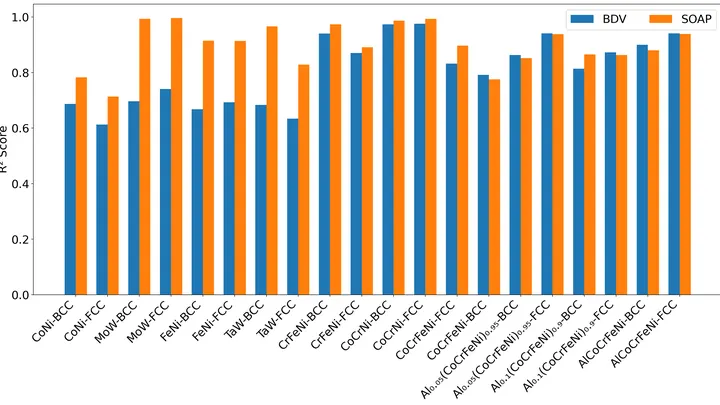
Creating an alloy from several metals is like cooking a soup from mysterious ingredients: guessing the final texture without trial and error is nearly impossible. Conventional models often get it wrong when there are more than three different kinds of atoms.
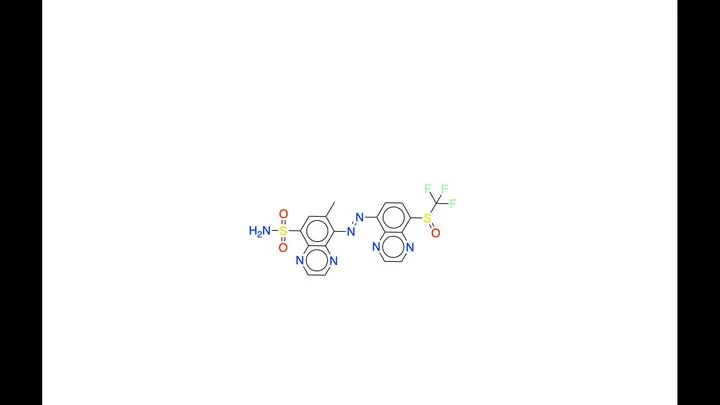
The light bulb turns on only in the room where you need it. That's roughly how photoactivatable drugs work: they 'switch on' only where light is directed, leaving the rest of the body untouched. This is especially important in cancer treatment: conventional chemotherapy hits all dividing cells indiscriminately, causing severe side effects.
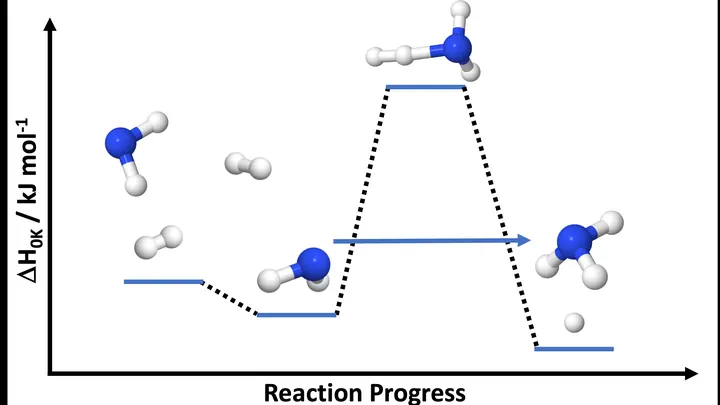
A ball rolls up a hill, but it doesn't have enough energy, so it rolls back down. That's classical mechanics for you. But in the quantum world, a tiny particle can sometimes pass right through the hill, as if the barrier weren't there. This trick, tunneling, is business as usual for a light atom like hydrogen.
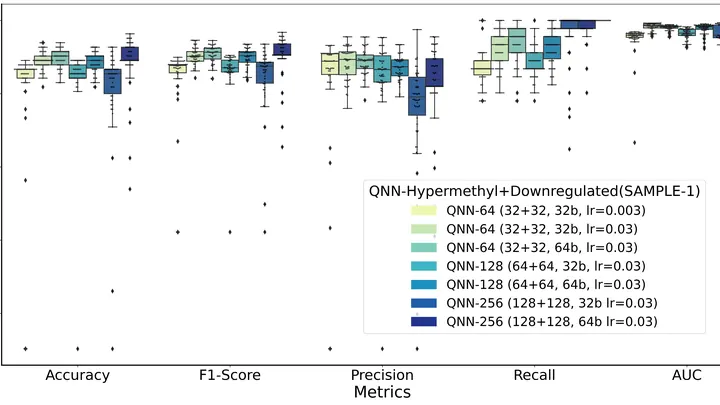
Two nearly identical locks are opened by the same pick. They look alike on the outside, but inside the mechanisms differ. Much the same can be said for the two main types of non-small cell lung cancer — adenocarcinoma and squamous cell carcinoma. Under a microscope, they can be confused, yet they require different treatments. That's where the quantum "magnifier" comes in.
A seven-metal alloy is like a team where every player is pulling the blanket their own way. Atoms of iron, cobalt, nickel, aluminum, titanium, tantalum, and vanadium can either fall into a strict pattern or scatter into random positions. This determines whether the material will be as strong as steel or as light as aluminum.
In a heart-lung machine, blood flows through narrow tubing and past rapidly spinning pump blades. Sometimes red blood cells can't take it: their membranes rupture, and hemoglobin spills into the plasma. For a patient, this is like pouring sand into a car's fuel system — small damages accumulate and wreck the whole mechanism.
In every handful of fertile soil, there are bacteria that do something no factory can: they take nitrogen straight from the air and turn it into fertilizer. The secret lies in the enzyme nitrogenase, and its working core, a cluster of iron and molybdenum atoms, looks like a tiny factory floor.
Chemists have long tried to understand how this factory works from the inside.
Drug design is like picking a lock: the drug molecule must fit precisely into the target protein. But the lock is submerged in water, and the fluid’s friction alters the fit. Classical calculations account for this by modeling the key dissolving into the solvent for hours per attempt.
Many molecules, like amino acids, are like musical notes: their left and right versions sound almost identical, yet the difference is critical. One heals, the other is poison. Picking up this difference is hindered by inescapable noise, like in a room where a fan is loudly running. Regular spectroscopy misses the nuances.