The Salt That Dries Out ✛
A lake drying up during a drought doesn't shrink all at once. First, patches of dry land appear on the surface, they expand and merge, and then the water recedes from the exposed bed. A mirabilite crystal behaves the same way when it loses water: round patches of anhydrous salt appear on it, growing outward, and then they begin to deepen.
Mirabilite is a salt whose crystal contains a lot of water: for every salt particle, there are ten water molecules. When the crystal dries, the water leaves, and another salt, thenardite, remains. Previously, it was thought that drying proceeds uniformly from start to finish, but it turns out there are two distinct stages.
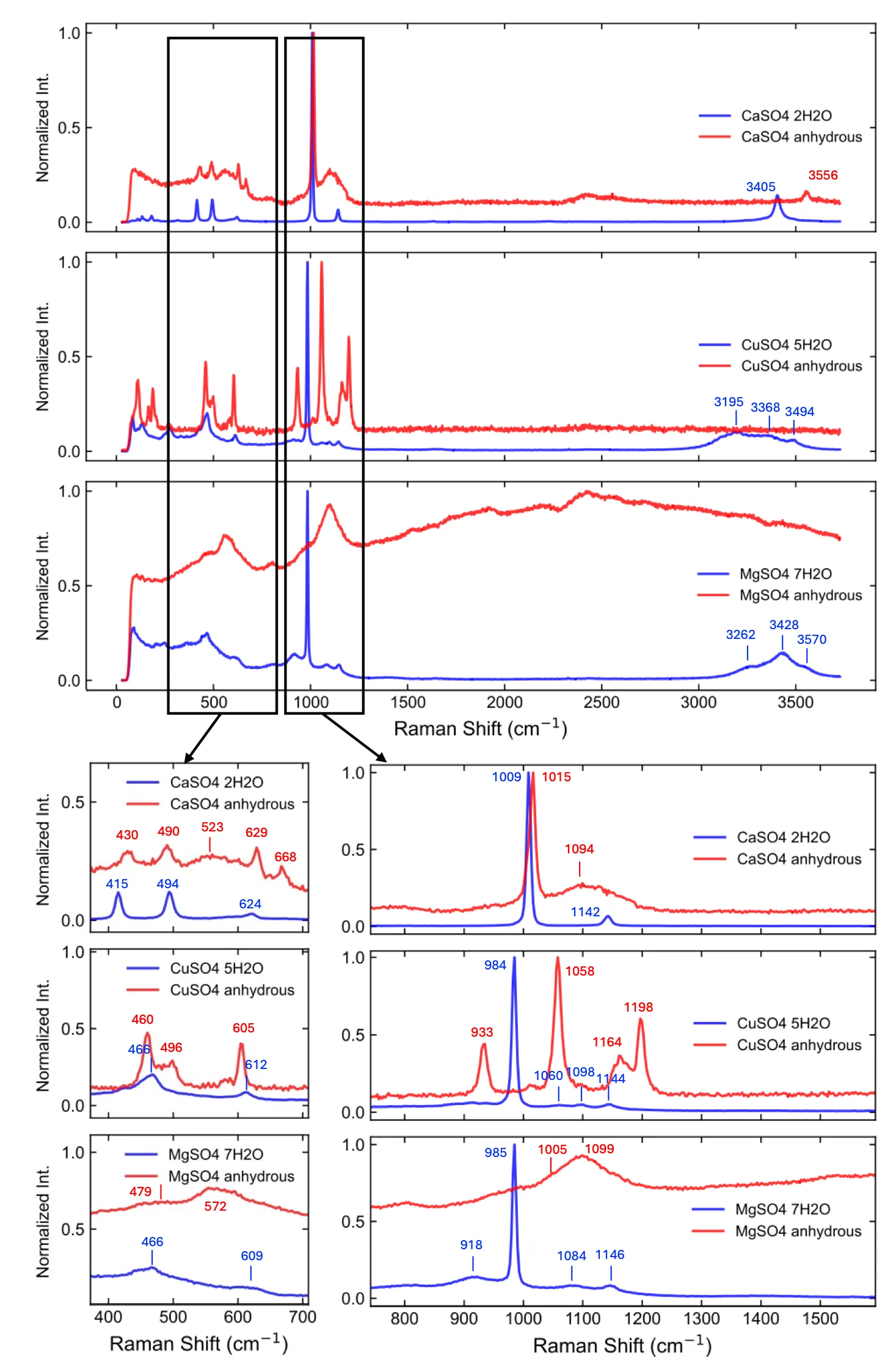
After complete drying, the crystal shrinks by about a third and becomes layered, with pores of varying sizes. Air humidity affects the size of thenardite crystals: in dry air they are small, in humid air they are larger. If you compare different salts, some develop round patches upon drying, while others develop cracks. The shape of these patches and cracks can predict in advance how a salt will lose water, which helps in selecting materials for thermal storage.
Mirabilite's energy density (2.4 GJ/m³) is higher than that of lithium-ion batteries (0.72–1.8 GJ/m³), so it is considered a cheap material for seasonal heat storage.