How Atoms Swap Places in the Insulator–Metal Transition
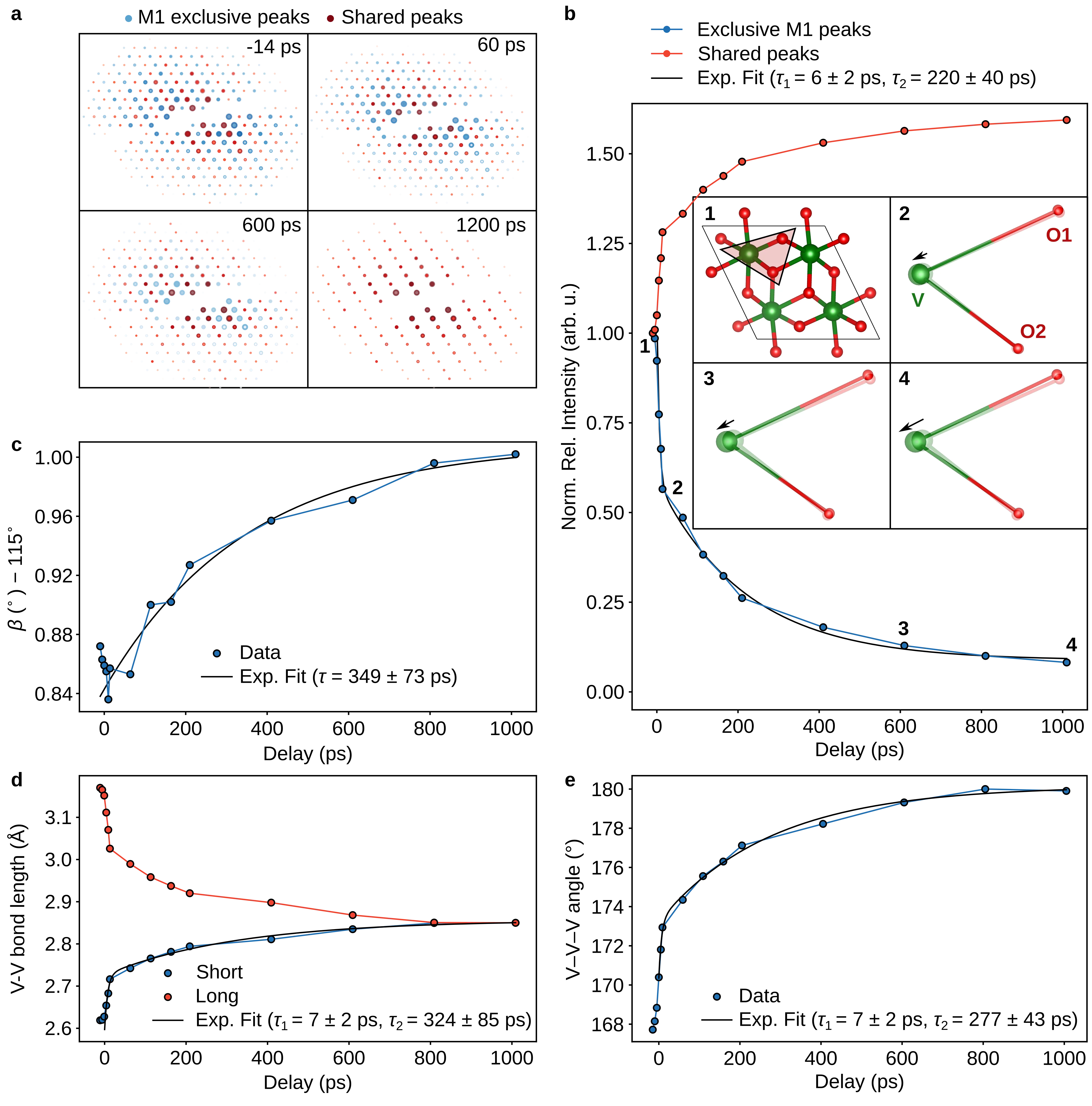
Imagine filming dancers as they change places in a very fast routine. In vanadium dioxide, vanadium and oxygen atoms rearrange when the material switches from an insulating to a metallic state. This transition happens in trillionths of a second, and until now no one had seen the exact routes the atoms take.
Scientists used ultrafast electron diffraction, which works like photography with an extremely short exposure. They excited the crystal with a laser, then probed it with electron pulses, capturing snapshots from different angles. From these images, they reconstructed the positions of all atoms at each moment. It turned out that the atoms move almost in a straight line, covering half the distance in the first few picoseconds.
This knowledge helps in designing fast switches and memory devices, where precise control over atomic motion matters. The method can now be applied to other materials to reveal their atomic routes during phase transitions.
Vanadium dioxide transitions to the metallic state at about 340 K, which is only slightly above room temperature. Because of this, it is used in smart windows that begin to reflect infrared radiation when heated.