How to Hold a Cell Without Scorching It with Light ✛
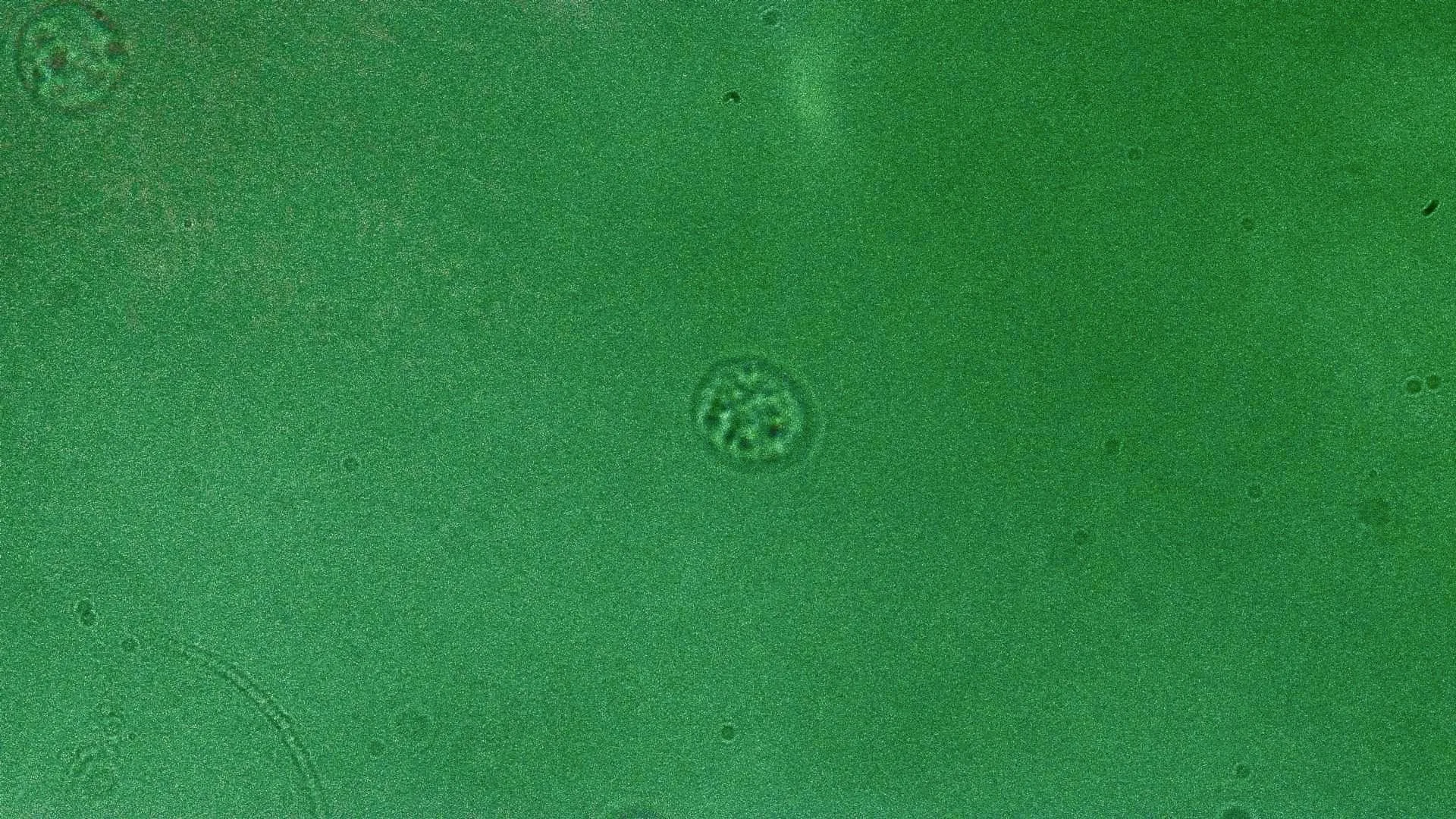
If you aim a bright laser beam at a cell, it grabs it like tweezers, but it also burns it. A yeast cell stops dividing under such light because photons break its internal machinery. Scientists in Rio de Janeiro figured out how to remove light from the center of the trap. They arranged three laser beams that converge not at a single point but around the cell, like the walls of a room. In the middle, where the cell sits, there is almost no light, yet around it forms a light cage without bars.
To make the light repel the cell rather than attract it, they added iodixanol to the nutrient solution. This substance makes the medium optically denser than the cell itself, so photons push the cell from outside, like water pushing on an air bubble.
Previously, dark traps were used only for nonliving particles, while living cells were held in regular tweezers, and researchers put up with the damage. Now, for the first time, yeast in a light room not only survive but reproduce for hours. It is like holding a butterfly in your palms without touching its wings: it goes on living its life. Biologists will be able to watch a single cell through its entire cycle without interfering.
Iodixanol, which was added to the medium, was originally developed as a contrast agent for X-ray imaging, and now it helps keep yeast in the dark.
In Arthur C. Clarke's novel 'Rendezvous with Rama,' an alien spacecraft uses light fields to manipulate objects; dark traps take a step toward such 'contactless' manipulation of living organisms.