Archaeological Lead Catches Solar Axions express
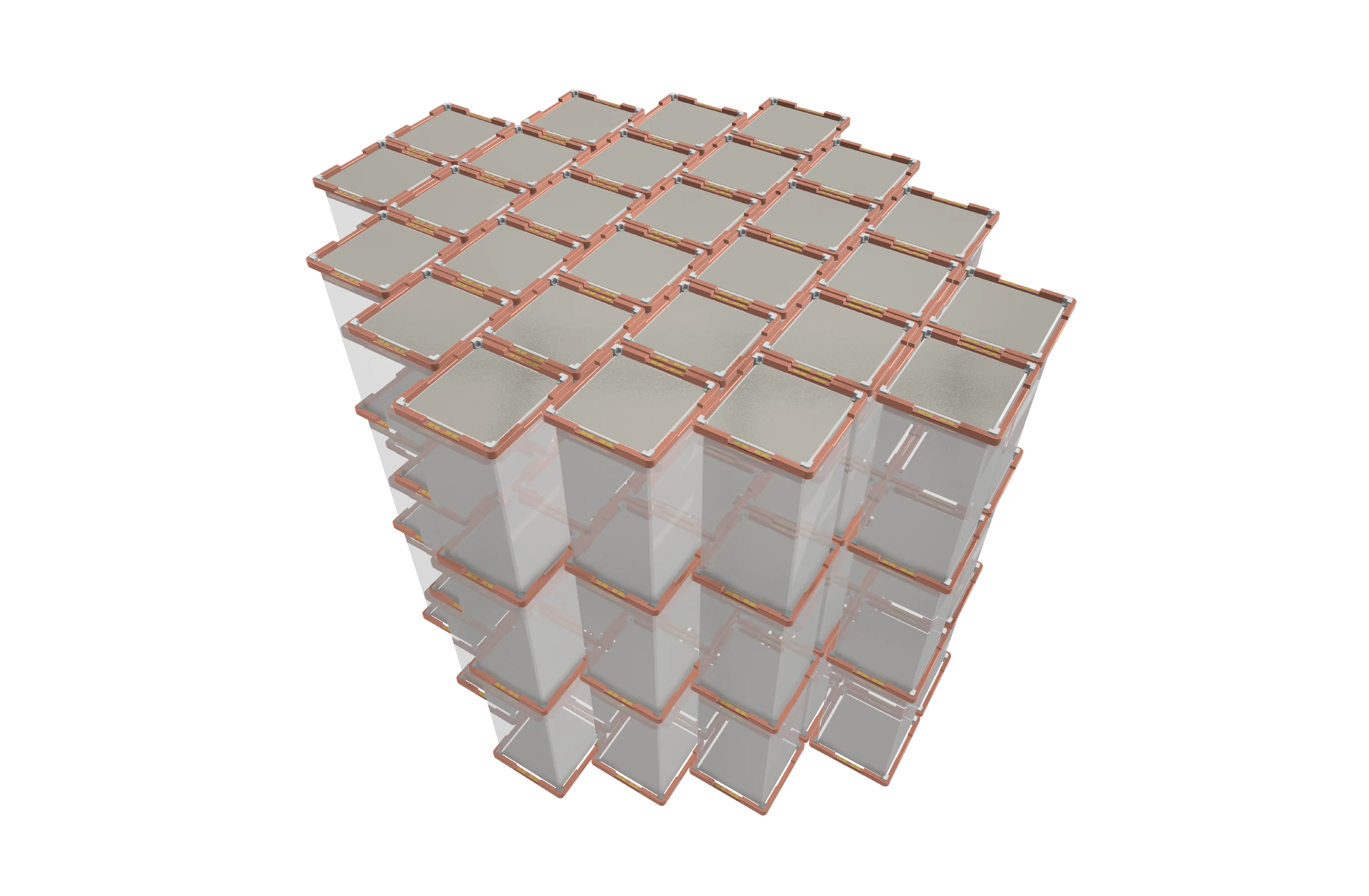
Deep underground, in the silence of a cryostat (a cooled container), lie crystals of lead that once belonged to an ancient Roman ship. This material barely emits background radiation — over two thousand years, unstable isotopes have decayed, leaving it perfectly clean for hunting the rarest events. The RES-NOVA experiment was built to catch the neutrino response from a supernova explosion in our Galaxy. But the same crystals turned out to be an excellent trap for solar axions — light, invisible particles that no one has ever seen.
Axions are born in the Sun's hot plasma through several pathways. For instance, a photon can convert into an axion in the electric field of a nucleus: this is called the Primakoff effect. Or an electron, when decelerating, can emit such a particle. In a lead tungstate (PbWO4) crystal, the reverse process occurs: an axion is absorbed, transferring energy to an electron or producing a new photon. This creates a signal — a tiny temperature rise in the detector, which an ultrasensitive bolometer (a device for measuring minuscule heat flows) can detect.
Analysis of the first data from the 13-gram prototype already yielded limits on the axion-photon coupling strength. And this was done without complex background models, using a simple statistical method. In the future, with a ton-year exposure (a measure of accumulated data), RES-NOVA could simultaneously probe three different axion coupling channels: to photons, electrons, and nucleons. Thus, ancient lead becomes a bridge between astrophysics and particle physics.
Original abstract
as written by the authors arXiv:2607.21363
RES-NOVA is a cryogenic experiment based on PbWO4 scintillating bolometers produced from archaeological lead, originally designed to detect coherent elastic neutrino-nucleus scattering (CEvNS) from galactic core-collapse supernovae. We show that the same high-density, high-Z absorbers and sub-keV energy resolution make RES-NOVA an appealing probe of solar axions. We compute the expected signal from the Primakoff, ABC (atomic recombination and de-excitation, Bremsstrahlung, Compton), longitudinal-plasmon (LP), and 57Fe nuclear-line components of the solar axion flux, folded through the inverse-Primakoff and axioelectric detection channels in PbWO4, which probe the axion couplings to photons (g_a-gamma), electrons (g_ae), and nucleons (g_aN), respectively. We derive projected sensitivities for a 1 ton*y exposure of the RES-NOVA demonstrator in the (g_ae,g_a-gamma), (g_ae,g_aN), and (g_a-gamma,g_aN) planes. The projected reach in g_ae approaches that of XENONnT to within a factor of ~2, despite a background roughly four orders of magnitude higher, thanks to the large target mass, the high-Z enhancement of the axioelectric and inverse-Primakoff cross sections, and the sub-keV energy resolution. Because the inverse-Primakoff constraint on g_a-gamma relies on absorption rather than coherent conversion, it is independent of the axion mass, unlike bounds from magnetic helioscopes. We complement these projections with the first solar-axion exclusion limit obtained on real data with a 13 g PbWO4 prototype grown from archaeological lead, using a background-model-independent optimum-interval analysis. These results establish RES-NOVA as a promising multi-coupling probe of solar axions, with simultaneous sensitivity to g_ae, g_a-gamma and g_aN that is complementary to existing helioscope and direct-detection searches.
The lead used in the detector was recovered from a sunken Roman ship about 2000 years old. Over that time, the radioactive isotope lead-210 has almost completely decayed, making the material hundreds of times cleaner than modern lead.