Lead from an Ancient Shipwreck Hunts Dark Matter express
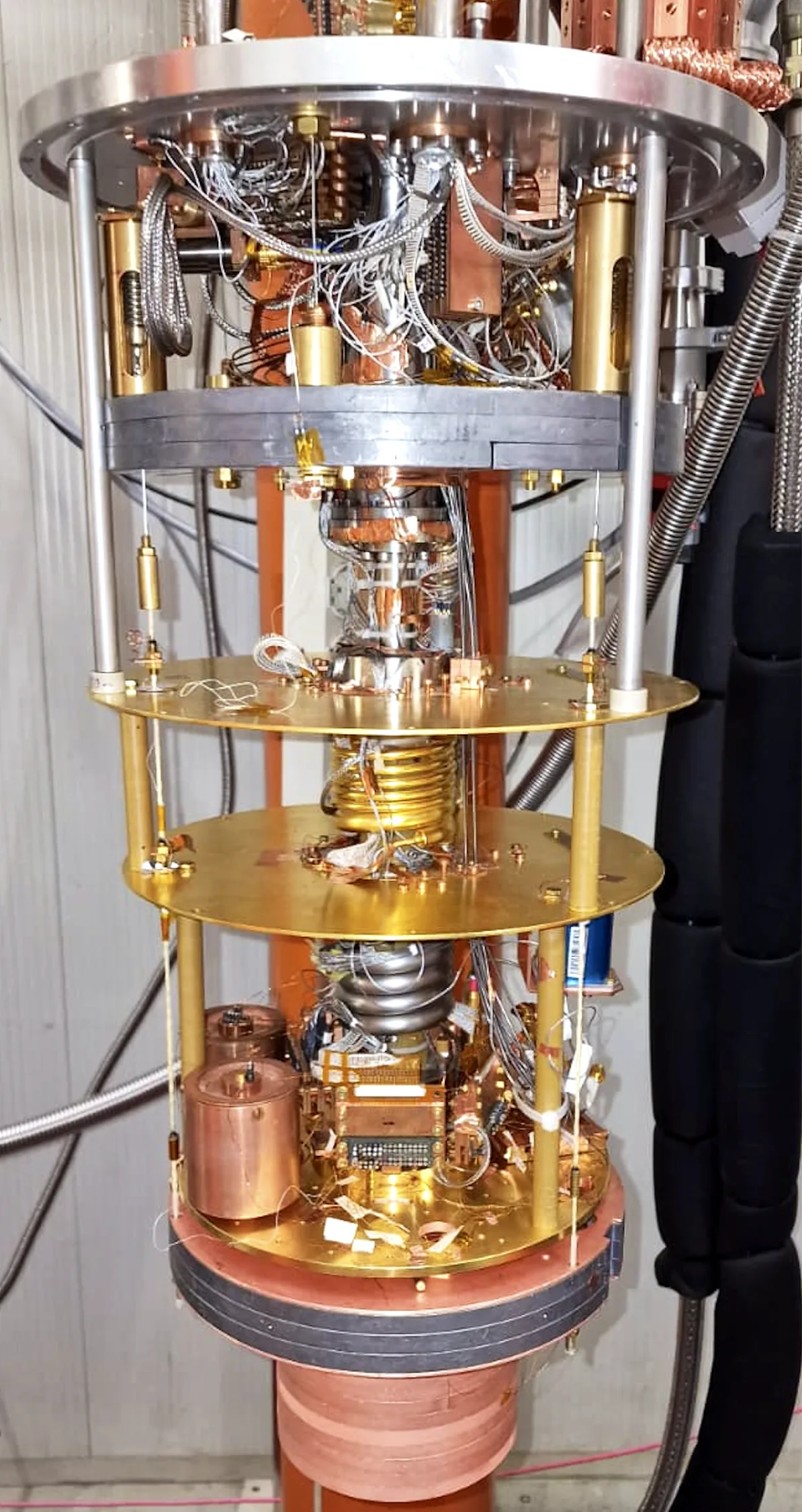
Ancient lead that lay on the seafloor for two thousand years has become the heart of a detector searching for the most elusive substance in the universe. From it, researchers grew a transparent lead tungstate crystal weighing 13 grams and cooled it to near absolute zero. Such lead is valuable because over the centuries almost all unstable atoms have decayed away, leaving it exceptionally pure, like water from a mountain spring.
The crystal was placed in an underground laboratory where the rock overburden shields against cosmic rays. It was connected to an ultra-sensitive thermometer that can detect temperature changes of millionths of a degree. If a dark matter particle collides with a nucleus in the crystal, the nucleus recoils slightly and heats the material: this tiny pulse is what the instrument captures. During the observation period, no such pulses were found, but for the first time researchers were able to set limits on how strongly dark matter can interact with ordinary matter.
The experiment served as a rehearsal for the larger RES-NOVA detector. The prototype showed that vibrations and electrical noise, which can mask a rare signal, can be managed. In the future, such crystals will be grown to kilogram and ton scales, and new superconducting thermometers will boost their sensitivity. Then, perhaps, ancient lead will finally catch what has eluded us for billions of years.
The lead for the crystal was likely mined from Roman mines, then lay in seawater for about 2000 years. During that time, its radioactivity dropped by thousands of times compared to freshly smelted lead.
Searching for dark matter with ancient artifacts echoes stories where heroes use old relics to fight invisible forces — except here the relic is not magical, just very pure.