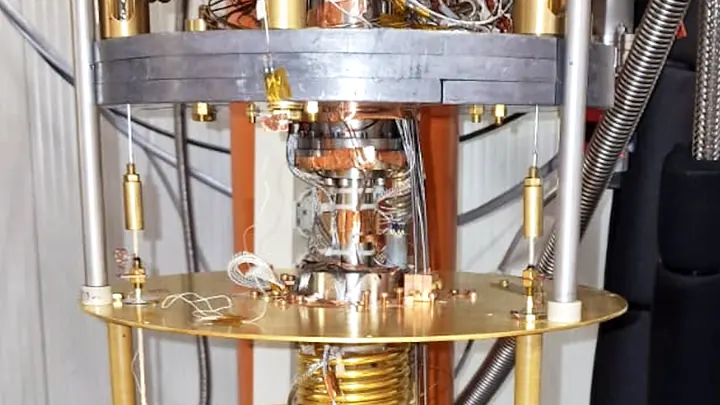
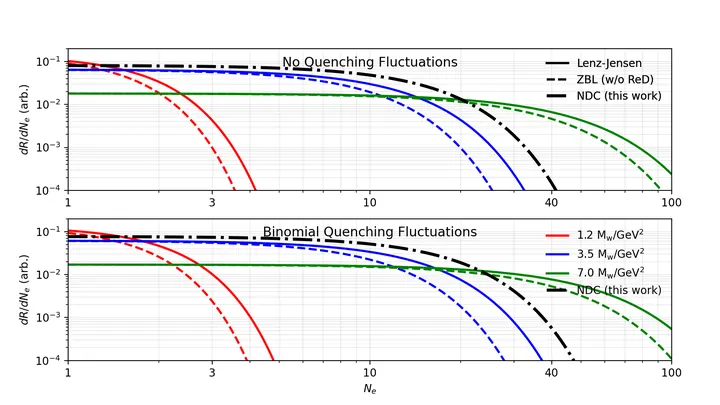
Direct detection experiments are Earth-bound laboratories designed to catch dark matter particles as they pass through ordinary matter. Unlike astronomical observations, which infer dark matter's presence through gravity, these experiments aim to observe the rare collisions between dark matter particles and atomic nuclei or electrons. The challenge is formidable: dark matter is thought to interact so weakly that a single event may occur only once per year in a kilogram of detector material, and background radiation from cosmic rays and natural radioactivity can mimic the signal. To suppress backgrounds, detectors are placed deep underground, shielded by lead and copper, and cooled to near absolute zero.
History
The first direct detection experiments were proposed in the 1980s, with the pioneering work of Mark Goodman and Edward Witten in 1985. The field grew rapidly in the 1990s with the development of germanium and silicon detectors, and later with noble-liquid detectors like XENON and LUX, which set increasingly stringent limits on dark matter interactions.
How it works
A typical detector consists of a large mass of ultra-pure material — such as liquid xenon, germanium, or silicon — instrumented with sensors that record the tiny amounts of light and charge produced when a particle strikes a nucleus. When a dark matter particle scatters off a nucleus, it imparts a small recoil energy, typically in the range of a few keV. The detector measures this recoil and distinguishes it from background events by its energy spectrum, timing, and spatial distribution. Some experiments use superheated liquids or crystals that emit phonons, while others employ superconducting qubits to detect even smaller energy deposits.
In practice
Direct detection experiments are the primary means to identify the particle nature of dark matter, and their results guide theoretical models of new physics beyond the Standard Model.
Fun fact
Some experiments use a single dust grain levitated in a laser trap as a detector, where a dark matter collision would cause a measurable change in its motion — a technique sensitive to very light dark matter particles.
The universe is constantly sending us signals, but many are too faint to notice. Relic neutrinos, particles left over from the Big Bang, pass through Earth by the billions every second, yet catching even one is a feat on the edge of possibility. We need a detector that can sense energy a thousand times smaller than what it takes to move a speck of dust.
Buried in Antarctic ice, there's a detector the size of a cubic kilometer. It doesn't catch light but ghostly particles — neutrinos. Yet sometimes, a different beast might flash through: a pair of muons born together and flying apart in a wide fan. No known particle of ordinary matter can paint that pattern.
Dark matter is the invisible scaffolding of the universe. It's there, we know from the motion of stars and galaxies, but what this scaffolding is made of remains unknown. One guess is ultra-light particles similar to axions. They barely interact with ordinary matter, yet occasionally they do get involved.
264 kilometres per second — that's how fast the Solar System hurtles through the cloud of dark matter. Its existence was given away by galaxies: they spun too fast to be held by visible mass, and Vera Rubin was first to suspect a hidden scaffolding.
At nine in the morning, the DarkSide-50 detector, 1400 meters beneath Gran Sasso, records a weak ionization pulse. By eleven at night, the frequency of such events drops noticeably. This is not an electronics glitch or a seasonal background variation.
The universe sounds with silence. The lion's share of matter — about 85%—remains invisible, manifesting only through gravity. Back when Vera Rubin Vera Rubin showed that galaxies spin as if wrapped in unseen mass.
Dark matter — the invisible architect of the universe, holding galaxies from flying apart. Thanks to the pioneering work of Fritz Zwicky and Vera Rubin we know: ordinary matter in the cosmos is just a negligible impurity. But what lies behind this dark matter?
Gravitational waves from merging black holes sound like bass chords, pulsars tap out a rhythm, and the cosmic microwave background carries echoes of the Big Bang. But there is a silent player — dark matter, whose presence is betrayed only by gravitational effects.
The standard model of cosmology, based on the field equations proposed by Einstein, describes the Universe as a cocktail of dark matter (discovered thanks to Vera Rubin) and dark energy in roughly a 1:3 ratio.
A large underground tank of liquid xenon waits for a rare event — a nudge from a dark matter particle. Normally, gravity is too weak to notice such a nudge. But if space has hidden dimensions, everything changes: at tiny distances, gravity suddenly strengthens, and the chance of catching an elusive particle grows.
Dark matter detectors are essentially incredibly sensitive microphones, capable of hearing a whisper amid the roar of a rock concert. Their job is to catch the rare nudges from hypothetical dark matter particles, which are thought to occasionally collide with atomic nuclei of ordinary matter.
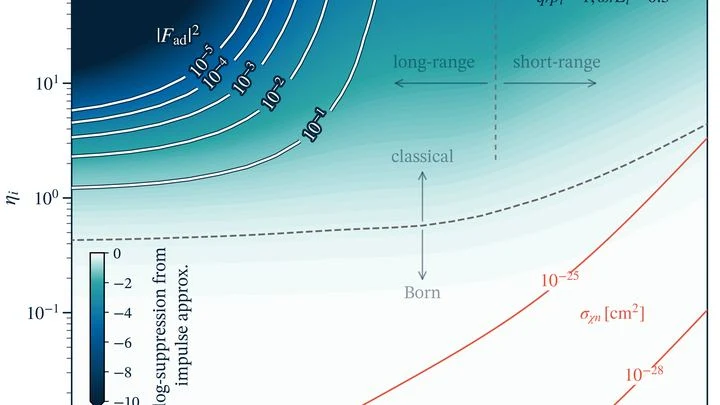
A billiard ball slams into another. Impact, and the balls scatter. But if the push is not sharp but very gentle, the balls just roll together without bouncing. An atom behaves much the same way when hit by a dark matter particle.
An old photograph taken at the moment of the universe's birth has been carrying its light to us for nearly 14 billion years. This snapshot is the cosmic microwave background, the cooled echo of the Big Bang. It captures the tiny inhomogeneities from which galaxies later grew.
The story began almost a century ago, when Edwin Hubble showed that galaxies are receding, and Fritz Zwicky and Vera Rubin later realized: to explain their motions, invisible mass is needed — dark matter.
A stone thrown into water leaves ripples. A satellite orbiting Earth also leaves a trace — not on water, but in the laws of physics. Its orbit is not a frozen line: it slowly rotates, like the hand of a giant clock.
In a dark room, a glass bead the size of a dust grain hangs on a laser beam. Beneath it are two mirrors: one aluminum, one silver. If axions (light, invisible particles that could make up the mysterious dark matter) whiz by, they exchange with the mirror atoms, and the bead shifts ever so slightly.
Dark matter has eluded direct observation so far, even though its gravity holds galaxies together. One hypothesis: it’s made of axions — ultra-light particles predicted by theory.
Dark matter is invisible, but its gravity governs the motion of galaxies. What it's made of is a mystery. One idea: it consists of ultra-light particles akin to axions.
A detector filled with superfluid helium-4 is like a perfectly still lake. The liquid doesn't slosh or bubble: it's frozen in a single quantum state. An invisible guest, a dark matter particle, flies through it. It doesn't shine or leave a track. But sometimes it nudges a helium nucleus.
You taste a fruit smoothie through two different straws. One lets through only the big chunks, the other only the liquid. Individually, the sensations are misleading, but together they give you the key: here, it seems, is banana, and here, strawberry.
A neutron star is the dead core of a massive star, crushed to the size of a city. A teaspoon of its material weighs as much as a mountain. Dark matter particles fly through such a dense medium almost unimpeded, but occasionally they do hit neutrons and get stuck, like bullets bogging down in deep sand.
Conventional dark matter detectors are like a soccer goalkeeper waiting for a powerful shot while the ball barely rolls. The invisible particles filling our galaxy often move too slowly to be noticed by sensitive sensors.
A cold cloud of atoms is like a swarm of fireflies drawn to one another. The attraction between atoms tries to pack them into a single dense ball. But quantum jitter, the unavoidable motion of particles, keeps the ball from collapsing. When the attraction is strong, the cloud breaks into separate clumps.
Underground, in a former gold mine, sits a tank of liquid xenon. If a dark matter particle flies through it, the xenon flashes. But it also flashes from ordinary particles, like neutrinos or leftover radioactivity. The task is to tell which flash comes from dark matter and which from noise.
Dark matter is an invisible mass holding galaxies together. Its nature remains unknown, but one likely candidate is the axion — an ultra-light particle that barely interacts with matter. To catch it, physicists built a hybrid trap.
A tiny superconductor, levitating above a magnet, is like a cork on the surface of an invisible ocean. The slightest breath of dark matter makes it shudder. Scientists examined two kinds of such 'wind'. The first – gravitational waves, which stretch and squeeze space itself, like ripples on the fabric of the cosmos.
A dark matter detector is like a room where you're trying to hear a whisper while static electricity crackles nearby. This crackle is produced by radon atoms — a radioactive gas that seeps out from materials and air.
The universe is held together by an invisible scaffolding of dark matter. Part of it could be dark photons, ghostly copies of light that pass right through matter. The Dandelion experiment turned a spherical mirror into a super-sensitive ear: it gathers dark photons and translates them into the language of radio waves.
In nuclear transitions of beryllium-8, helium-4, and carbon-12, physicists from the ATOMKI collaboration have been seeing extra events since 2020—as if, when an excited nucleus decays, something else is sometimes born besides the usual photons. The energy of this "something" is always the same: about 17 million electron-volts.
A bullet that doesn't just pierce one target but leaves marks in several layers of armor. That's roughly how superheavy dark matter behaves, and it's what the DarkSide-50 detector was built to catch for the first time. The usual suspects for dark matter (weakly interacting massive particles, or WIMPs) pass through matter almost unnoticed, occasionally bumping into a nucleus.
Dark matter is invisible, but you can catch it on the rebound. Hydrogen embedded in a carbon film acts like a billiard ball: when a dark matter particle hits it, the proton flies out. That ejection is the signal you're looking for.
Galaxies are flying apart, but the expansion rate measured from the afterglow of the Big Bang and from supernova explosions doesn't match: this problem has been called the Hubble tension. It's like two dancers losing their rhythm because they can't feel each other.
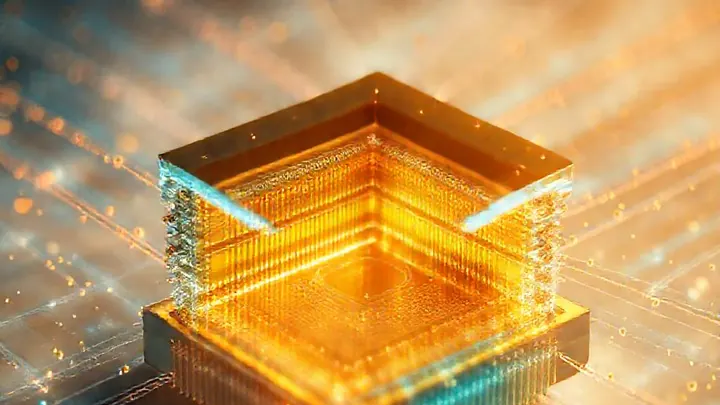
Ancient lead that lay on the seafloor for two thousand years has become the heart of a detector searching for the most elusive substance in the universe. From it, researchers grew a transparent lead tungstate crystal weighing 13 grams and cooled it to near absolute zero.
Since Vera Rubin first convincingly showed that galaxies are surrounded by invisible matter, the quest to understand the nature of dark matter has remained one of physics' greatest challenges.
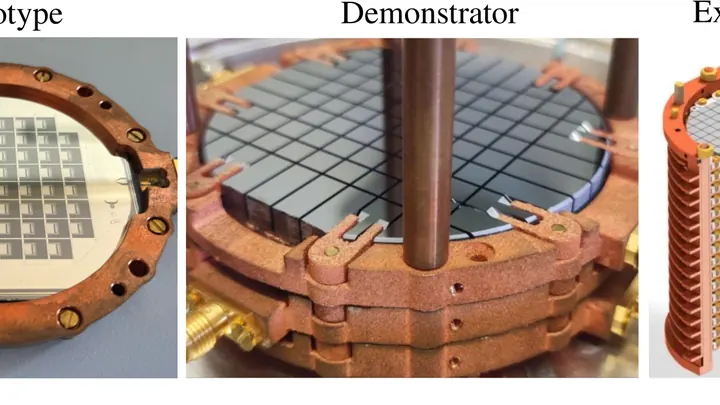
Dark matter is the invisible substance that holds galaxies together, yet it has so far escaped direct detection. The BULLKID-DM detector is designed to catch candidate particles with a mass around 1 GeV (roughly that of a proton) and an extremely weak interaction with ordinary matter — a…
The LCLS-II X-ray laser in California fires short, powerful flashes, like a strobe light at a disco. Between flashes, there are dark pauses lasting 26.9 nanoseconds (billionths of a second).
Dark energy and dark matter are the invisible conductors of the cosmos. Usually considered independent, new research proposes seeing them as dance partners. The lead — dark energy — changes the mass of dark matter particles. Like a dancer who lifts and lowers their partner, dark energy increases or decreases the weight of dark matter.
Dark matter is an invisible substance that holds galaxies together but emits no light. Catching its particles is like trying to hear a whisper in a noisy hall. Ordinary detectors only pick up loud impacts, while weak signals get drowned out by background noise.
Dark matter is an invisible substance, five times more abundant in the universe than ordinary matter. Its particles barely touch atoms, but occasionally they can nudge an electron, like a string brushed by the wind.
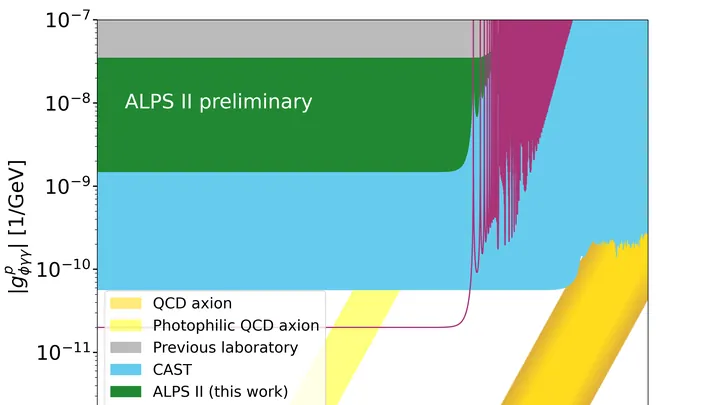
At the DESY lab, the ALPS II experiment was launched to hunt for axions — hypothetical ghost particles that might make up dark matter. This invisible mass acts like a skeleton, preventing galaxies from flying apart due to their spin.