Pedro Bargueño

4 articles · 6 co-authors · latest: 2026-08-01
1,668 citations · h-index 22 · 128 papersData: Semantic Scholar

We have retold 4 papers by this author. most often about: Bose-Einstein condensate, Standard Model, gravitational waves. 6 co-authors across our retellings.

Links in the knowledge graph
Quantum Gases2026-06-071 minarXiv:2606.08717express
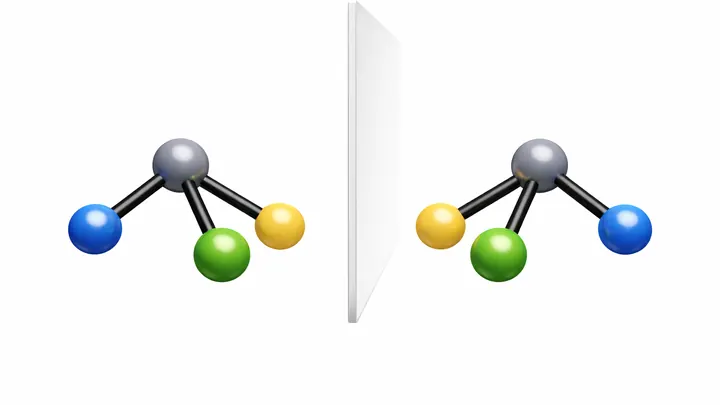
Ultracold Condensate Turns Weak Molecular Asymmetry into Complete Handedness
Many molecules, like gloves, come in left- and right-handed versions. Their energy difference, caused by the weak interaction, is minute, like a whisper in a noisy room. Physicists have figured out how to turn that whisper into a chorus. A mixture of precursor molecules in an ultracold gas yields mirror-image pairs.

General Relativity2026-07-301 minarXiv:2607.28209express
Gravitational Waves in a Noisy Room
A pendulum in a noisy room is constantly jostled by people passing by. Its motion is a mix of regular swings and random jerks. Something similar happens with weak gravitational waves against the backdrop of an expanding universe. In Einstein's general relativity, these waves are tiny ripples in spacetime.
General Relativity2026-07-302 minarXiv:2607.28249express
Mosaic on the Surface of a Black Hole
A black hole devours everything, even light. Yet it obeys the laws of physics: it possesses entropy — a measure of the hidden information an object 'remembers.' In the 1970s, Jacob Bekenstein and Stephen Hawking discovered a strange pattern: a black hole's entropy grows not with its volume, but…
General Relativity2026-08-011 minarXiv:2608.00557express
Cauchy Horizon: Why It Survived
A black hole is like a perfectly smooth sphere. It has no features — only mass, charge, and spin. This rule is called "no-hair." But nature loves to complicate things: sometimes a cloud of a scalar field (a special field described by a single number at each point) spontaneously appears around a black hole.