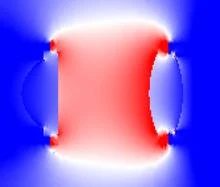
Detector noise is the unwanted random fluctuation in a measuring instrument's output that masks or distorts the true signal. In physics, every measurement is a battle between the signal you care about and the noise that competes with it. This is especially critical in experiments hunting for extraordinarily weak effects, like gravitational waves, where the signal might be a thousand times smaller than the noise it's buried in. The challenge is not just to build a sensitive detector, but to understand and suppress every possible source of noise, from thermal vibrations to quantum fluctuations.
History
The systematic study of detector noise began in the early 20th century with the work of Walter Schottky on shot noise in vacuum tubes (1918) and Johnson and Nyquist on thermal noise in resistors (1928). The field matured with the development of electronics and later quantum optics.
How it works
Noise arises from many sources. Thermal noise comes from the random motion of atoms and electrons in the detector's components, which creates tiny electrical currents or mechanical jitters. Shot noise is the statistical fluctuation in the number of particles (like photons or electrons) arriving at the detector — it's inherent to the discrete nature of matter and light. Quantum noise, including radiation pressure noise, comes from the fundamental uncertainty principle: even a perfect detector is disturbed by the very act of measuring. To reduce noise, physicists cool detectors to near absolute zero, isolate them from vibrations, and use clever techniques like squeezed light to manipulate quantum noise.
In practice
Noise reduction is the central engineering challenge in gravitational wave observatories like LIGO and Virgo, where mirrors are suspended on delicate pendulums and lasers are tuned to minimize quantum noise, allowing detection of ripples in spacetime from colliding black holes.
Fun fact
In gravitational wave detectors, the mirrors are so well isolated that the residual noise is dominated by quantum effects — the very act of measuring the mirror's position with laser light pushes it around due to radiation pressure.
A handful of pebbles drops into a pond: each one sends out ripples. If the pebbles are different, the ripples will be different too: some sharp, some smooth. But when you look at the water from a distance and see only a small part of the ripples, all those differences blur together.
The merger of two neutron stars is not just a collision. Even before they touch, they deform each other through tidal forces, and this deformation depends on how 'soft' or 'stiff' the matter inside is. Stiff matter resists more; soft matter changes shape more easily.
At the end of a massive star's life, its core collapses in a fraction of a second, giving birth to a supernova flash. This cataclysm shakes spacetime itself, emitting gravitational waves — ripples that race across the Universe.
The universe sometimes resembles a pot of boiling water. With enough heat, liquid turns to vapor: that's a phase transition. Something similar could have happened in the early universe: a field filling space suddenly changed its state, like water becoming gas.
An ultra-sensitive microphone tries to catch the whisper of a distant galaxy. But the microphone itself trembles from heat: its atoms jitter like popcorn in a pan. Physicists call this jitter thermal noise, and it often drowns out weak signals.
Gravitational wave detectors are microphones listening to the trembling of space. But their own noise drowns out weak signals. To hear more, physicists add special "squeezed" light to the instrument: it reduces quantum noise, like noise cancellation in headphones.
A silicon sphere 166 nanometers in diameter floats in a beam of infrared laser light. The pressure is below 10⁻⁸ mbar, and the motional temperature is about 10 millikelvin. That is colder than the cosmic microwave background.