The Uneven Pulse of Time: How Irregular Sampling Skews Conclusions and What to Do About It
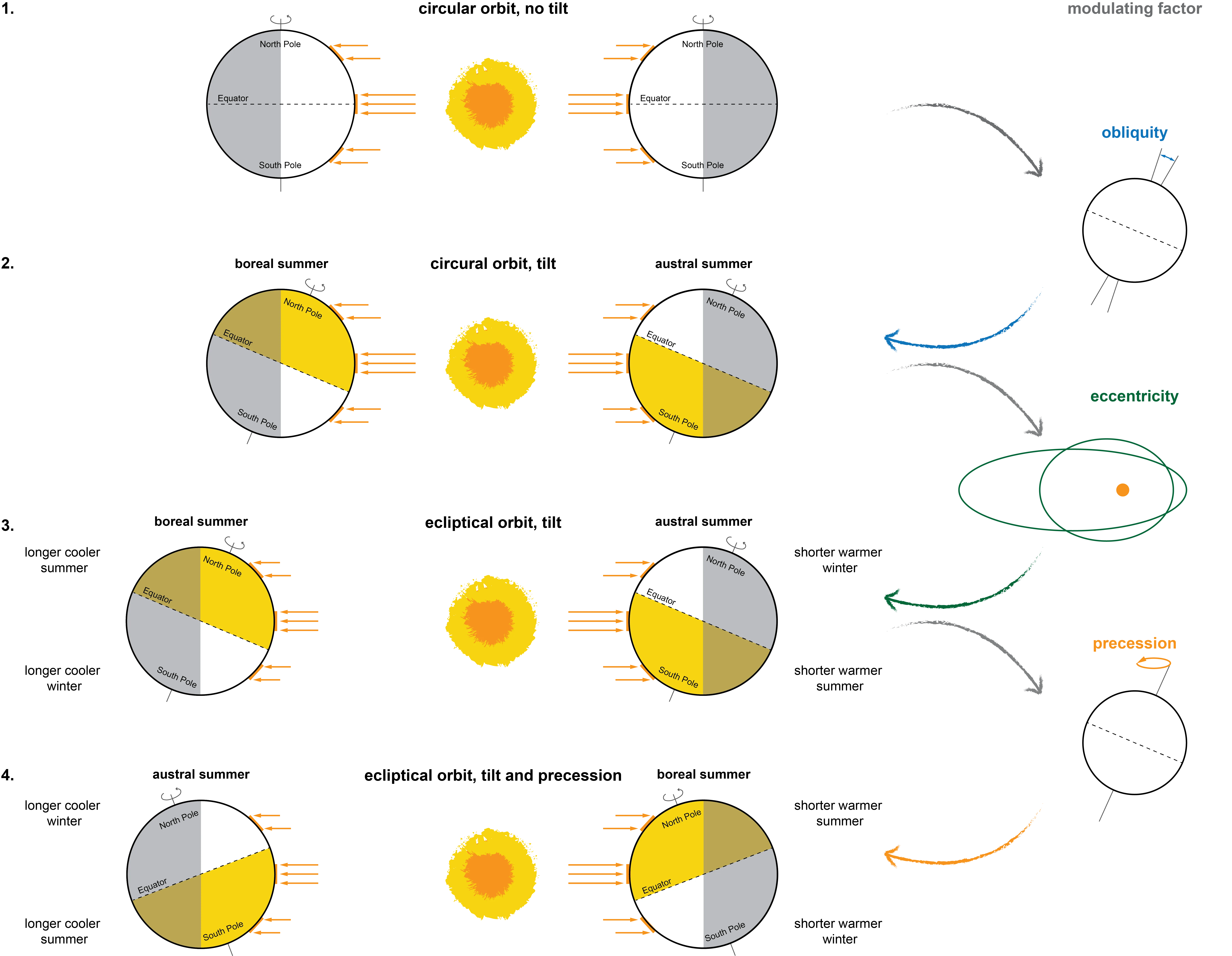
A translator gets distracted by every rustle in the hall, and a one-hour meeting stretches into two. The same happens with data: when measurements come unevenly, standard analysis tools start "hearing" changes that never occurred in the underlying process. Irregular time series are everywhere, from stock tickers to stalagmite layers in a cave. You cannot apply familiar methods directly, and attempts to "smooth" the series by interpolation add their own distortions.
One popular way to compare segments of such a series is a similarity measure based on edit distance (the cost of transforming one segment into another through shifts, deletions, and insertions of points). It comes from text processing and is convenient because it does not require equal lengths. But the authors found that the transformation cost systematically increases with segment size. A longer segment looks more dissimilar to others simply because it contains more points. It is as if the translator made more mistakes the longer the speech went on, even if the speaker stayed equally clear.
To separate real changes from sampling-frequency artifacts, the researchers proposed a surrogate data method constrained by sampling frequency (SRC-surrogates). The idea is simple: generate many artificial copies of the series that preserve segment sizes and interval distributions but destroy the dynamics. Then compare the predictability measure (DET) of the real series with the distribution of DET from surrogates. If the real series falls outside that distribution, its behavior cannot be explained by uneven sampling alone.
On a synthetic series with a sharp change in sampling frequency, the method worked: the spurious shift toward higher predictability disappeared, and the linear trend built into the model was recovered. The method was then applied to real data, a stalagmite from Niue Island that grew for 1000 years (6.4–5.4 thousand years ago). Without correction, predictability of seasonal rainfall seemed to increase, but after subtracting the artifact, two periods of reduced predictability emerged. They coincide with intensified El Niño and tropical cyclones.
Now researchers have a tool for honest comparison of episodes with different sampling densities. This is especially important for paleoclimate, where the time step is set by natural processes, not by the experimenter's choice. The method is universal and can be applied to any edit-distance-based measure, and in the future to clustering, classification, and networks. The translator is no longer thrown off by rustles: they have learned to tell them apart from the speaker's voice.
The stalagmite from Niue grew faster during wet periods, so its layers contained more measurement points per year, and without correction this looked like an increase in climate predictability, when in fact it was just an artifact.