The Lomb–Scargle periodogram is a method for detecting periodic signals in data that is unevenly sampled in time. Unlike the classical Fourier transform, which requires equally spaced samples, the Lomb–Scargle approach fits sinusoids of different frequencies directly to the observed data points, weighting each measurement by its uncertainty. It is the workhorse for finding exoplanets, variable stars, and other periodic phenomena in astronomical time-series data.
History
The method was developed independently by Norman Lomb in 1976 and Jeffrey Scargle in 1982, building on earlier work by Barning in 1963. It has since become a standard tool in astrophysics.
How it works
For each trial frequency, the method computes a power value that measures how well a sinusoid of that frequency fits the data, after accounting for the uneven sampling. The key trick is to shift the sinusoid's phase so that it is orthogonal to a constant offset, which makes the fit independent of the mean of the data. The resulting periodogram shows peaks at frequencies where the signal is strong, and the significance of each peak can be assessed against a false-alarm probability.
In practice
It is used to discover exoplanets by detecting the periodic Doppler shift of their host stars, to measure the rotation periods of stars, and to analyze variable star light curves.
Fun fact
The Lomb–Scargle periodogram is mathematically equivalent to a least-squares fit of a sinusoid, which means it gives the same result as a full nonlinear fit but at a fraction of the computational cost.
The orchestra plays without a conductor. Each instrument follows its own schedule: the violin on Monday, the flute on Wednesday, the timpani on Saturday. Astronomers hear not music but isolated notes scattered across the calendar. A telescope sees a star only when it is above the horizon and when the schedule has allotted time for it.
Try to pick out the rhythm of a distant drum through the noise of a construction site. Standard methods look for a steady "tick-tock-tick," but if the drummer plays erratically, with sharp hits and pauses, they might miss it entirely. That's roughly how astronomers searched for periodic signals in the emission of blazars — active nuclei of distant galaxies that shoot powerful jets of particles toward us.
You're listening to the faint whisper of stars, and nearby someone keeps moving a chair. In gravitational wave telescopes, that role is played by scattered light: it reflects off trembling surfaces and creates false signals.
3I/ATLAS burst into the Solar System like an uninvited guest, a gift of fate for hunters of extraterrestrial intelligence. This comet-like wanderer from the depths of the Galaxy flew close enough to be heard in all its details — unlike distant exoplanets.
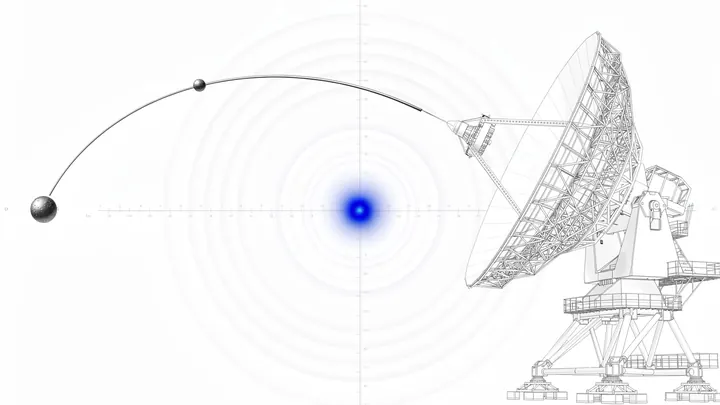
The Sun is not just a source of heat; it's also the largest lens in the solar system. Its gravity bends light rays like glass, focusing them into a bright ring far beyond Pluto's orbit. If light from a distant planet enters this ring, astronomers could reconstruct its portrait — not a point, but a map with surface details.
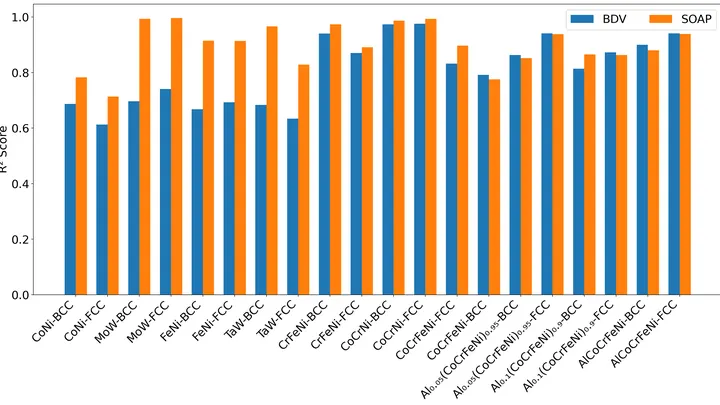
Creating an alloy from several metals is like cooking a soup from mysterious ingredients: guessing the final texture without trial and error is nearly impossible. Conventional models often get it wrong when there are more than three different kinds of atoms.
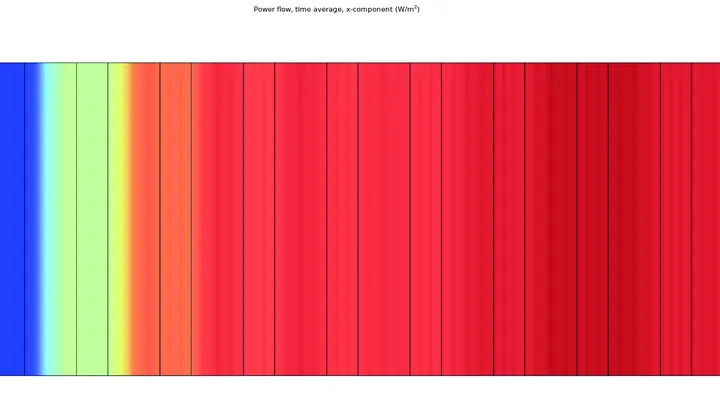
A palm hovering over a hot stove feels the heat even when the surrounding air seems cool. Something similar happens to electrons in the Aharonov–Bohm effect: the particle senses an electric voltage even though it enters a region where the field has already been switched off.
A beam of light passing through a transparent plate usually keeps its color. But if you stack the plate from thin alternating layers, it becomes a grating that reflects and transmits waves selectively. This has long been used in lasers and optical filters. Now such gratings have been made to vibrate, and light started changing color.
The heart beats, and on a paper ECG strip, each beat looks like a sharp spike with two humps: a quick rise, then a smaller wave, then a descent. A doctor looks at such a strip and sees the rhythm, but the shape of each spike, how exactly the muscle contracted, is hard to discern, especially if the recording lasts a full day.
This new method turns that strip into a colorful carpet.
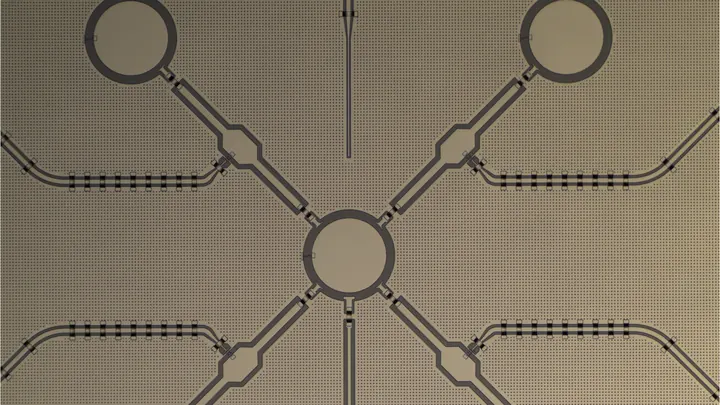
A quantum processor is like an orchestra where each musician (qubit) must play their part precisely in time. But in reality, the instruments go out of tune: qubits lose energy, and their interactions get distorted. To tune this orchestra, you first need to record how it sounds right now: that is, measure the noise parameters and couplings.
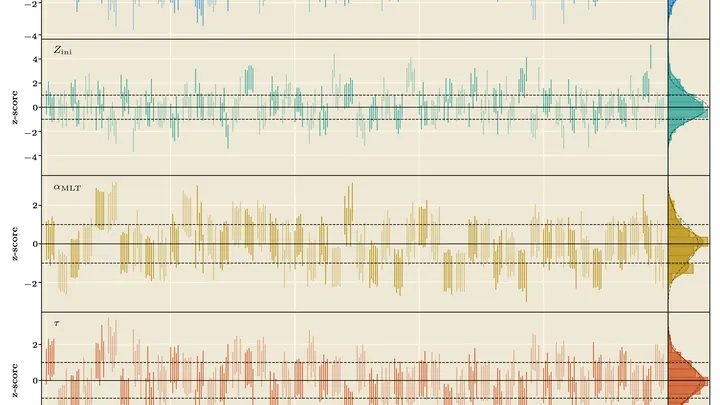
A star trembles like a bell after being struck. These tremors, tiny fluctuations in brightness and surface, can be caught by a telescope. From the frequencies of these 'stellar notes,' astronomers infer what's happening inside: how old the star is, how it's structured.
A pulsar is a dead star that spins and emits radio pulses like a lighthouse. If a pulsar has a companion, they whirl around a common center of gravity.
Imagine an interpreter who gets distracted by every rustle in the hall. The more rustles, the more errors in the translation, even though the meaning of the speech hasn't changed. The same happens with data: if measurements are unevenly spaced, standard analytical tools start "hearing" changes that never occurred in the underlying process.