Cross-validation is a family of techniques for estimating how well a statistical model will perform on new, unseen data. The core idea is to split the available data into separate parts: one part is used to train the model, and the other part is used to test it. This mimics the real-world situation where a model must make predictions on data it has never encountered, giving a more honest measure of its predictive power than simply re-testing on the training data.
History
The concept was introduced by Seymour Geisser in 1975, building on earlier work on data splitting and prediction.
How it works
The most common form is k-fold cross-validation. The data is randomly divided into k equal-sized folds. The model is trained on k−1 folds and tested on the remaining fold. This process is repeated k times, each time using a different fold as the test set. The final performance estimate is the average of the k test results. This uses all data for both training and testing, reducing the variance of the estimate compared to a single split.
In practice
It is used in machine learning to tune hyperparameters, select between competing models, and report realistic accuracy figures.
Fun fact
In leave-one-out cross-validation, a special case where k equals the number of data points, the model is trained on all but one point and tested on that single point, repeated for every point.
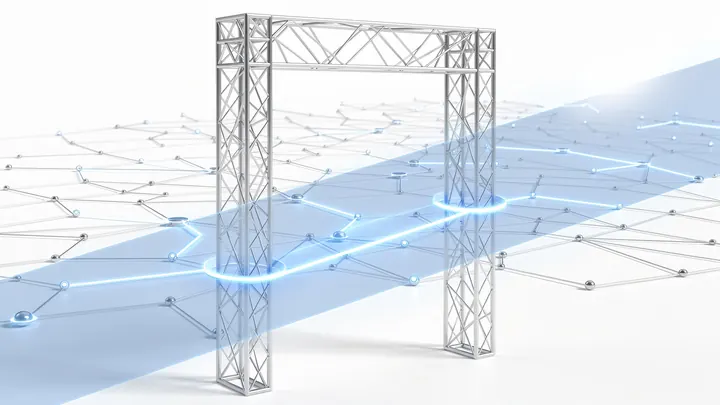
The orchestra plays without a conductor. Each instrument follows its own schedule: the violin on Monday, the flute on Wednesday, the timpani on Saturday. Astronomers hear not music but isolated notes scattered across the calendar. A telescope sees a star only when it is above the horizon and when the schedule has allotted time for it.
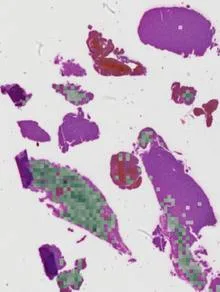
Imagine trying to figure out what happened in a room from the sound that lingers after a gunshot. The shot is gone, but the echo still bounces off the walls. That's roughly how a neuropathologist views a brain tissue section where the tumor itself is absent: the biopsy only captured healthy tissue that reacted to the disease.
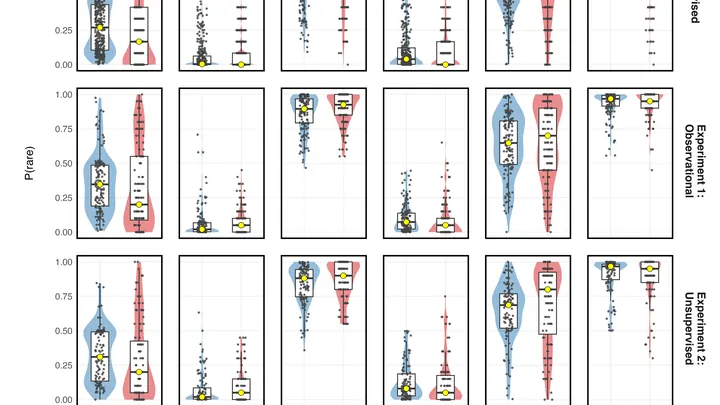
In a warehouse, there are boxes of apples and pears. There are many apples and few pears. But when the stock clerk says "a fruit with smooth skin," we are somehow more likely to recall the rare pear than the common apple. This is the inverse base-rate effect — a persistent glitch in how the brain resolves ambiguity between categories.
A glucose meter that doesn't prick your finger but just looks at your wrist: that's the dream for millions of people with diabetes. It's the promise of algorithms that extract glucose levels from the ordinary pulse signal, the photoplethysmogram (the same one that measures heart rate in smartwatches).
Predicting the yield of a chemical reaction is a bit like trying to guess the harvest knowing only the soil composition. Traditionally, chemists have relied on long columns of numbers, quantum descriptors, that describe electron energies but say nothing about molecular shape.
Two figure skaters on a lake frozen to the horizon. They are so far apart that their silhouettes turn into dots, and their mutual attraction becomes almost an article of faith. By Newton's law, they should circle in an unimaginably slow waltz. But telescopes see otherwise.
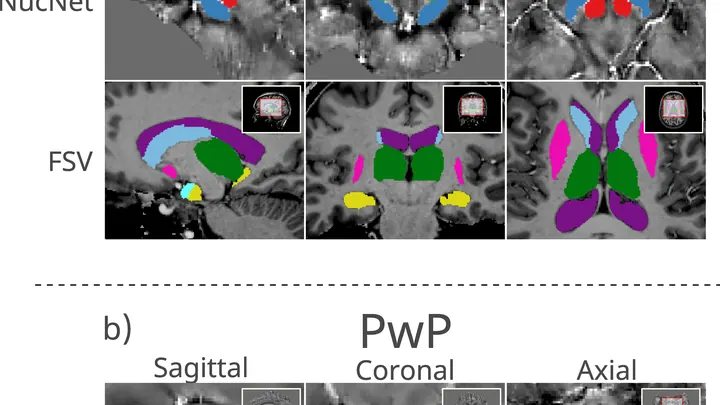
Ordinary AI looks at medical images like puzzles made of unfamiliar pieces: it considers any two unmatched pictures completely different. It's like trying to tell twins apart without knowing they're related. In medicine, however, patients with the same condition look nearly identical on MRI, and the algorithm mistakes 'relatives'.
An AI predicting room acoustics is like a student taking an exam with a cheat sheet. If the test points are the same as the training ones, the model simply memorizes the acoustic 'fingerprint' of each position — like a student recognizing a question by the dog-eared corner.
Assessing image quality is a job for a meticulous inspector with a toolbox. The IQA-T1 neural network acts exactly like that: it doesn't just stare at the picture, but applies either a spectroscope or a light meter.
The power grid is a huge restaurant where thousands of 'dishes'—potential accidents — threaten to be served every minute. Checking every plate fully would take hours, and a quick glance sometimes misses danger, like invisible mold on cheese.
Searching online is a lot like sifting flour for baking: white particles can hide dark specks of dirt. This data contamination is an invisible impurity that spoils the outcome. C3R operates like a smart sieve: it not only filters out information junk but also knows when to stop if there's too much trash. Rather than risk errors, the algorithm honestly declines to answer.
The railway's electrical network is like an orchestra: trains are musicians whose systems respond differently to current. When their 'electric voices' fall out of tune, disorder arises — a cacophony that can escalate into dangerous voltage rocking.
A child builds a simple game in Scratch: a character appears in the center and instantly jumps to a corner. The first move happens between frames — no one sees it. Removing that command is safe. But how does an automatic optimization optimizer know that? Today, the Scratch repository holds tens of millions of projects written by young authors.
Imagine an interpreter sitting in a meeting room, translating every word. But then they notice their translation could improve if they learned from their mistakes. They start noting which phrases caused confusion and adjust them. Within an hour, their translation is more accurate and the meeting runs smoother.
A lab sends a robot a list of a thousand candidate molecules for a new drug. The predictor robot, trained on old data, gives each one a 'fit or no fit' score. But when the list comes from an unfamiliar area, a different virus or a rare tumor, the robot starts to get confused. Its confidence stays high, while actual hits drop to zero.
Your arm lifts a cup from the shelf — a familiar motion you don't notice until muscles tire. Then the trajectory changes: the elbow shifts slightly, the hand trembles. A doctor usually catches these changes by hand, feeling the patient's muscles.
For one person, the disease begins with a tremor in the hand — the cup dances on its saucer as they carry it to the table. For another, the legs suddenly refuse to move smoothly: the step becomes short and shuffling, as if the floor were suddenly covered in a sticky layer. These are not two different diseases but two faces of the same one — Parkinson's disease.
A camera takes a snapshot, but the sensor is noisy, the optics blur, and some pixels are overexposed. Reconstructing the original picture is like guessing a melody from a scratched record: there are many possibilities, and which one is true is unclear.
A baker follows a recipe for a cake, but instead of a fluffy sponge, they get a hard crust. They start running through possible causes: maybe the flour was damp, or the oven heats unevenly, or the eggs were too cold.
Two specialists look at the same breast image. One is an experienced doctor, the other is an artificial intelligence program. Sometimes their opinions match, sometimes they diverge. How often they agree determines how accurately they can together distinguish healthy tissue from a tumor.
A protein language model is like a chef who learned from thousands of recipes and now invents new dishes. Sometimes he gets carried away and salts every dish because one good cookbook used a lot of salt. In proteins, such repetition isn't just ugly: identical stretches in the chain make the protein fragile, it can't fold into the right shape, and it doesn't work.
Genetic diagnostics is like comparing two photos taken with different cameras. If one camera slightly shifts the colors, the image will show "defects" that don't exist in reality.
Imagine an interpreter who gets distracted by every rustle in the hall. The more rustles, the more errors in the translation, even though the meaning of the speech hasn't changed. The same happens with data: if measurements are unevenly spaced, standard analytical tools start "hearing" changes that never occurred in the underlying process.
The ice cover of a river looks solid, but beneath it lie cracks that alter the flow. So it is with a time series: behind the smooth surface of numbers hide moments when the rules of the game change. These moments are called change points, and finding them is like tapping the ice to locate weak spots.