A Diode Chip That Sees Images ✛
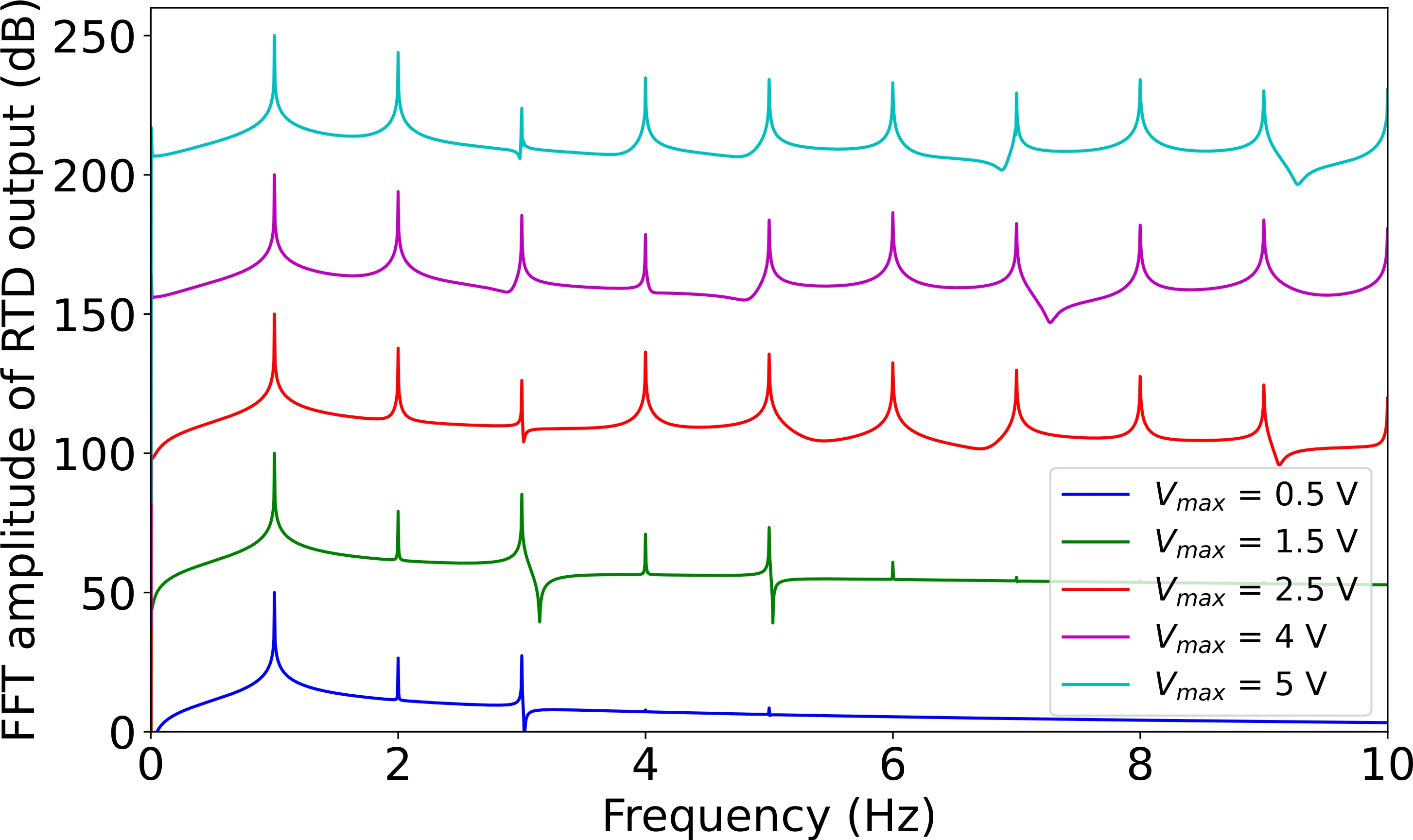
A drumroll on water creates a unique ripple — from it you can guess the rhythm. That’s how a reservoir computer works: instead of water, it uses a diode invented by Leo Esaki in 1958. Under voltage, its current behaves nonlinearly: first it rises, then drops, and rises again. The signal gets tangled like waves on water, and each image produces its own electrical pattern. Unlike regular neural networks, connections aren’t tuned here — the diode’s physics itself generates complexity. Only the output layer is trained, mapping the pattern to the answer. A circuit of such diodes reads handwritten digits and tells apples from oranges as well as powerful graphics cards, but uses hundreds of times less energy. The secret lies in the growth of entropy: the signal gets mixed into a nearly random yet distinctive response. By analyzing it as a spectrum of light, the chip extracts key features. The diode switches in picoseconds — a thousand times faster than transistors, because electrons tunnel through energy barriers like ghosts.
Electrons in this diode pass through energy barriers like ghosts through walls. That’s why it switches in picoseconds — faster than any transistor.