Robust machine learning in physics focuses on creating AI systems that can reliably extract signals from noisy, imperfect data — a common challenge in experimental physics. Whether it's identifying gravitational wave events buried in detector noise, classifying particles in high-energy collisions, or predicting material properties from noisy measurements, these models must be resilient to outliers, missing data, and systematic errors. The goal is not just accuracy on clean data, but dependable performance when the input is messy and unpredictable, as is often the case in real-world experiments.
History
The field grew alongside the deep learning revolution of the 2010s, as physicists began applying neural networks to complex data analysis tasks and realized that standard models were too fragile for real-world experimental conditions.
How it works
Robustness is achieved through several strategies: training on augmented data that includes realistic noise and distortions, using loss functions that are less sensitive to outliers (e.g., Huber loss instead of mean squared error), and incorporating uncertainty quantification so the model knows when it is uncertain. Techniques like ensemble methods (combining multiple models) and adversarial training (exposing the model to deliberately perturbed inputs) also help. In physics, this often means embedding physical constraints into the model architecture, ensuring the AI respects known laws of nature even when data is sparse or corrupted.
In practice
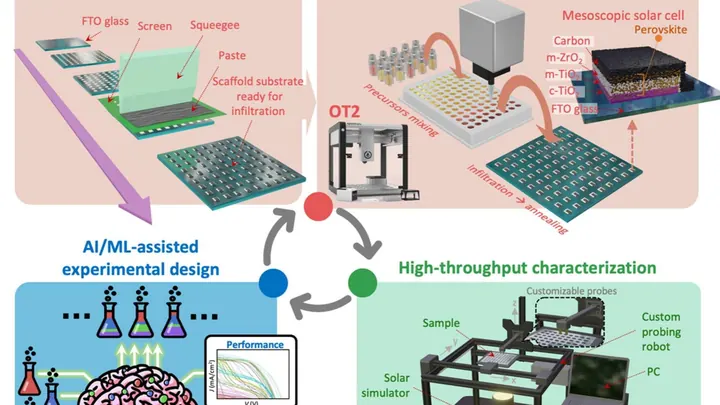
Robust machine learning is used in gravitational wave detection pipelines, particle physics event classification at the LHC, and in materials science for predicting solar cell efficiency from noisy experimental data.
Fun fact
Some robust models are trained by deliberately adding 'fake' noise to clean data, a technique called data augmentation, which can paradoxically make the model more accurate on real, noisy data.
The brain doesn't just react to the world: it's constantly guessing what will happen next. This principle is called predictive coding: neurons compare expectations with reality and update their internal picture when an error occurs. But how such a complex system could be wired into the living tissue of the cortex remained unclear.
A noisy café. You're trying to make out two quiet conversations: one from the table by the window (black hole mergers), the other a barely audible whisper from the far corner (echoes of the universe's birth). But the hiss of the espresso machine and street noise (detector jitter) drown everything out. New work teaches a computer to separate these sounds.
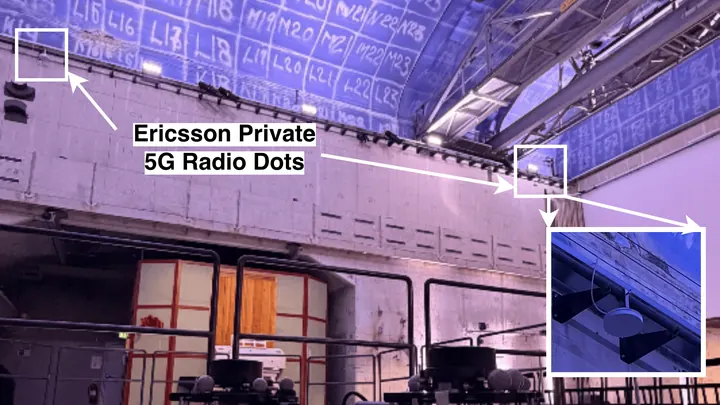
Wireless communication for robots is like a conversation in a noisy workshop, where every word can get lost in the din or arrive too late. In this mess, entropy of the channel, robots fail to yield in time, and coordination breaks down.
Many natural processes are described by differential equations, but scientists often have only fragmentary data — a sort of torn map. The new computational method works like a cartographer who reconstructs a complete map of the terrain from a few landmarks.
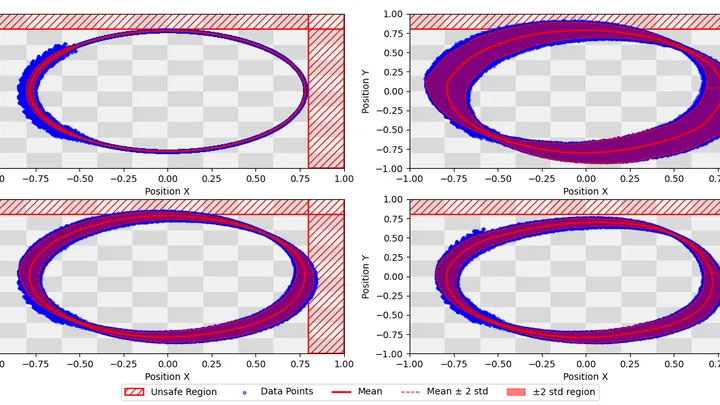
When an unmanned aerial vehicle learns from an experienced pilot, it memorizes not individual maneuvers but entire safe corridors — the trajectories along which the human mentor moved. This approach is called imitation learning: the machine mimics expert demonstrations.
Imagine an experienced chef during rush hour: suddenly a stove fails or a key ingredient runs out. Instead of panicking, he instantly reworks the recipes — speeding up some dishes, slowing down others, reallocating resources on the fly. This principle of dynamic adaptation underpins a new generation of ultra-reliable networks.
A regular radar is like a microphone in a buzzing crowd: individual sounds blend into mush. PiVoT works like a conductor who instantly recognizes each instrument in the tuning chaos. Instead of shuffling through hypotheses, the algorithm tightens a loop around the most likely targets — cars, cyclists, pedestrians.
A sound signal is conveniently represented as a complex number: its modulus (amplitude) reflects loudness, while its argument (phase) indicates the wave's position in time: its instantaneous shift.
Neutron stars are the last clumps of visible matter before collapsing into a black hole. In their interiors, matter is squeezed to trillion-fold densities. Here, nuclear forces and gravity weave into an exotic substance inaccessible to any earthly particle accelerator.
The railway overhead contact line resembles a galaxy: energy flows through it like gravity, with trains becoming planets. The more trains draw current simultaneously, the stronger the voltage fluctuations — gravitational waves ripple through the system, threatening blackouts.
Wireless devices flood the airwaves with signals that blend into chaos — as if everyone in a room started talking at once. Scientists have proposed a solution: smart panels, reminiscent of acoustic tiles. Each cell can either reflect a radio wave on command, like a wall echo, or absorb it, as soundproofing dampens noise.
The railway's electrical network is like an orchestra: trains are musicians whose systems respond differently to current. When their 'electric voices' fall out of tune, disorder arises — a cacophony that can escalate into dangerous voltage rocking.
Ever since Einstein predicted gravitational lensing, and gravitational waves were first heard by LIGO detectors, physicists have dreamed of catching the lensed echo — a repeating signal from one merger, multiplied by the gravity of a massive body.
Gold doesn't lie on the surface: it's hidden in tons of barren rock. To extract a gram of precious metal, prospectors sift through cubic meters of dirt.
A solid electrolyte is not just a crystal lattice: it’s a bustling metropolis for ions. Each act of conduction resembles a trip through the city: there are wide highways with low energy barriers, gridlocks in bottlenecks, and tricky detours where an ion can get stuck.
Perovskite crystals harvest sunlight almost as well as silicon, but cost pennies. Their trouble is an inborn fragility: from warmth and ordinary water in the air, they “get sick.” Inside, disorder builds up, and the shiny plate turns cloudy, losing its abilities within a couple of days.
A radio picks up a broadcast through crackle and hiss. That's roughly how modern quantum computers work: the useful signal drowns in noise. The longer the computation runs, the more the interference distorts the result.
A uranium nucleus is like a tight wallet snapped shut on two halves. To make it burst and release energy (that is, to make the nucleus split) you have to climb over an energy barrier. The height of this threshold determines whether a substance is stable or ready to fall apart at any moment.
The lungs are not two bags but millions of tiny sacs where air enters and blood flows close by. To see how they work, doctors sometimes use MRI without contrast: the scanner picks up weak signals from the tissues themselves. But these signals are like a radio in a thunderstorm — breathing is irregular, pulse jumps, and the image falls apart.
The Taiji detector, planned for launch into space, will pick up the trembling of space caused by collisions of enormous black holes. But its data is frequently marred by random bursts, like static crackling in a radio receiver.
A quantum computer is a finicky instrument. Each measurement of its state is like photographing a fast-moving object: the shorter the exposure, the higher the chance of getting a blurry shot. But if you skillfully process a series of such snapshots, you can reconstruct a clear picture.
That's exactly what the researchers did.
Particle detectors such as resistive plate chambers (RPCs) work like sensitive traps: when a charged particle flies through, it generates an electrical signal. But sometimes the chamber fires a false hit, as if an invisible hand pressed a doorbell. These spurious signals muddy the picture and make it harder to pinpoint the particle's path.
Water in a river flows around rocks, air bends around an airplane wing: these motions are described by equations that are hard to solve even on a powerful computer. Neural networks can approximate such solutions, but they often err when data is collected at only a few points or is noisy.
When a massive star dies and collapses into a supernova, a neutron star is born — a city-sized sphere with the Sun's mass. Its matter is so compressed that a teaspoon weighs more than Mount Everest. Physicists are trying to learn the "recipe" of this matter — the equation of state that explains how matter behaves under extreme pressure.
In particle scattering experiments, the target is often polarized: nuclei are aligned so that their spins point predominantly in one direction. The degree of this alignment affects the collision outcomes.
A crystal that inside resembles a sponge with a labyrinth of pores turns out to be capable of performing computations. The material, named DUT-8, consists of metal nodes and organic linkers forming an intricate lattice. Under the influence of different gases, this lattice slightly changes shape, like a house of cards that rearranges with a gentle breath.
Stars on the outskirts of galaxies rotate faster than predicted by the laws of physics if only visible matter is considered. This paradox was uncovered in the 20th century by Vera Rubin and Fritz Zwicky.
When a top quark is born in a particle detector, it immediately decays into a shower of other particles. Catching a hint of new physics in that shower is like hearing a whisper at a rock concert. You need not just a good microphone, but the ability to subtract the roar of the amplifiers and the hum of the crowd.
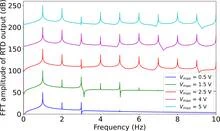
In 1974, physicists first described a device in which electrons pass through an energy barrier thanks to quantum tunneling. Today, that device, the resonant tunneling diode, is becoming the heart of an unusual computing architecture.
Imagine a translator in a noisy hall, trying to catch a speech through the buzz of voices. The usual approach is to memorize a set of phrases and slot them into templates. But when the noise cranks up, the template falls apart.