Time won't disappear when the stars go out ✛
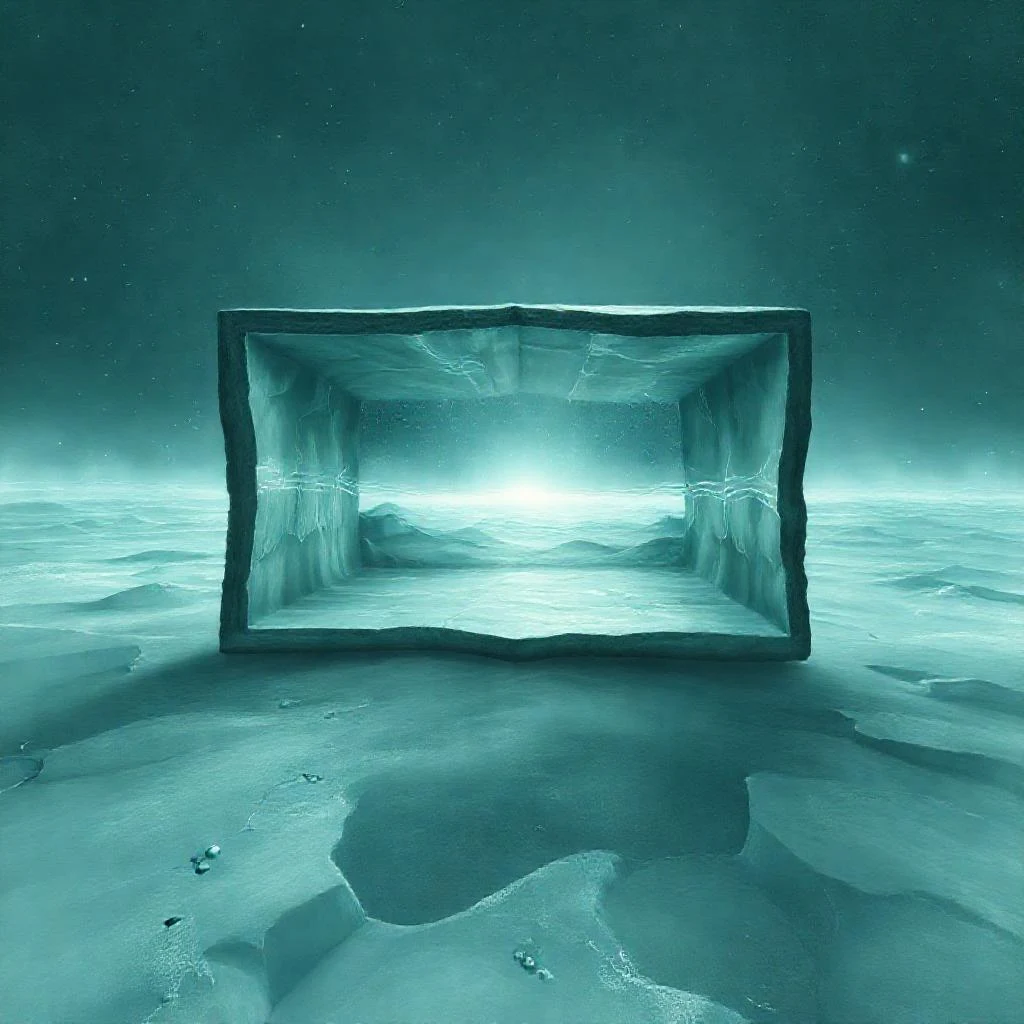
Time is often compared to a river flowing from order to disorder. The growth of disorder — entropy — does set the direction. But Ludwig Boltzmann showed that the river and its current are not the same thing. Time is the riverbed, not the stream. When the Universe expands to its limit and reaches full equilibrium, all processes will stop. Energy will be spread evenly, stars will go out. But time itself, woven into spacetime curvature, will not go anywhere. It will become like a river emptying into a boundless ocean: water is there, but no current. Past and future will lose meaning — everything will merge into a vast 'now'. In such a world, shards of a broken cup could reassemble themselves — the arrow of time would vanish. This knowledge separates the physical essence of time from our usual sense of events.
In the heat death state, temperature will drop to fractions of a degree above absolute zero. A single photon would feel like unbearable heat in such an icy void.
Isaac Asimov, in his story 'The Last Question', described the end of entropy, yet even there time remains a river without a current.