Popular

History and Philosophy of Physics physics.hist-ph

10 articles

History and philosophy of all branches of physics, astrophysics, and cosmology, including appreciations of physicists.

articles

Why Does Time Only Move Forward?

A cup of coffee cools down but never heats up on its own—that's the arrow of time at work. Scientists have discovered: the direction from past to future depends not only on increasing disorder but also on how the cosmos expands.
arXiv:2508.01803 · 2025-08-03

Time won't disappear when the stars go out

Many think time is movement from order to chaos. But physicists found out: even when the Universe cools and everything freezes, time will remain. It will become a river flowing into an ocean: the current is gone, but the water is there. Only the difference between past and future will disappear.
arXiv:2508.14312 · 2025-08-19

Quantum Mind? Can't Do Without the Classical

Scientists have proved: purely quantum systems cannot become agents. To make plans and decisions, you need to copy information about the world, and the quantum no-cloning theorem puts an end to such attempts. The mind requires classical 'parts'. This explains how familiar behavior emerges in a quant
arXiv:2510.13247 · 2025-10-15

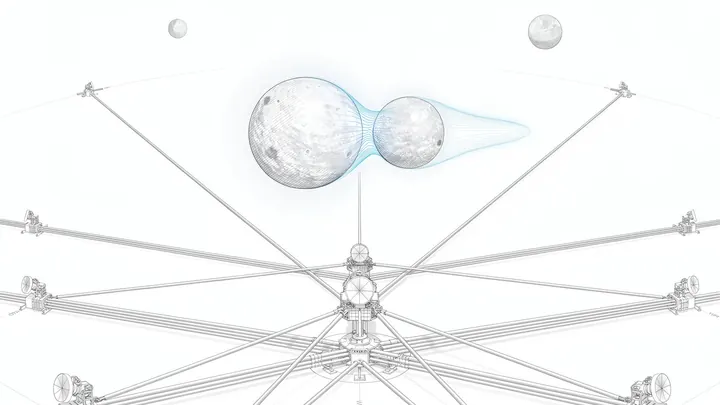
Can gravity entangle particles?

Physicists have found: if gravity obeys only classical laws, it cannot entangle two particles. If entanglement occurs in an experiment, it means something else is at work — dark matter, new fields, or unknown particles. This turns tests of quantum gravity into a search for unexpected forces.
arXiv:2511.19242 · 2025-11-24

Seven Truths That Can't Coexist in the Quantum World

Scientists constructed a logical chain of seven self-evident statements and showed that in the quantum world they are incompatible: any six work, but all seven together never do. Rejecting a particular statement determines which interpretation of quantum mechanics one adopts, and it provides a simpl
arXiv:2512.01982 · 2025-12-01

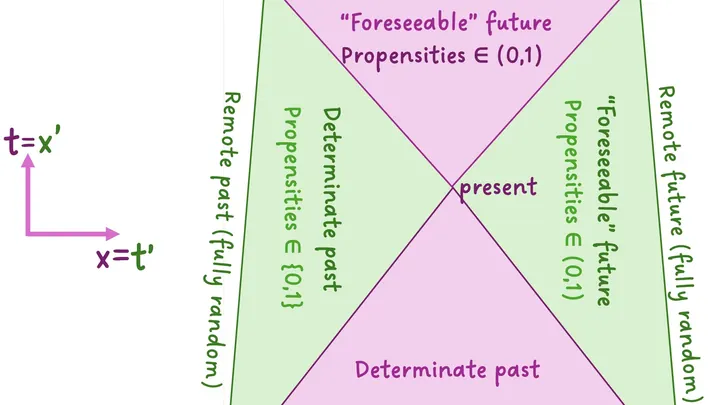
Why Superluminal Signals Tangle Time

To keep the usual order of events with superluminal signals, the world must possess infinite precision—and quantum randomness might turn out to be an illusion.
arXiv:2601.15263 · 2026-01-21

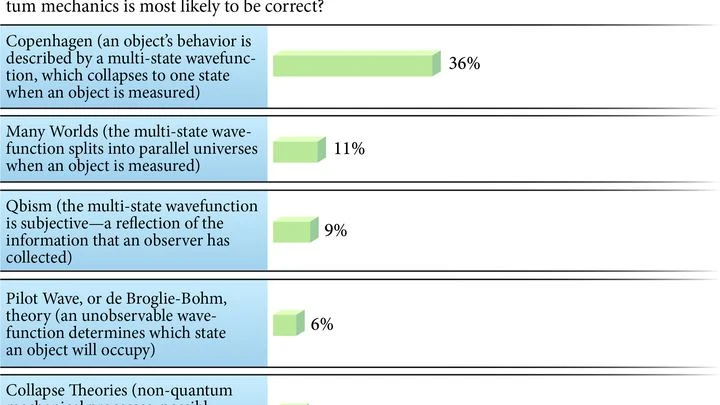
Big Mysteries: Survey Reveals Physicists' Disagreements

Hundreds of scientists answered questions about the deepest mysteries of the Universe. The results showed that topics which seem settled in textbooks actually provoke fierce debate. Science is not a set of dogmas but a living dialogue, and this research confirms it.
arXiv:2605.11058v1 · 2026-05-11

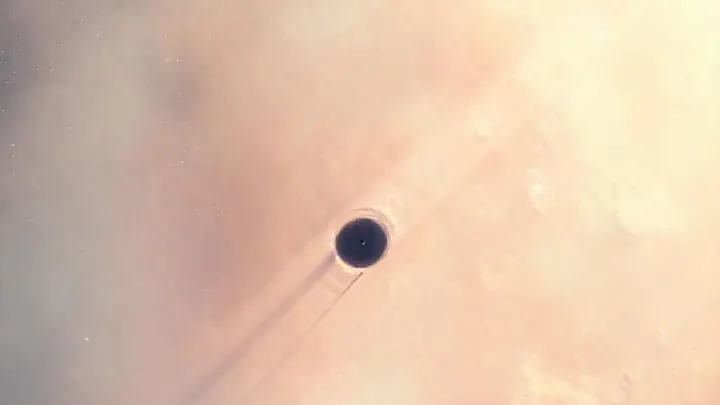
Information — The Shadow of What Never Was

What is information? Not a substance, nor an empty abstraction. Rather, it’s the shadow of all the options that never came to be. When we erase data, the shadow vanishes, releasing a tiny amount of heat. In black holes, this shadow thickens but doesn’t disappear—a puzzle leading to quantum gravity.
arXiv:2606.15120 · 2026-06-13

The Chameleon Star: Where Did Theta Eridani's Brightness Go?

Astronomers discovered that the Theta Eridani system contains three stars, with two inner ones locked in a tight dance. One star ran out of hydrogen fuel, swelled up, and wrapped its companion in a gaseous blanket. Friction inside this cloud triggered a bright flash that lasted for centuries. The fi
arXiv:2606.30748 · 2026-06-29

The Quantum Wave That Gives Birth to the Universe

A physicist found that interpreting a motionless quantum wave as a probability distribution for a particle’s internal clock naturally yields the math of an expanding universe. Gravity becomes unnecessary—spacetime bends purely from statistical chances. This offers a route to merging quantum physics
arXiv:2607.05020 · 2026-07-06