Twilight of Time: Why the Arrow Fades but Time Endures ✛
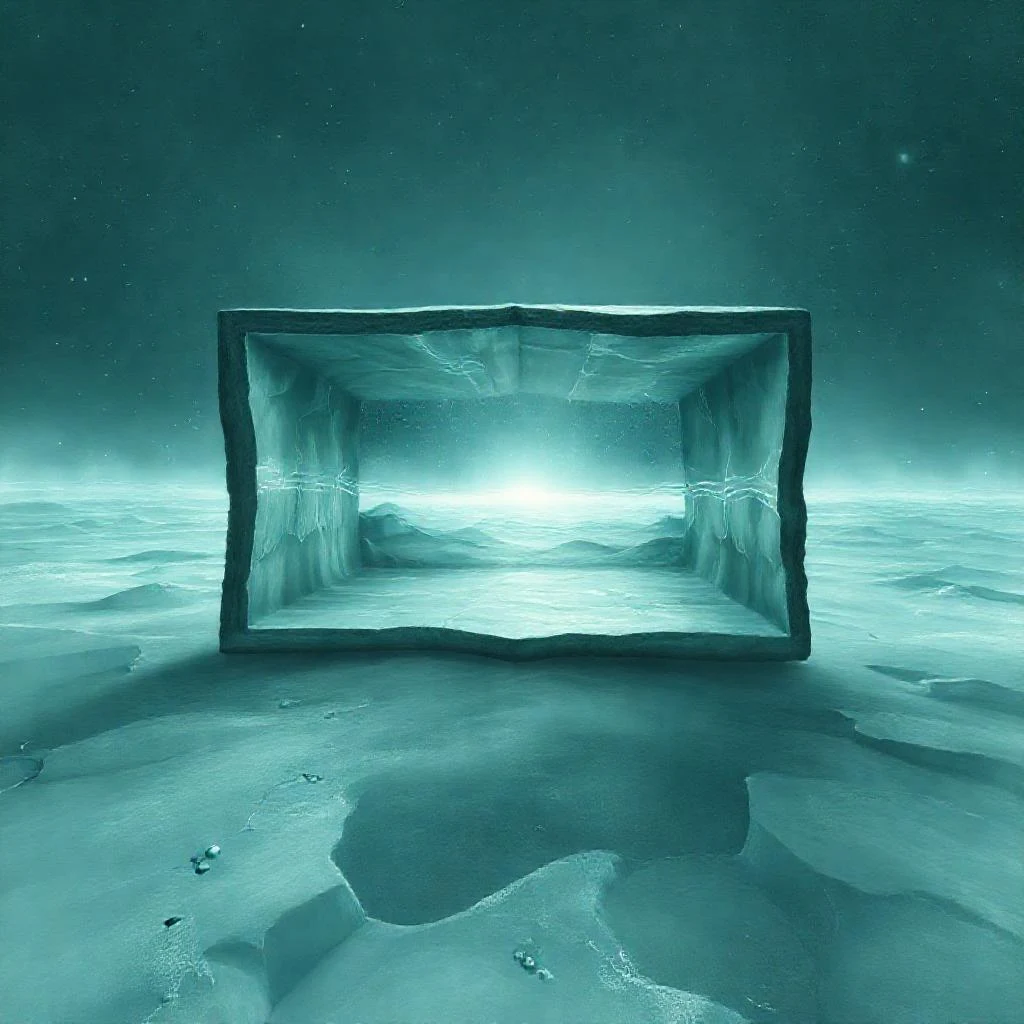
When entropy reaches its maximum, the play is over. The curtain falls, the actors leave, the scenery freezes. But the stage remains. So it is with time: the heat death of the universe erases the direction 'past—future', but not time itself. It continues to exist as a geometric structure, sustained by quantum vacuum fluctuations.
Entropy—a measure of disorder—often seems synonymous with time. The second law of thermodynamics says that disorder increases, and this increase sets the arrow of time. But this is a confusion of categories. Comparing entropies S(t2) > S(t1) already presupposes temporal ordering: without time, one cannot say that 'later' is greater. Entropy is a plot unfolding on the stage of time, not the stage itself.
In the state of heat death, all macroscopic gradients vanish. There are no energy flows, no chemical reactions, no life. But the quantum vacuum—the ground state of fields with unavoidable fluctuations—continues to live. Correlation functions of fields depend on the time interval, and the de Sitter horizon temperature sets a characteristic scale. Time persists as a pure sequence, devoid of direction.
It once seemed that time was identical to entropy or reducible to it. What happens to time at the heat death of the universe remained unclear. Now it has been shown: entropy provides only the arrow of time, not time itself. Even at maximum entropy, the temporal structure persists thanks to vacuum fluctuations and geometry. This conclusion is reached by logical analysis of the foundations of physical theories—identifying the presupposition of time in all formalisms and demonstrating the categorical error of identification. It can serve as a conceptual basis for programs in quantum gravity and cosmology, where time must emerge from more fundamental structures, and it clarifies philosophical debates about the nature of time.
Even in absolutely empty space, at zero temperature, fields do not freeze: the uncertainty principle forces them to fluctuate continuously. These fluctuations can be seen as the ticking of the most fundamental clocks, which will never stop.
In Isaac Asimov's novel 'The Last Question', a supercomputer at the end of time, when the universe has reached maximum entropy, still exists and operates—echoing the article's idea that time does not disappear even in heat death.