How Entropy Builds a Black Hole
A black hole is not just a dark spot in space. It has a temperature, and it radiates. It has entropy — a measure of hidden information encoded on its horizon's surface, like a pattern on a soap bubble.
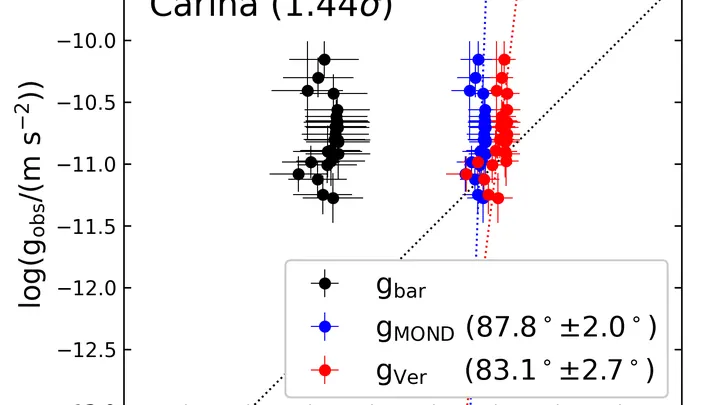
A theory proposing that gravity emerges from the statistical behavior of microscopic degrees of freedom.Entropic gravity is a theoretical framework suggesting that gravity is not a fundamental force but an emergent phenomenon arising from the statistical behavior of microscopic degrees of freedom, much like temperature emerges from the motion of atoms. The idea, most prominently advanced by Erik Verlinde in 2009, posits that spacetime itself is an emergent entity and that gravitational attraction is a consequence of the tendency of a system to maximize its entropy. In this view, when matter is present, it alters the information content of a holographic screen, creating an entropic force that manifests as what we call gravity.
The concept was proposed by Erik Verlinde in his 2009 paper 'On the Origin of Gravity and the Laws of Newton', building on earlier work by Ted Jacobson (1995) who derived Einstein's equations from thermodynamics, and on the holographic principle from string theory.
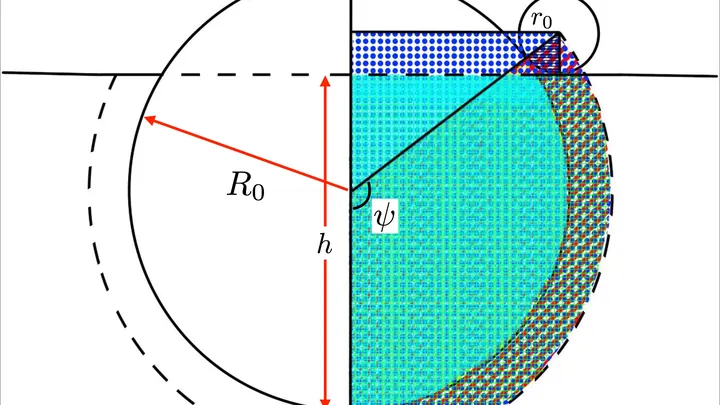
The mechanism draws on the holographic principle and thermodynamics. Imagine a spherical holographic screen enclosing a mass. The screen is divided into cells, each holding one bit of information, and the total number of bits is proportional to the screen's area. When a test particle approaches the screen, it changes the entropy distribution on the screen. By applying the equipartition theorem (energy is equally distributed among degrees of freedom) and the thermodynamic relation F·Δx = T·ΔS (force times displacement equals temperature times entropy change), one derives an entropic force that follows the inverse-square law, matching Newton's law of gravity and, with relativistic corrections, Einstein's field equations.
Currently, entropic gravity is a theoretical proposal with no direct technological applications, but it inspires research in quantum gravity, black hole physics, and cosmology, potentially guiding future experiments that probe the quantum nature of spacetime.
Verlinde's entropic gravity paper was downloaded over a million times within months of its release, making it one of the most-discussed physics preprints of the decade.