Time is a fundamental dimension in which events occur sequentially, from the past through the present to the future. It is not just a backdrop for events but an active participant in the laws of physics, intertwined with space in the fabric of spacetime. The nature of time—whether it flows, whether it has a beginning, and why it appears to have a preferred direction—remains one of the deepest questions in physics, touching on relativity, quantum mechanics, and cosmology.
History
The modern understanding of time began with Isaac Newton's absolute time, but was revolutionized by Albert Einstein's special and general relativity in the early 20th century, which showed that time is flexible and linked to space. The thermodynamic arrow of time was formalized by Ludwig Boltzmann in the late 19th century.
How it works
In Einstein's theory of relativity, time is not absolute but relative: it ticks at different rates for observers in different gravitational fields or moving at different speeds, a phenomenon known as time dilation. The 'arrow of time'—the fact that we remember the past but not the future—is linked to the second law of thermodynamics, which states that entropy (disorder) tends to increase in a closed system. This statistical tendency gives rise to the perceived flow of time, even though the fundamental laws of physics are time-symmetric.
In practice
Time dilation is a real effect that must be accounted for in GPS satellites, which experience slightly slower time due to their orbital speed and higher altitude, requiring corrections to maintain accurate positioning.
Fun fact
At the event horizon of a black hole, time as measured by a distantobserver appears to come to a standstill, a consequence of extreme gravitational time dilation.
A mail carrier delivers letters along one-way streets. As long as he only drives forward, the route is simple and predictable. But if U-turns are suddenly allowed, he'll start doubling back, crossing his own tracks, and the delivery pattern gets tangled. That's roughly how an infection behaves when people can get sick more than once.
In the grand orchestra of the universe, every instrument has its own rhythm. Electrons in an atom make quantum leaps in femtoseconds, neurons in the brain exchange signals in milliseconds, and a human needs tenths of a second to become aware of the 'now.' Physicists have long sought the conductor…
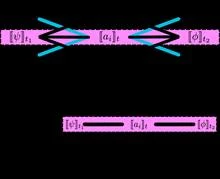
Light cones are not about light; they are boundaries in spacetime that separate causes from effects. These cones are not rigid: a massive object curves them, like a heavy ball pressing into a stretched sheet.
You can zoom into a high-resolution photo for a long time — until suddenly a smooth face dissolves into individual pixels. Something similar, according to a new study, happens to spacetime itself. The authors propose that tiny intervals of length are not pre-existing 'parts' of the universe but results of measurements.
An old mechanical alarm clock ticks on the shelf. You hear the steady sound, see the hands moving, and you're certain time is passing. But if you take the clock apart, you won't find a single part labeled "time." Only springs and gears.
A translator gets distracted by every rustle in the hall, and a one-hour meeting stretches into two. That's roughly how ordinary quantum mechanics works: a particle evolves in time, while space serves as the stage. But what if we swapped their roles? Then the particle 'moves' through space, and time becomes a static backdrop.
A doctor holds a stack of test results taken at different times. Each sheet on its own is just a snapshot of a single day, but what you want is a whole movie of how the disease unfolded. A neural network called Tempo learns to glue these scattered frames into a smooth reel.
According to Einstein, spacetime is a flexible fabric, curved by matter. But in the quantum world, everything is different: particles are smeared over a probability cloud, governed by a rigid rule discovered by Max Born.
It all started with tiny quantum flickers on the primal canvas. Inflation — an avalanche-like expansion proposed by Alan Guth — stretched those brushstrokes to the scale of galaxies.
A raindrop falling to the ground strikes with a certain force. But what if the drop isn't round but elongated like a cigar or flattened like a pancake? It turns out that shape is everything: the impact force can vary by more than a factor of ten just because of how the drop looks at the moment of impact.
Two phones with identical batteries: one charges in a basement with a weak signal, and the process goes slower. The battery percentage here plays the role of a clock hand. Physicists applied the same logic to the quantum world. Their clock is a microscopic battery that stores energy. The charging rate depends on a hidden quantum 'mode'—like a switch.
A stone drops into a pond — ripples spread across the water. Do short waves outrun long ones? No, in deep water it's the opposite: long waves overtake short ones. In metal, sound of one pitch travels at one speed, another pitch at another.
A thin thread in a water flow is like a hair in a shower stream. If you jerk the water back and forth, the hair either stretches out with the flow or crumples up. The researchers took real protein threads (actin, which makes up muscles) and placed them in a microscopic channel where the fluid oscillated at different frequencies.
Time in quantum mechanics is like a shadow on a wall: we see its motion, but we cannot grasp the shadow itself. The Schrödinger equation describes how a system's state changes, but time enters it as an external parameter that nothing measures.
When entropy reaches its maximum, the play is over. The curtain falls, the actors leave, the scenery freezes. But the stage remains. So it is with time: the heat death of the universe erases the direction 'past—future', but not time itself.
The clock on the kitchen wall ticks, and each tick relentlessly carries us from breakfast to lunch. This is so familiar that it seems like a law of nature, but physics says otherwise. In Einstein's equations, time is reversible: you can rewind the film, and no frame will give the trick away.
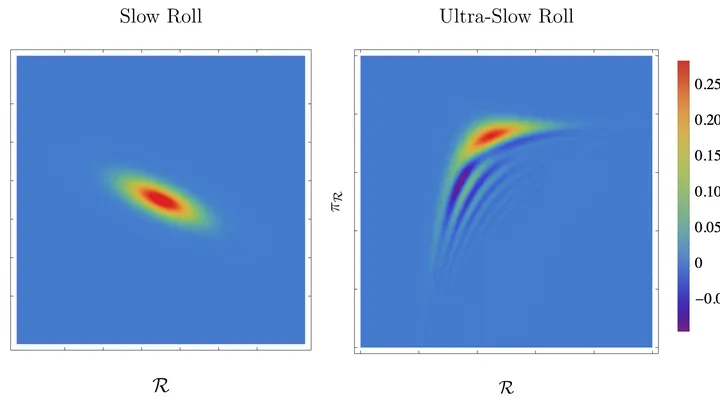
At night, an astronomer points a telescope at the edge of the visible universe and sees not stars but ripples — the imprint of the first moments. He knows these ripples should obey statistics, like the heights of people in a crowd. But he has only one crowd, and nothing to compare it with.
This is cosmic variance.
A postal money order doesn't arrive instantly but after a set delay, and the amount credited to the recipient's account ends up larger than what the sender deposited in cash. That's roughly how the new protocol, dubbed temporal quantum energy teleportation (TQET), works.
In ordinary quantum energy teleportation, two parties, Alice and Bob, share a common quantum state.
A woven basket holds its shape not because it has a rigid frame, but because each strand is interlaced with its neighbors. Pull one out, and the pattern unravels, leaving a heap of twigs. Quantum mechanics, according to a new paper, works the same way: its elementary objects do not exist independently, but only in interweaving with each other.