Are you one of the authors of this paper? Email us from your institutional or work email address mentioning this article's arXiv ID and we'll verify you and give you edit access to this page.
Are you an author who sees something we missed or got wrong? Write to us — the subject line already carries the paper id. We read every note and correct the write-up.
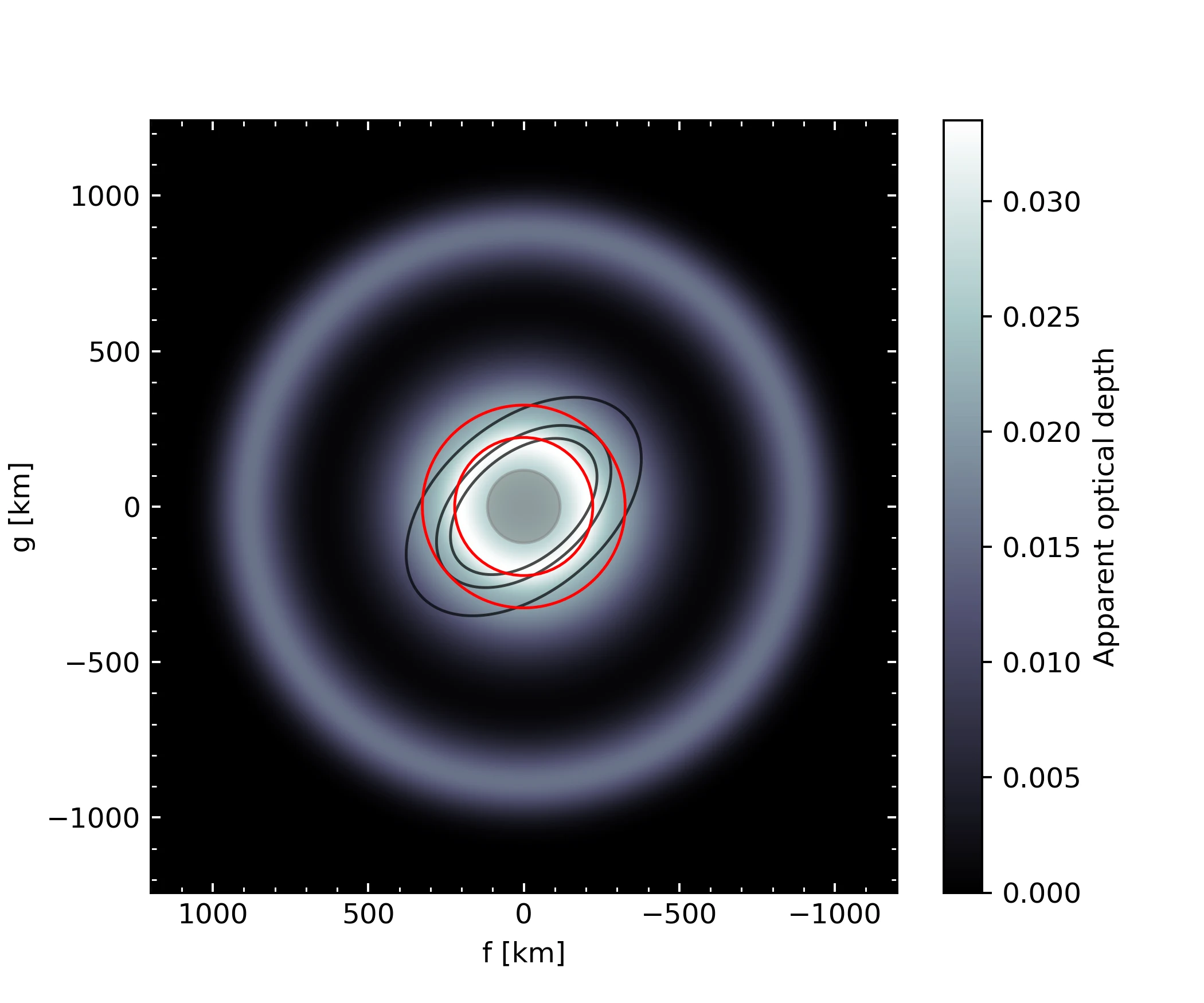
The outermost ring lies in a forbidden zone: where, by the rules, moons should be born, not rings assemble.
Gravitational forces no longer tear the dust apart, allowing it to clump together. Why we see another hoop instead of a moon is unknown. Nearby — a dust disk and a tiny object off to the side: likely a moon embryo.
Chiron is only the fourth small world with rings, and its icy round dance turned out to be inconstant.
Comparing images over 30 years showed: the rings are changing. Today we see a new planetary system, of snow and stones, coiling around the icy wanderer.