Quantum Bounce: How the Universe Became Uniform express
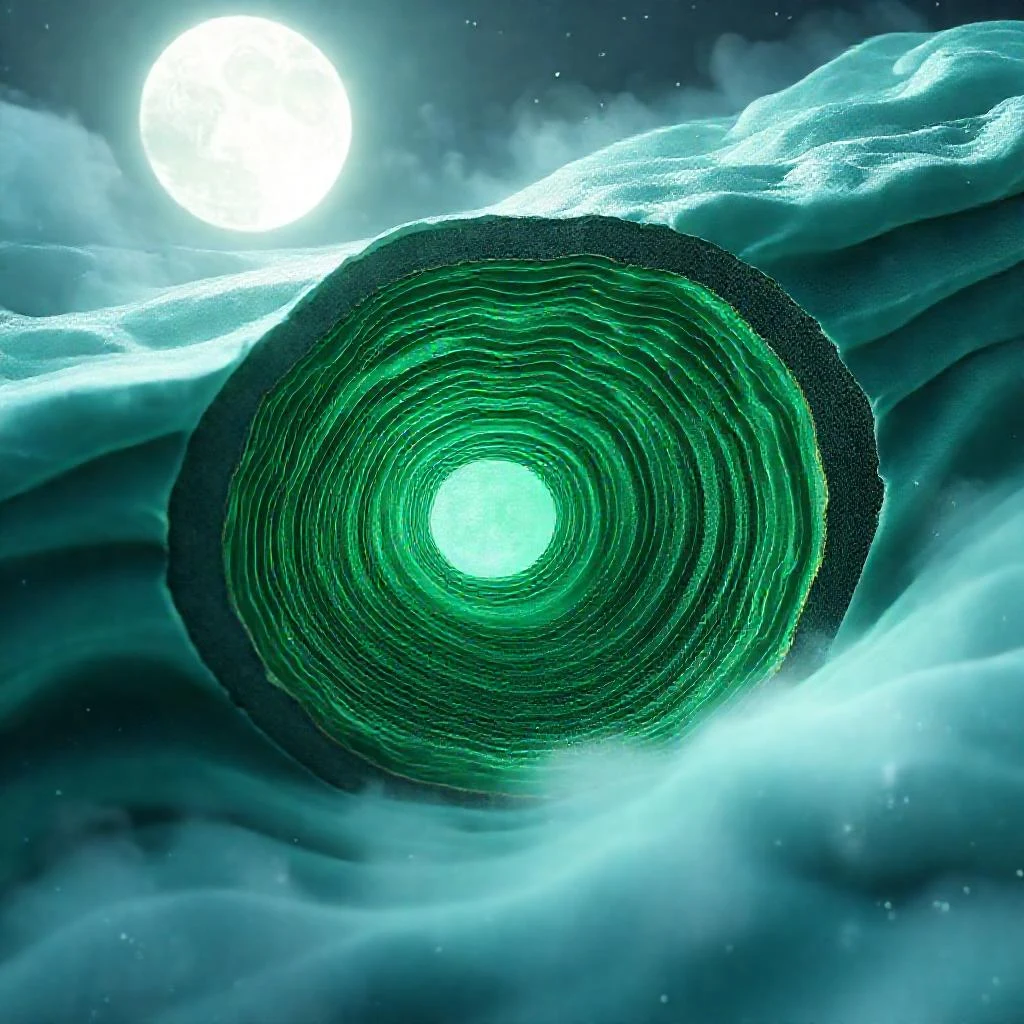
The early universe was far from perfect: some regions stretched faster than others, creating folds and warps. But a quantum bounce — the transition from contraction to expansion, driven by the laws of the microworld — fixes everything. Instead of a Big Bang with its crushing density, the universe first contracts, and then, due to quantum corrections to spacetime curvature, it rebounds and begins the expansion of the universe. At that moment, all irregularities vanish, like wrinkles in a sheet when you sharply tug on its corners.
Amazingly, this mechanism works for any composition of matter — whether particles, radiation, or something else. The outcome doesn’t depend on what the ‘sheet’ of the cosmos is made of.
During a quantum bounce, the fabric of space doesn’t collapse into a point of infinite density but smoothly unfurls, like a crumpled sheet after a swift tug.