Worlds with Eternal Magma Oceans express
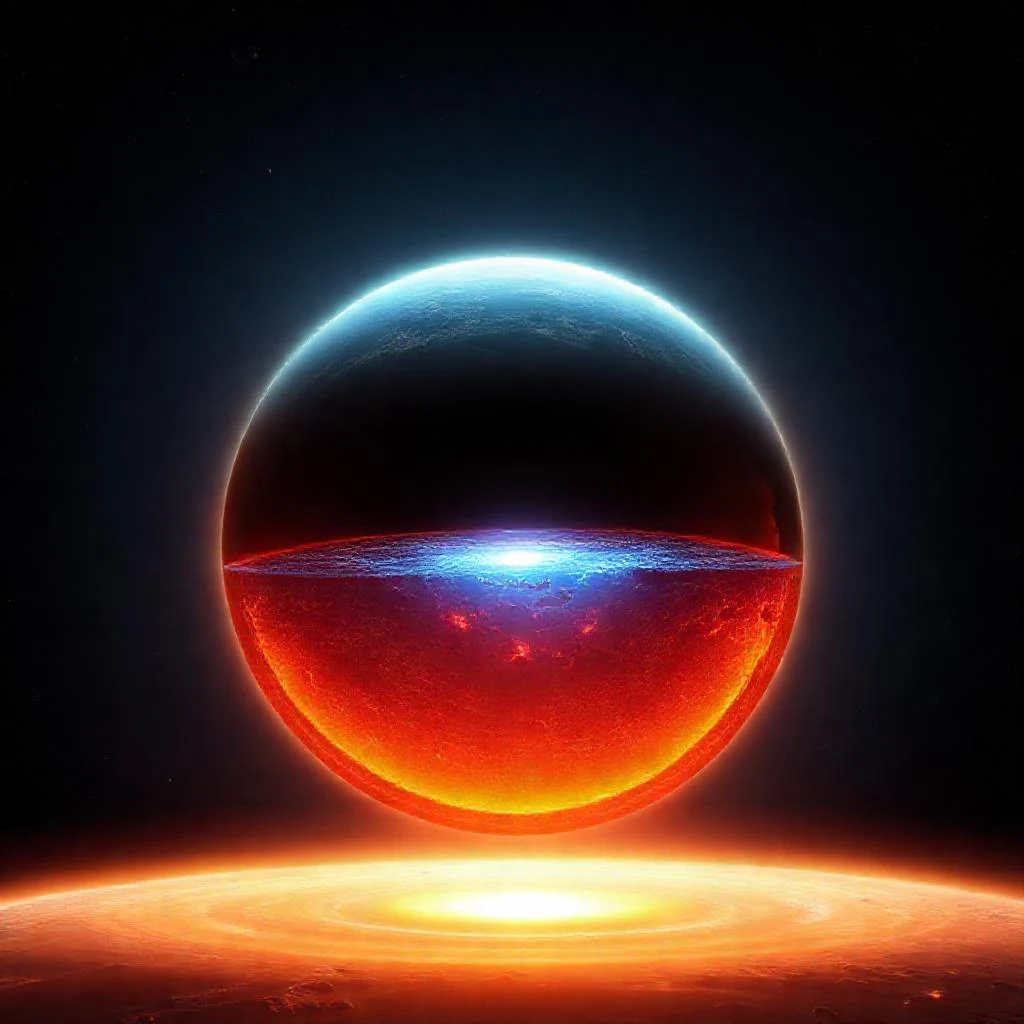
A star warms its planet like an oven warms a kettle. For most sub-Neptunes (worlds larger than Earth but smaller than Neptune), the heat is enough to keep an ocean of molten rock eternally churning beneath a hydrogen sky. A computer model revealed that 98% of such known planets remain molten inside — provided they truly resemble gas dwarfs with a light atmosphere of hydrogen.
If a planet has a lot of oxygen inside and carbon outside, its atmosphere gets heavier and cools faster. But for most worlds, the internal fire hasn’t gone out. This flips our understanding upside down: we used to think such bodies freeze solid over billions of years, but it turns out their interiors are still blazing.
Sub-Neptunes are the most common planet type in our galaxy, yet none exist in our Solar System.