X-ray Without a Camera: How to Film a Spinning Engine express
An X-ray image is like a photograph taken in the dark with a very short flash: anything that moves comes out blurred. Conventional X-ray detectors are large arrays of millions of pixels, and by the time they read out one frame, the next is already missed. For a spinning turbine or a beating heart, such sluggishness is a death sentence.
A team of researchers sidestepped this problem by ditching the array altogether. Instead, they use a single, highly sensitive detector that captures the entire X-ray flux at once. In front of the object, they place a mask with a random pattern of opaque and transparent areas. The mask spins rapidly, the pattern changes, and the detector records a series of numbers, as if you were looking at the world through flickering shadows. Then a computer, knowing which patterns were present at each moment, reconstructs an image from those numbers. This approach is called ghost imaging: the image is born not from a direct snapshot but from correlations between patterns and signals.
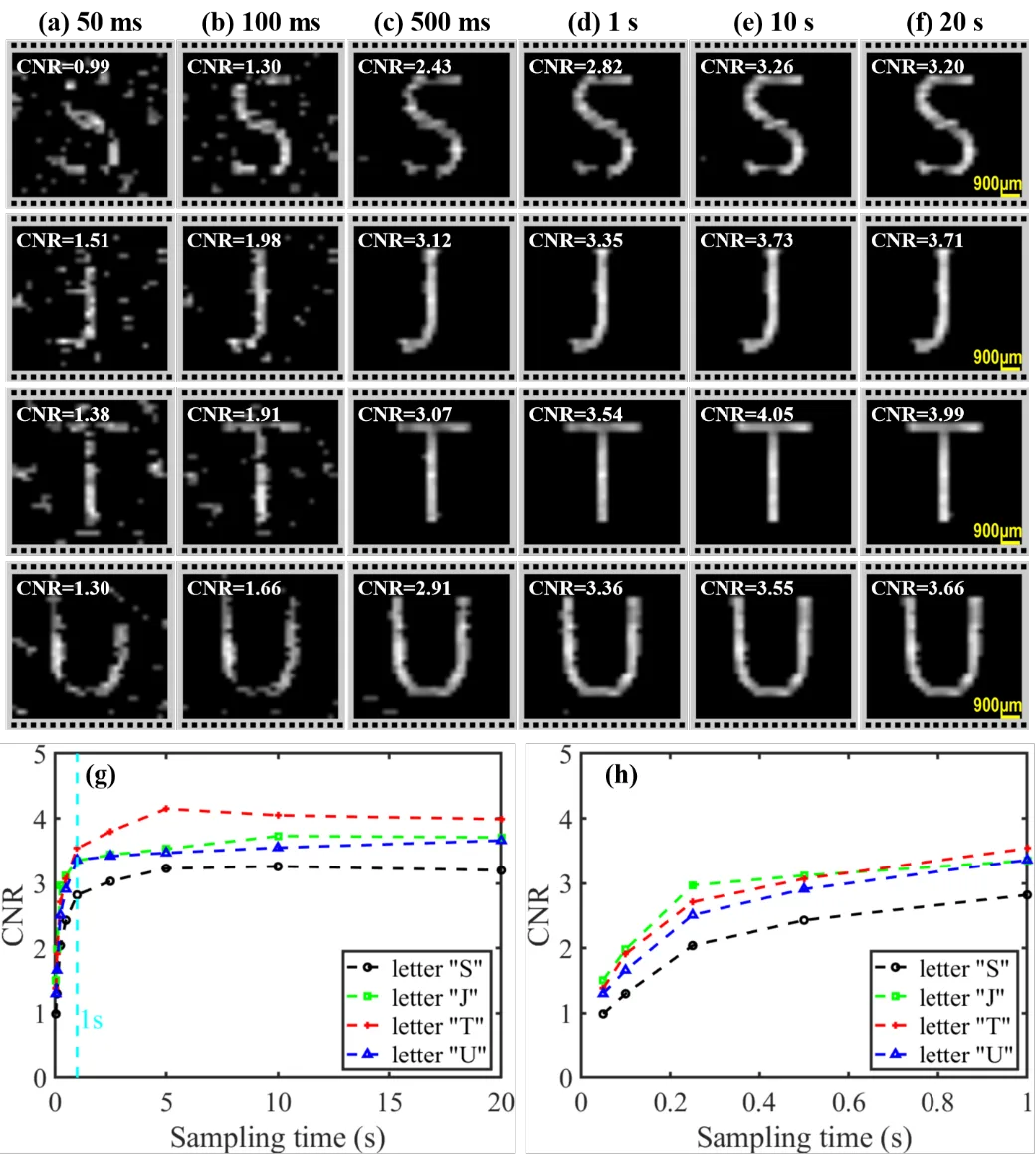
Previously, ghost imaging for X-rays was too slow: each frame took minutes. The new method with a fast mask speeds up imaging to 200 frames per second, and details as small as 225 micrometers, thinner than a human hair, remain discernible. For the first time, clear X-ray video of moving objects has been captured at such speed.
Now you can look inside a running aircraft engine and see how the compressor blades vibrate at full throttle. Or take a chest X-ray while the patient breathes, without asking them to hold still. The method opens the door to X-ray "cinema" where previously there were only static images.
A resolution of 225 micrometers is roughly the thickness of two sheets of paper. With such detail in X-ray video, you could spot a crack in a turbine blade while it spins at thousands of revolutions per minute.
Ghost imaging is reminiscent of the "shadow maps" in science fiction, where an image is reconstructed from scattered light reflected off walls, like in Ted Chiang's "Story of Your Life," where characters learn to read the world from barely perceptible signals.