method

real time imaging

Capturing images of a process as it happens, without delay, to observe dynamics directly.
25 related articles

Description

Real-time imaging is the set of techniques that capture visual data of a process as it unfolds, with minimal delay between the event and its observation. Unlike traditional photography or microscopy that produce a static snapshot, real-time imaging creates a continuous stream of frames, effectively a movie, that allows scientists to see dynamics directly. This is crucial for studying phenomena that are too fast, too slow, or too complex to be understood from a single image, such as chemical reactions, biological processes, or material transformations.

History

The concept has evolved with technology, from early high-speed photography in the 19th century to modern ultrafast techniques. The specific development of real-time imaging as a scientific tool is intertwined with the history of photography, cinematography, and electronic sensors, with no single inventor.

How it works

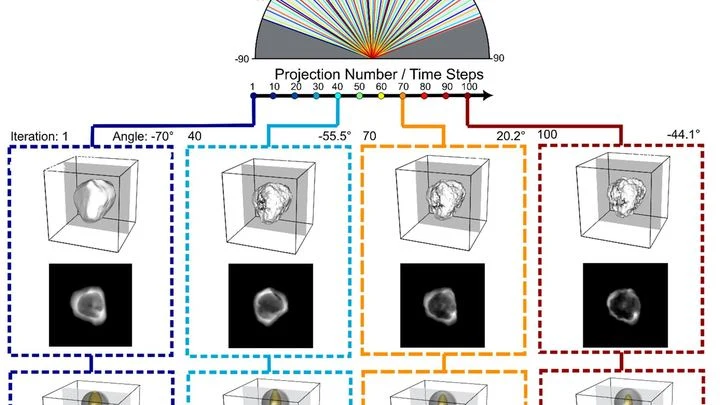
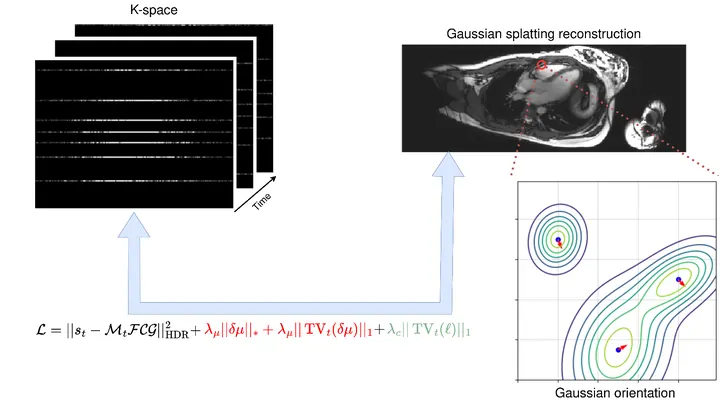
The core of real-time imaging is the ability to acquire and process data faster than the timescale of the process being observed. This is achieved through a combination of high-speed detectors, fast electronics, and clever data processing algorithms. For example, in ultrafast electron microscopy, a laser pulse triggers a reaction, and a second, delayed pulse captures the state of the sample at a specific moment. By varying the delay, a series of snapshots can be assembled into a movie. In medical imaging, like real-time MRI, advanced reconstruction algorithms (e.g., using Gaussian spots) allow images to be generated from less data, speeding up the acquisition without sacrificing quality.

In practice

Real-time imaging is used in medical diagnostics (e.g., ultrasound, real-time MRI), industrial quality control, and fundamental research, such as observing atomic motion in materials or tracking chemical reactions.

Fun fact

Some real-time imaging techniques can now capture processes that last only a few hundred attoseconds (10^-18 seconds), which is to a second what a second is to the age of the universe.
Concept graph →

Related articles · 25

Optics That Fix Themselves
An orchestra of a hundred musicians plays without a conductor. Every instrument is tuned perfectly, but one violin goes slightly off, and the harmony falls apart.
FPGA Turns a Radio Telescope into an Instant Camera
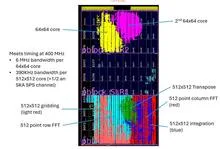
A radio telescope with thousands of antennas is like a giant ear that hears the whole sky at once. But an ear cannot draw a picture: signals from every pair of antennas must be multiplied, and in an array of ten thousand elements there are already fifty million pairs. A classical correlator does exactly that, and its complexity grows as the square of the number of antennas.
Signal Processing2026-07-161 minarXiv:2607.14851express
Flying Radio Mirror: A Drone That Steers Its Own Signal
A mirror can direct a reflected beam onto one spot, even as it rotates. Engineers borrowed this trick for radio waves, building a smart mirror on a drone. It cancels out shakes and vibrations on the fly: it anticipates the drone's movements and instantly re-aims to keep the signal crisp.
Image Processing2026-07-161 minarXiv:2607.15073express
World in Flickers: How a Camera Assembles an Image from Flashes
Unlike regular cameras, event-based ones only record moments when light becomes brighter or dimmer. They don't produce snapshots; instead, they send an endless stream of such flashes. Scientists turned this stream into a sharp picture of the Earth while flying over it on a satellite. Each flash is like a piece of a mosaic; together they form a still image.
Image Processing2026-07-151 minarXiv:2607.13601express
Video Instead of Dozens of Shots: Urine Analysis Made Easier
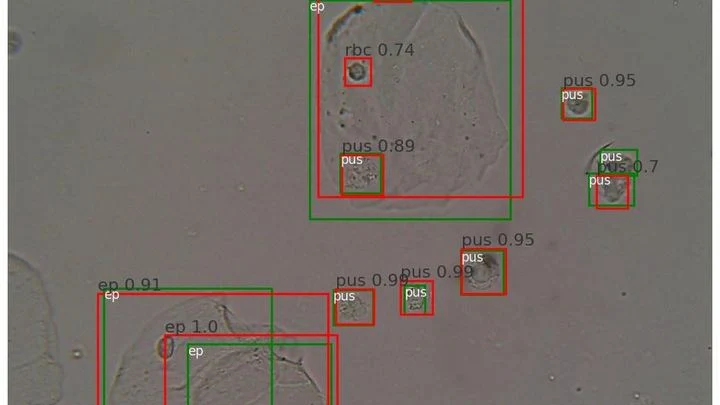
A drop of urine under a microscope isn't a flat puddle but a multi-layered volume. Like a stack of transparent pages: if you focus on one, the neighboring ones blur. The microscope's light only shows one depth layer sharply. To see all the cells, a lab technician had to take a series of snapshots, manually adjusting focus — tedious and slow.
Computer Vision2026-07-141 minarXiv:2607.12874express
Synthetic Deception: How Fake Images Teach Computers to See the Truth
A cook who learns to cook from hand-drawn pictures risks ruining every dish. The same trap awaits computer vision: models need thousands of labeled images, but collecting them manually is expensive and tedious. Synthetic frames solve the problem, but only if they look real.
Quantum Optics of Decay: A Crisp Snapshot of Vacuum Bubbles
A false vacuum is not just a supercooled liquid, but a quantum hologram, ready to spring to life under the right projection. Its decay is described by the tunneling of a quantum field from a metastable minimum, and the classic calculation via Euclidean instantons is as elegant as a still life under spotlights.
Medical Physics2026-05-242 minarXiv:2605.24815express
How to Make MRI See a Beating Heart
A photographer shoots a runner with a long exposure and gets a blurry silhouette. That's roughly how a standard MRI scanner "sees" moving organs: the heart contracts, the lungs breathe, and the image smears. To avoid this, patients are asked to freeze and hold their breath. But for a child or someone short of breath, that's nearly impossible. The method called GRASP tackles the problem differently.
Quantum Gases2026-05-221 minarXiv:2605.23881express
Time Crystals: Eternal Ticking Clocks Made of Atoms
A time crystal resembles an eternal clock: its atoms spontaneously perform rhythmic movements. In ordinary clocks, a pendulum is driven by a spring or battery, but here the motion arises without an energy supply — the system simply returns to its initial state at regular intervals. This idea was proposed by Frank Wilczek in 2012.
Instrumentation2026-05-172 minarXiv:2605.17546express
How to Assemble a Galaxy in One Step
An artist paints a portrait stroke by stroke, and then someone offers them a flash camera — one click, and it's done. That's roughly the shift from multi-step models to one-step models in generating images of galaxies. Typical neural networks for image synthesis work like a watercolorist: they apply a layer, blur it, add details.
Materials2026-03-311 minarXiv:2603.29462express
Movies for the Nanoworld: Watching Atoms in Motion
A tiny gold star melts under the beam of an electron microscope, its points slowly rounding off. In the past, such a process could only be seen in snapshots taken with long pauses, and the probing beam itself would alter the sample.
Medical Physics2026-03-232 minarXiv:2603.21980express
Heart MRI in a minute: how Gaussian blobs speed up scanning
An MRI scanner is like a camera that photographs your insides, but very slowly. The patient has to lie still for several minutes while the heart keeps beating. If the person moves or the rhythm goes off, the image blurs. Doctors then have to repeat the scan, wasting time and nerves.
Optics2026-03-192 minarXiv:2603.18365express
A Camera That Sees Color and Motion at Once
A regular camera captures the world as a series of frames: twenty-four, sixty, or even a hundred images per second. That's enough for filming a falling drop, but inside a living cell, events unfold a thousand times faster. Protein molecules carry cargo, membranes bubble, ions slip through channels — all in fractions of a millisecond.
Optics2026-03-131 minarXiv:2603.12729express
Laser Tape Measure with Micrometer Precision
A standard laser rangefinder works like a stopwatch on a 100-meter dash: it times how long light takes to run to the target and back. But such a stopwatch has a limit: it ticks in steps of tens of picoseconds (trillionths of a second). In that step, light travels about a centimeter, so finer details are invisible.
Superconductivity2026-03-121 minarXiv:2603.12473express
The Superconductor That Refuses to Die Quickly
A superconductor is a material that, when cooled sufficiently, conducts electricity without losses, like water flowing through a perfectly smooth pipe. But if you hit it with a brief flash of light, it quickly loses this property.
Materials2026-02-241 minarXiv:2602.20432express
Robot Chemist Hunts for the Perfect Film
A chef tastes the soup after every pinch of salt and instantly decides what to add next. That's roughly how the new setup for growing thin crystalline films works — except instead of taste, it uses an image from an electron microscope, and instead of a chef, a computer program.
Medical Physics2026-02-242 minarXiv:2602.21437express
Why Smart Methods Don't Reach Hospitals
Every breath in and out shifts internal organs by several centimeters. For an MRI scanner imaging the abdomen, this is like photographing a runner with a long exposure — the image comes out blurred. Clinicians have long known how to deal with this: they ask patients to hold their breath or take a series of fast snapshots between breaths. These methods are simple but effective.
Medical Physics2026-02-221 minarXiv:2602.19264express
A Carpet of Heartbeats
The heart beats, and on a paper ECG strip, each beat looks like a sharp spike with two humps: a quick rise, then a smaller wave, then a descent. A doctor looks at such a strip and sees the rhythm, but the shape of each spike, how exactly the muscle contracted, is hard to discern, especially if the recording lasts a full day. This new method turns that strip into a colorful carpet.
Medical Physics2026-02-131 minarXiv:2602.12917express
Ultrasound Keeps an Eye on the Spine
Your back hurts, and the doctor asks you to bend forward and backward to see how your vertebrae move. Usually, this means a series of X-rays: they show motion, but only in a plane, like a shadow on a wall. And volumetric methods like CT scans can't keep up with movement. Engineers proposed a different approach: a robot sweeps an ultrasound probe over your back while you bend.
Medical Physics2026-02-031 minarXiv:2602.03744express
Spectromicroscopy: Seeing the Unseen in Just 4% of Measurements
A chemical map of a sample is like a mosaic: each point has its own color, its own chemical composition. To assemble such a mosaic, a spectromicroscope scans the sample point by point, recording a spectrum at each location — a "fingerprint" of how the material absorbs or emits light.
Optics2026-01-171 minarXiv:2601.12162express
A Camera That Sees the Unseen
Light is like a many-voiced choir: color, direction of oscillation, and instantaneous changes all intertwine. An ordinary camera hears only one voice, while the rest are lost. Scientists have built a camera that listens to the entire choir at once, and from a single image understands what is happening.
Materials2026-01-081 minarXiv:2601.05018express
Watching a Material Change in Trillionths of a Second
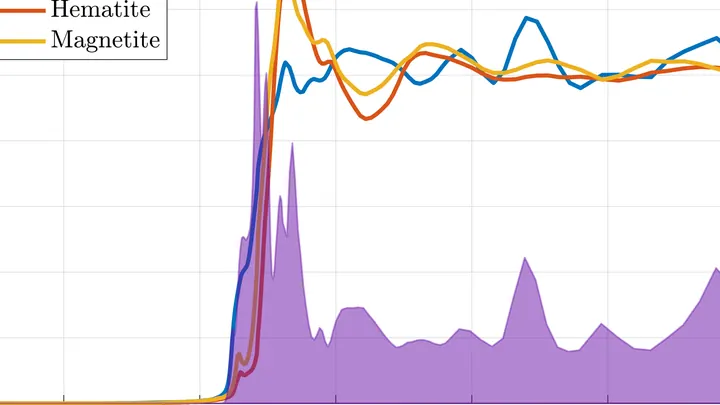
Vanadium oxide is a material that can act as an insulator, not conducting electricity, or as a conductor, like a metal. The switch takes trillionths of a second, and that's what makes it a candidate for ultrafast electronic devices. But exactly how it happens has long been a mystery.
Optics2026-01-022 minarXiv:2601.00552express
X-ray Without a Camera: How to Film a Spinning Engine
An X-ray image is like a photograph taken in the dark with a very short flash: anything that moves comes out blurred. Conventional X-ray detectors are large arrays of millions of pixels, and by the time they read out one frame, the next is already missed. For a spinning turbine or a beating heart, such sluggishness is a death sentence. A team of researchers sidestepped this problem by ditching the array altogether.
math.NA2024-07-152 minarXiv:2407.10931
The Climate Clockwork: New Math Captures Seasonal Rhythms
Every winter, the Pacific Ocean warms slightly off the coast of Peru, and every summer it cools. This rhythm is set by the gears of the climate machine, but some turn fast, others slow, and still others speed up or stall. Linear inverse models have helped us glimpse these gears in data for decades, but they were blind to seasonal changes in pace.
How to Make Images Taken in Different Languages Get Along
Two images of the same place: one taken in the morning from a drone, the other in the evening from a satellite. The first shows shadows from trees, the second shows glints on the water. It's like two accounts of the same event in different dialects: the words are similar, but the grammar is different.