Frame rate is the frequency at which consecutive images, called frames, are captured or displayed, typically measured in frames per second (fps). In video and photography, it determines how smoothly motion appears: a higher frame rate captures more snapshots per second, making movement look fluid, while a lower rate can produce a choppy or strobing effect. The concept is central to everything from cinema (traditionally 24 fps) to high-speed scientific imaging, where capturing millions of frames per second reveals events too fast for the eye to see.
History
The term became standard with the advent of motion pictures in the late 19th century, but the specific concept of measuring frames per second was formalized by early cinematographers like William Kennedy Laurie Dickson, who worked with Thomas Edison. The 24 fps standard for sound films was adopted in the 1920s.
How it works
A camera sensor records light for a fixed exposure time, then reads out the data as a single frame. The frame rate is set by how quickly this capture-and-read cycle repeats. For display, a screen refreshes at its own rate, and if the source frame rate matches a divisor of the display refresh rate, motion appears consistent. In high-speed imaging, the sensor is read out extremely fast, often with specialized electronics, to freeze ultrafast phenomena like laser pulses or atomic motion.
In practice
Frame rate is critical in high-speed cameras used in scientific research, such as capturing laser interactions or atomic trap dynamics, as well as in consumer devices for slow-motion video and in computer graphics for smooth rendering.
Fun fact
The human eye does not have a fixed 'frame rate,' but most people perceive continuous motion above roughly 50–60 flickers per second, which is why early cinema used 24 fps with a triple-bladed shutter to avoid visible flicker.
A treasure map drawn by a neural network promises to show where the gold is buried. But if you take that map to another island, the marks may point to nothing. That is exactly what happened with the explanations from a model that estimates pulse from facial video.
The RhythmFormer neural network picks up subtle color changes in the skin caused by heartbeats.
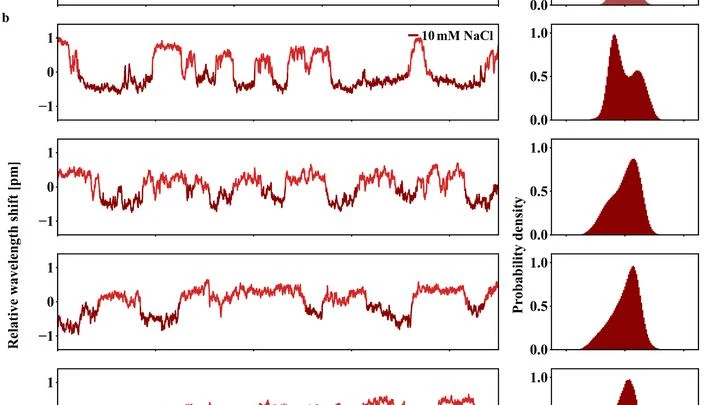
A protein in a cell is not a frozen sculpture but a restless mechanism. Its parts are constantly vibrating, and these movements determine how it grabs molecules, transmits signals, or builds the cellular scaffold. But filming the life of a single protein was hampered by two nuisances at once. First, the movements last millionths of a second — ordinary cameras simply cannot catch them.
Throw a stone into water: right at the point of impact, the waves are chaotic — that's the near field. Farther out, they spread in smooth circles — the far field. This same principle governs antennas for terahertz communications — the future of super-fast internet.
A regular radar works like an amateur photographer: it takes a series of blurry snapshots and tries to stitch them into a panorama. Details are smeared, and in a long corridor or crowd, the robot easily gets lost.
The principle is simple: like a bat, the radar emits a wave and catches the echo.
When a glass of water is full, pouring more is pointless waste. Cloud gaming often does the same with video data: encoders push the stream to maximum, even though the eye stops noticing improvements long before the limit. This overconsumption means extra traffic and entropy in the network — useless noise clogging the channel.
A typical atom trap works like a funnel: laser light and a magnetic field slow atoms down and gather them at the center. But the funnel has a limit: it only catches atoms moving within a certain speed range.
A regular camera captures the world as a series of frames: twenty-four, sixty, or even a hundred images per second. That's enough for filming a falling drop, but inside a living cell, events unfold a thousand times faster. Protein molecules carry cargo, membranes bubble, ions slip through channels — all in fractions of a millisecond.
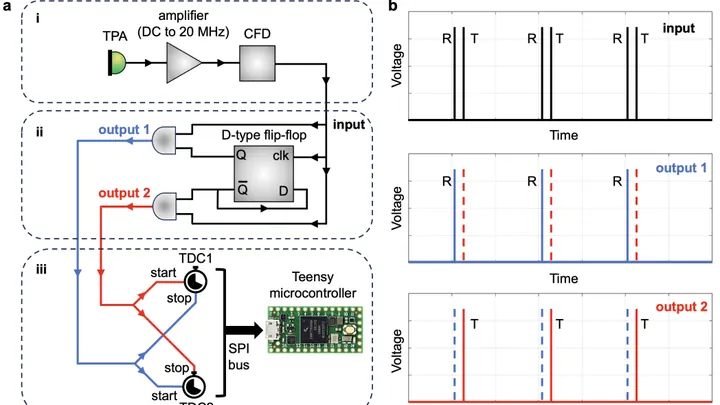
Two laser beams, like two pencils, draw an invisible scale on the wall. One tip moves slightly faster than the other, and by the way their strokes alternately coincide and diverge, you can calculate the distance to the wall with an accuracy down to the thickness of a spider's thread.
In the new work, physicists made these two beams work continuously, without pauses.
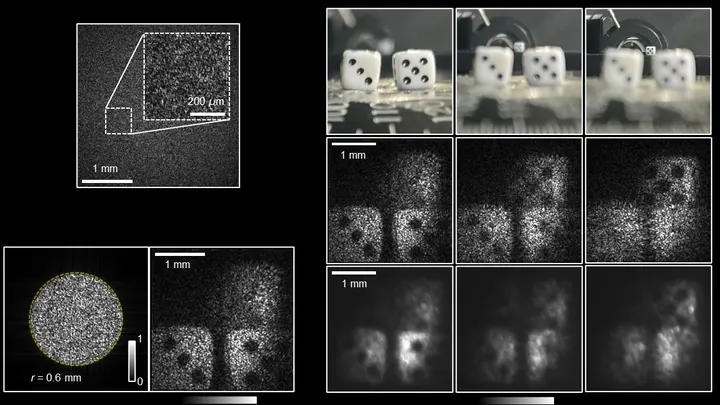
Shine a flashlight through rough glass, and the wall lights up with a speckled pattern of bright and dark dots. Once dismissed as useless noise, this pattern now serves as the key to reconstructing 3D images.
In the new system, light from an object passes through a specially designed plate with known irregularities.
According to Einstein's theory, Earth's rotation drags space-time itself along — like a spoon dragging thick honey. This effect is incredibly weak: about one revolution in billions of years. But it can be caught.
Two images of the same place: one taken in the morning from a drone, the other in the evening from a satellite. The first shows shadows from trees, the second shows glints on the water. It's like two accounts of the same event in different dialects: the words are similar, but the grammar is different.