Why Black Holes Can't Merge Without Gas ✎ express
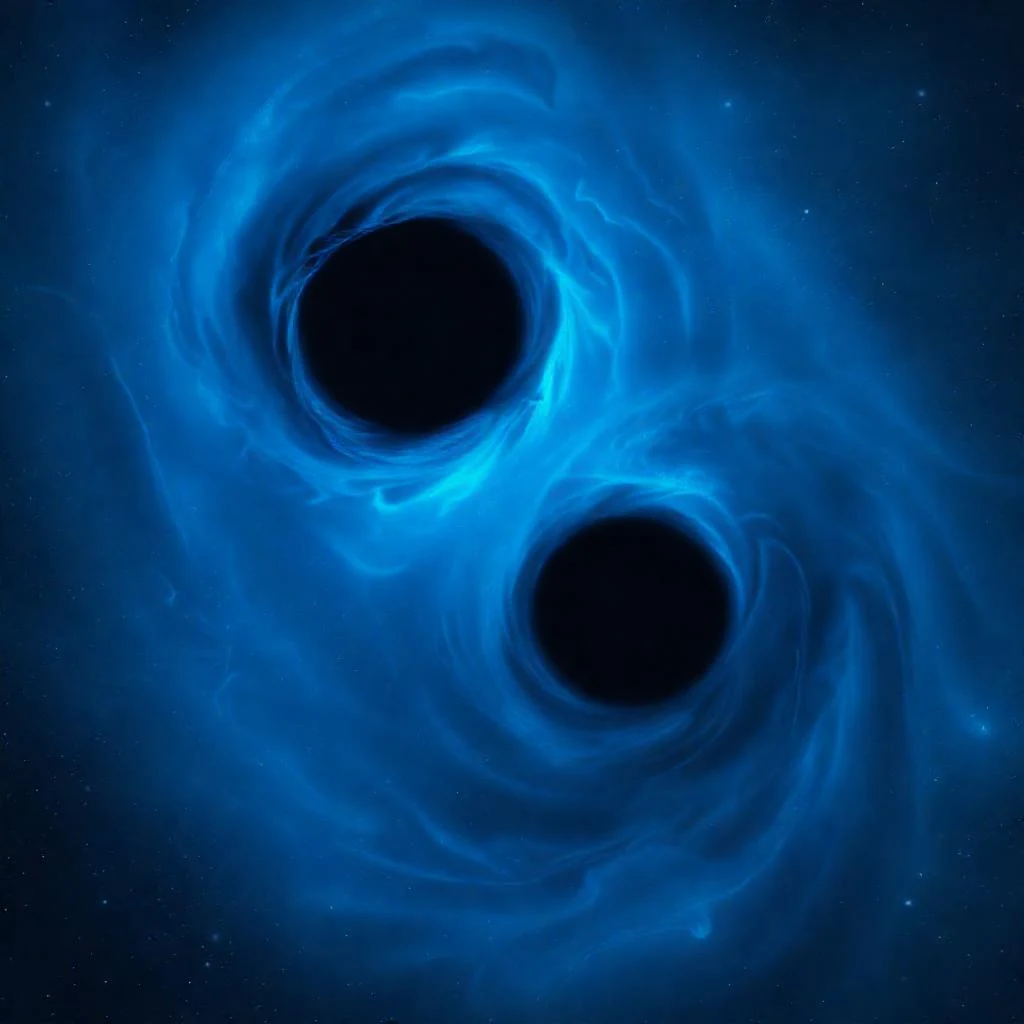
At the centers of almost all galaxies lurk black holes — invisible giants. When two galaxies collide, their black holes become a pair doomed to dance around each other. But to merge into one, they must close the gap from vast distances to just kilometers, in the final instant unleashing a burst of gravitational waves. Stars, like a crowd of guests at a ball, nudge the pair with their gravity, but the room quickly empties — there are few stars in the center, and the dance stalls. Gas decides everything — like invisible music filling the room. It rubs against the black holes, sapping their energy and forcing them closer faster. Simulations show: without this gas friction, even the most optimistic calculations of stellar nudges can't explain the gravitational hum our instruments pick up. And here's a surprise: the same gas, as it hurries the merger, heats up to billions of degrees and shines brighter than all the stars in the galaxy combined. So we can spot these pairs through telescopes as two blazing hearts long before they merge into one.
Supermassive black holes can be billions of times heavier than the Sun, but their mergers generate gravitational waves with periods of years — this 'hum' is detected by comparing the rhythm of pulsars across the entire Galaxy, which itself becomes a giant antenna.