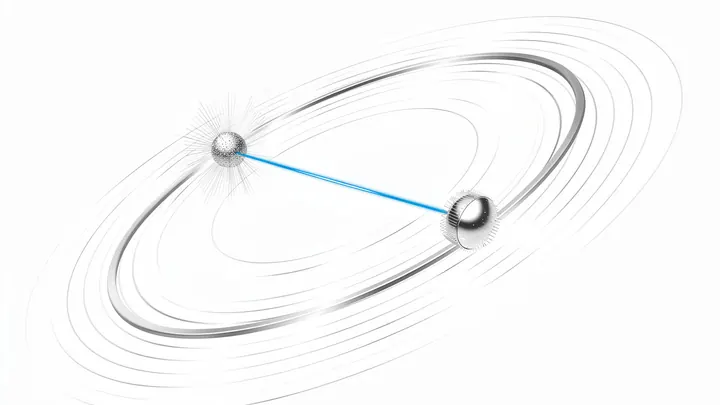
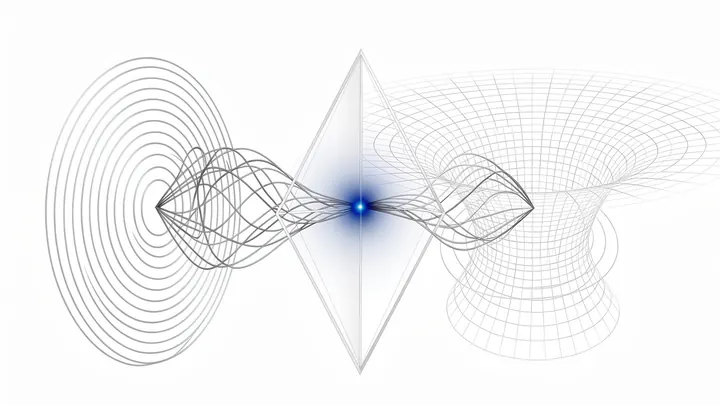
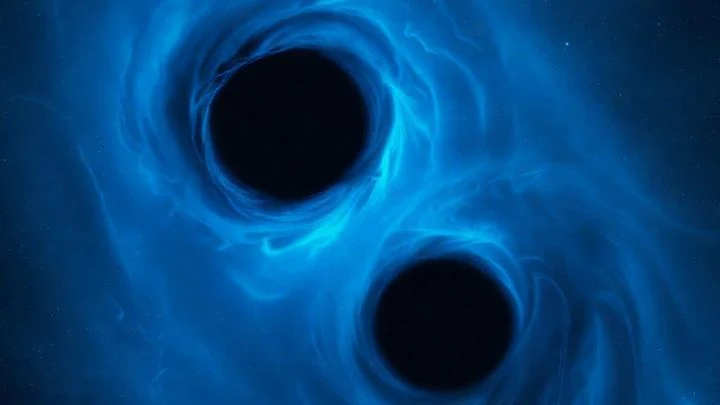
Binary star detection is the set of techniques astronomers use to find and confirm that two stars are gravitationally bound and orbit a common center of mass, rather than merely appearing close together by chance. This matters because binary systems are the primary way we measure stellar masses — the most fundamental property of a star — and they are laboratories for testing stellar evolution, gravitational physics, and even the behavior of extreme objects like black holes and neutron stars. The challenge is that many binaries are 'invisible pairs': one star may be too faint, or the orbital motion too slow, or the system's plane may hide eclipses, so detection often requires clever indirect methods.
History
The first binary star system was discovered by William Herschel in 1802, who observed that the components of Castor moved around each other, proving they were physically associated rather than line-of-sight coincidences. The first orbit calculation was done by Félix Savary in 1827 for the system Xi Ursae Majoris.
How it works
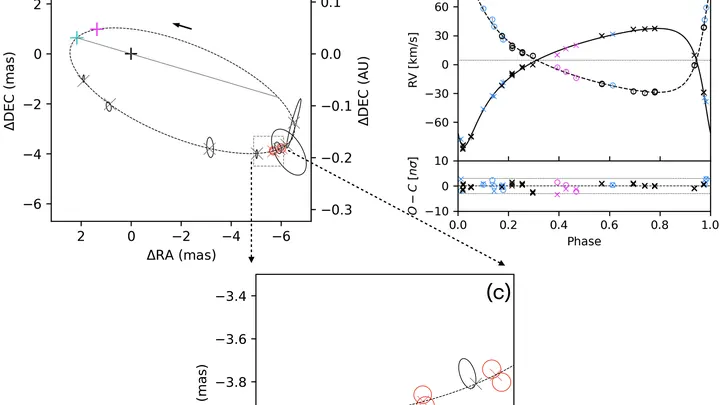
The main detection methods fall into several categories. Visual binaries are resolved directly by telescopes, showing two stars moving around each other over time. Spectroscopic binaries are detected by periodic Doppler shifts in spectral lines as the stars orbit, revealing radial velocity changes even when the pair cannot be separated visually. Eclipsing binaries show periodic dips in brightness when one star passes in front of the other. Astrometric binaries betray their presence by a wobble in the position of a visible star, caused by an unseen companion's gravitational pull. More exotic methods include detecting gravitational lensing, timing variations in pulsars, or analyzing the combined light curve for subtle periodic signatures.
In practice
Binary star detection is essential for measuring stellar masses, which calibrate our understanding of stellar structure and evolution, and for identifying compact object binaries that serve as gravitational wave sources or probes of strong-field gravity.
Fun fact
About half of all Sun-like stars are in binary or multiple systems, so detecting binaries is not just about finding rare objects but understanding the most common stellar configurations.
Gravitational-wave detectors are like extremely sensitive ears: they pick up the trembling of space when black holes or neutron stars collide somewhere in the universe. But even the most sophisticated "ears" cannot hear everything. The new LIGO A# project is like replacing the eardrum with a thinner, more sensitive membrane.
In the dark outskirts of our Galaxy, far from bright star clusters, millions of black holes lurk. They are invisible: they don't shine and don't noticeably accrete matter. Conventional search methods, designed for dense stellar fields, are useless here. A different approach is needed.
Astronomers have proposed using the very fabric of space as a detector.
At the heart of our Galaxy lives the supermassive black hole Sagittarius A*. If an invisible companion orbits nearby, their dance can be spotted through the light of other stars. The pair's gravity works like a lens: as the black holes pass in front of a background star, its light briefly brightens and splits into two.
In August 2019, the LIGO and Virgo detectors picked up gravitational waves from the merger of two compact objects in a binary star. One weighed 23 solar masses — a standard black hole. The other came in at 2.5–2.67 M⊙.
A neutron star is the collapsed core of a massive star, squeezed to the size of a city. A teaspoon of its material weighs as much as a mountain. But inside this superdense sphere, a surprise may lurk: under unimaginable pressure, neutrons break apart into quarks, giving the star a new, more compact core.
Two figure skaters on a lake frozen to the horizon. They are so far apart that their silhouettes turn into dots, and their mutual attraction becomes almost an article of faith. By Newton's law, they should circle in an unimaginably slow waltz. But telescopes see otherwise.
At the center of the Milky Way, shrouded in dust and glare, lurks a supermassive black hole — Sagittarius A*. Around it, like moths around a flame, swarm dozens of guide stars. Two of them, S2 and S38, with eccentric orbits and periods of just a few years, have become the protagonists in testing the fundamental laws of the cosmos.
Two neutron stars spiral closer and collide. The result: a gravitational wave, a ripple in spacetime, a short gamma-ray burst, and a faint glow astronomers call a kilonova. But sometimes the signal passes by a massive galaxy.
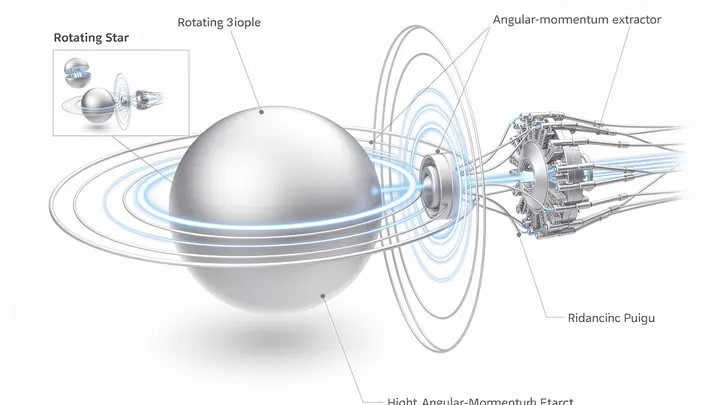
For decades, SETI has hunted for Dyson spheres — hypothetical shells that capture a star's light stars and re-radiate it in the infrared. But the cosmos remains silent. Perhaps an alien intelligence operates more elegantly: instead of collecting light, it tames the rotation of a sun, like a giant flywheel.
A pair of neutron stars, locked in a gravitational embrace, traces invisible circles in the void. A century ago, Albert Einstein described this dance as waves of curved geometry, but for a long time we could only catch glimpses — through the feverish flicker of radio pulses.
It was Edwin Hubble who discovered that galaxies are rushing apart, and Georges Lemaître linked this to the expansion of space. Today, the ΛCDM model, relying on dark energy and dark matter, asserts that the Universe is flat as a perfectly stretched canvas.
When a massive star exhausts its fuel, the core collapse can spawn a supernova and a neutron star, but with enough mass, nothing halts the crush — a black hole is born.
Imagine an orchestra tuning up: the violins rise in pitch: that's the familiar 'chirp' of black hole mergers in LIGO detectors. Now picture a funeral march: a sound that descends, like a fading siren. That's exactly the gravitational-wave signature a system with one negative mass should leave.
Some red giants (huge, old stars) change brightness very slowly: one cycle can last more than a year. Astronomers have long been puzzled about why. One idea: an invisible companion orbits nearby, periodically blocking part of the light. Another: the star itself pulsates, like a heart, but very leisurely: its outer layers alternately contract and expand.
Rhythmic flashes of a lighthouse in thick fog: that's what searching for pulsars looks like. The lighthouse spins, and its beam periodically sweeps across the telescope. But the fog smears the light, making the period seem slightly different. If the same lighthouse was observed twice, you can compare: the periods should nearly match, and the smearing should be similar.
In the constellation Pisces, there is a star that people have seen for thousands of years, but only now have they discerned its inner structure. Alpha Piscium is not one star, nor even two, but a whole family: two pairs of stars bound by gravity. Astronomers had suspected that a third star lurked in the second pair, but they couldn't see it: it was too crowded.
A star like the Sun doesn't just shine: it hums quietly. Inside, plasma churns, and these motions make the surface rise and fall rhythmically. Catching such a tremor from Earth is nearly impossible: it gets lost in the noise of the atmosphere and the instrument itself. That's why astronomers listen to stars from space, where it's quieter.
A hot star in its death throes trembles like a plucked string. Its surface oscillates with amplitudes of thousandths of a magnitude, like noticing a light bulb in a room flicker 0.3% brighter. For a space telescope, such precision is routine, but from Earth, the atmosphere gets in the way.
When two galaxies collide, their central black holes begin a long dance of approach. Until they merge into one, we can see a pair of quasars — bright beacons that ignite as the black holes consume gas and dust. Such pairs in the sky are like two lighthouses standing close together, each shining from its own harbor.
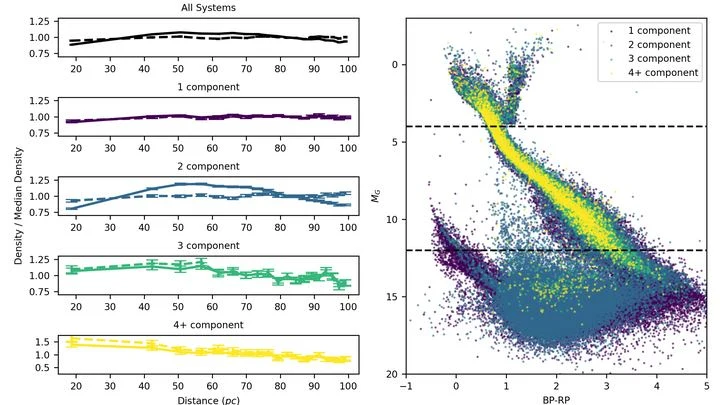
In the star cluster NGC 2158, which is over a billion years old, astronomers have counted how often stars live in pairs. The Hubble telescope stared at the cluster for a long time to catch even the faintest stars: those lighter than one-third of the Sun.
The gravitational waves detectors LIGO and Virgo picked up a deep rumble — the aftermath of two invisible objects merging. Their combined mass turned out to be less than the Sun's. Stellar evolution doesn't produce such lightweight black holes: a dying star doesn't collapse into such a tiny finale.
Two spotlights placed side by side: from a distance, their light blends into one patch, and it seems there's a single source. The same happens in space: about 10–20% of faint stars are actually close pairs of identical stars. Individually, they can't be resolved, but together they shine noticeably brighter than a single star with the same parameters.
In August 2017, gravitational wave detectors caught a signal from the merger of two neutron stars — the ultra-dense remnants of exploded stars. At that very moment, life on Earth was business as usual: planes were landing, cars were driving, and navigators were plotting routes.
Sometimes you find a movie ticket from three years ago in the pocket of an old jacket. You can't reconstruct the time from it, but you can figure out where the owner went. The same goes for hot subdwarfs — tiny stars in the late stages of life that shine mostly in ultraviolet. Their light is like that ticket: it tells you about the past, but reading it is tricky.
A piano tuner in a noisy hall doesn't listen to all sounds indiscriminately: they isolate one string among dozens. A similar challenge is tackled by the new laser radar: among the many reflected beams, it identifies those carrying information about the target's vibration.
A conventional radar sends a short pulse and waits for the echo.
Two stars orbit so closely that their outer layers merge into a shared envelope. Matter flows from one to the other, like water spilling from an overfull cup into its neighbor. In this cosmic dance, where stars literally touch each other, astronomers have for the first time detected magnetic fields in large numbers.
At the centers of almost all galaxies lurk black holes — invisible giants. When two galaxies collide, their black holes become a pair doomed to dance around each other. But to merge into one, they must close the gap from vast distances to just kilometers, in the final instant unleashing a burst of gravitational waves.
A neutron star is a sphere the size of a city, but it weighs as much as one and a half Suns. Inside such a sphere, matter is so compressed that a teaspoon of it would weigh billions of tons. But physicists don't fully know what this matter is made of.
A pulsar is a dead star that spins and emits radio pulses like a lighthouse. If a pulsar has a companion, they whirl around a common center of gravity.
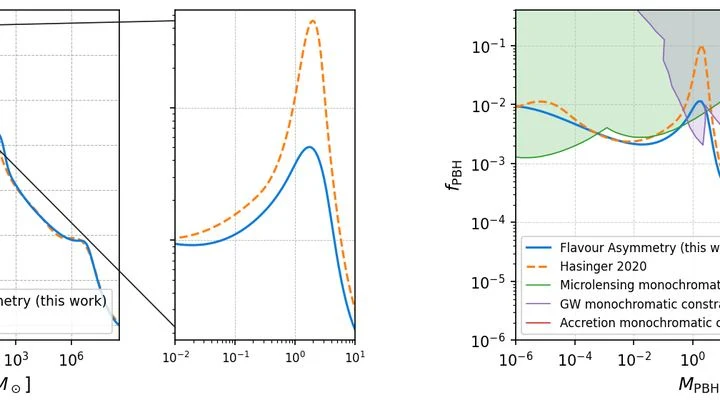
The Universe is filled with invisible mass, dark matter, which reveals itself only through gravity. One hypothesis suggests that dark matter consists of primordial black holes — objects formed in the extreme conditions just after the Big Bang.
Astronomers have found an invisible object in the Universe weighing just a million Suns — for cosmic scales, that’s a mere trifle, a hundred times lighter than anything they’ve been able to “weigh” at such distances. The object itself doesn’t shine, but it gave itself away by bending the light from an even more distant galaxy.