How a Silver Ion Traps Oxygen in a Trap express
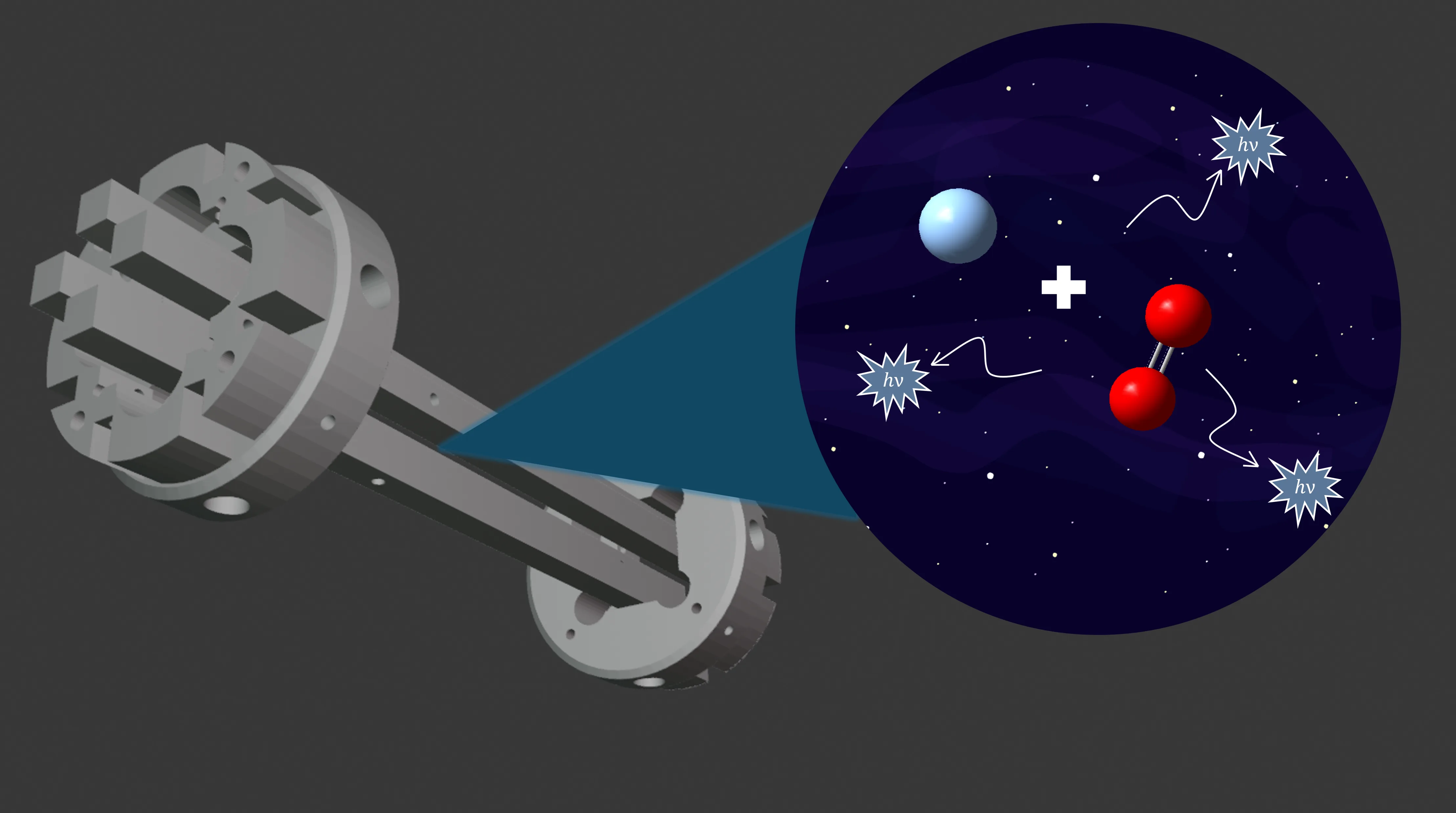
In the cold, sparse clouds of space, particles rarely meet, but sometimes an ion and a neutral molecule pass close enough to stick together. As they do, they emit light, like a muted flash carrying away excess energy. This process is called radiative association, and it is responsible for the formation of many molecules in interstellar space.
Measuring such a union in the lab is tough: you need to keep particles together for a very long time without letting them fly apart. The new device does exactly that. Silver ions and oxygen molecules are launched into a trap — a device that holds charged particles with electromagnetic fields, like invisible walls. The particles stay close for hours, and during that time some pairs manage to combine. The researchers tracked for the first time how the reaction rate changes at different oxygen pressures and estimated how quickly a silver ion captures an oxygen molecule.
Such an instrument is like a quiet dating room where rare pairs can finally meet. It will allow measuring the rates of union for various ions and molecules found in cosmic clouds. Understanding these processes will help explain where complex molecules in the cold corners of the universe come from and how they influence the birth of stars and planets.
In interstellar space, the density of matter is so low that there is less than one atom per cubic centimeter, so reactions proceed extremely slowly — sometimes a single collision takes years.