The reaction rate is the frequency at which a specific nuclear reaction occurs, typically estimated from cross-section data. It is a central quantity in nuclear physics, astrophysics, and nuclear engineering, determining how quickly nuclei transform under given conditions. In stellar nucleosynthesis, for example, the rate of reactions like carbon fusion or neutron capture dictates the abundance of elements produced in stars and supernovae.
History
The concept was formalized in the early 20th century with the development of nuclear physics, particularly through the work of George Gamow and others on stellar energy generation in the 1930s.
How it works
The rate depends on the cross-section (a measure of probability for a reaction at a given energy), the number densities of the interacting particles, and their relative velocity distribution. In practice, it is computed by integrating the cross-section over the energy spectrum of the particles, often using the Gamow peak for thermonuclear reactions. For neutron-induced reactions, the rate is proportional to the neutron flux and the cross-section at the relevant energies.
In practice
Reaction rates are used to model stellar evolution, design nuclear reactors, and plan medical isotope production, such as in the creation of radionuclides for cancer therapy.
Fun fact
In stars, the reaction rate for proton-proton fusion is so low that a single proton would wait on average about a billion years before fusing, yet the Sun still shines because of the immense number of protons.
Units by system: SI: s1 · CGS: s1 · Planck: t planck1 · natural: gev
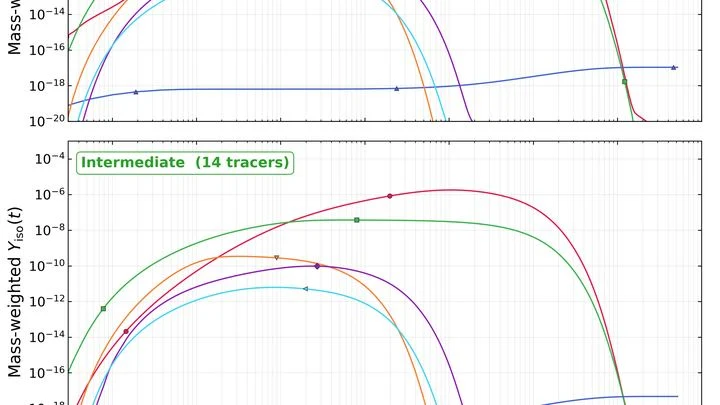
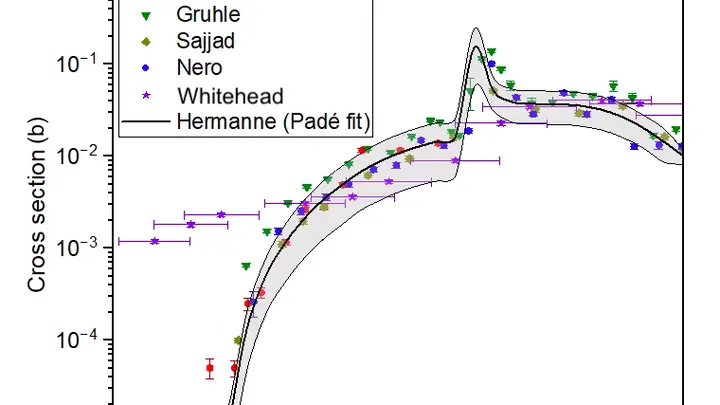
When a massive star explodes as a supernova, heavy nuclei are forged in its interior within seconds. Among them is titanium-44, a radioactive isotope that later glows in gamma rays for years. How much of it remains depends on a single nuclear reaction: a proton is captured by a vanadium-45 nucleus, turning it into chromium-46.
In 1976, physicists predicted that an electron could do more than just fly past a nucleus: it could slam into it, transferring energy and making the nucleus 'shudder.' They called this effect NEEC — nuclear excitation by electron capture. But for nearly fifty years, no one has managed to observe it in an experiment.
A mountain pass connects two valleys. In one, the protein is folded; in the other, it is unfolded. To get from one to the other, you must cross the saddle — the highest point on the path. In protein science, this point is called the transition state, and the coordinate that shows the distance to it is the committor.
A camera flash that fires in a thousandth of a second doesn't heat the subject — unlike a regular flash that lasts a full second. A similar trick has been found in radiotherapy: when a radiation dose is delivered in milliseconds instead of minutes, healthy tissues suffer less. This is called the FLASH effect.
When biologists measure the activity of thousands of genes, they usually just see a list of coincidences, like two ingredients in a soup that often end up together. The standard method looks for such pairwise connections but doesn't show who influences whom.
A new approach, like a detector of dark matter, uncovers hidden threads of causation.
A collision of two neutron stars is a cosmic forge where the heaviest elements of the periodic table are hammered out in seconds. In 2017, detectors picked up gravitational waves from such a merger, and telescopes saw a flash — a kilonova.
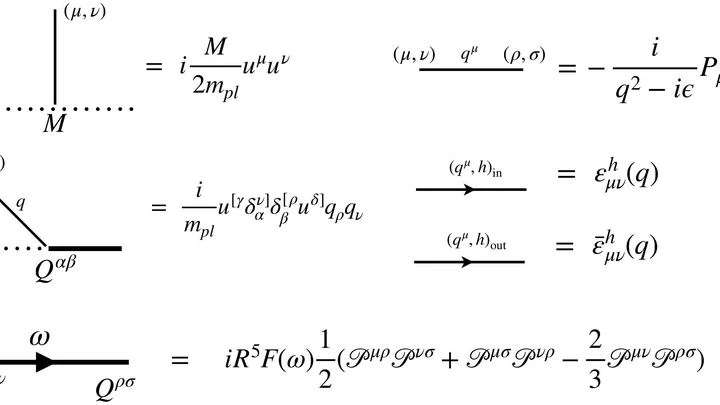
When two superdense stars circle in a tight dance, the space around them shudders. This shudder, gravitational waves, is caught by giant detectors on Earth. But deciphering the signal is tricky: you need to figure out what exactly you're dealing with — a pair of black holes or neutron stars.
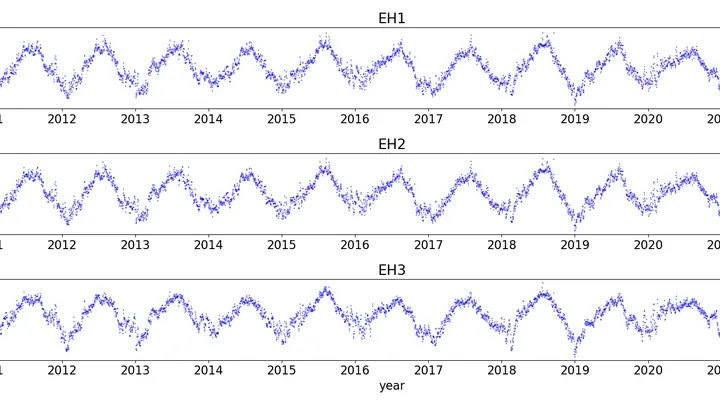
Deep underground, in the thickness of granite, detectors catch rare visitors from space — muons. These particles are born high in the atmosphere when cosmic rays slam into air nuclei. They make it to the underground lab thanks to their enormous speed, close to the speed of light.
A pendulum that almost nothing can knock off balance (not shaking, not heat, not magnetic fields) because it is hidden in the very heart of the atom. That is the kind of pendulum physicists used when they first switched on a nuclear clock. Previously, the best clocks, optical ones, relied on electron transitions.
A pot of boiling soup bubbles away, and you'd love to know how hot individual droplets are inside. But you can only dip your thermometer at the edge, where things are calmer. Laser fusion is a bit like that: a powerful laser pulse hits a target, creating a cloud of fast protons.
A swing only gets going if you push it in rhythm. Miss the beat, and your effort is wasted. Light interacts with an atomic nucleus in much the same way: a photon is usually absorbed only when its energy exactly matches the gap between nuclear levels. But what if the photon's energy doesn't fit? The authors of a new study have found a workaround.
Old photographic plates from a 1950s sky survey held a detective mystery: mysterious flashes kept appearing on them. The first clue — the flashes coincided with days of atmospheric nuclear tests. The second clue — the Earth's magnetic field: the stronger the storm raged, the rarer the spots.
It was as if the suspect only came out in calm weather.
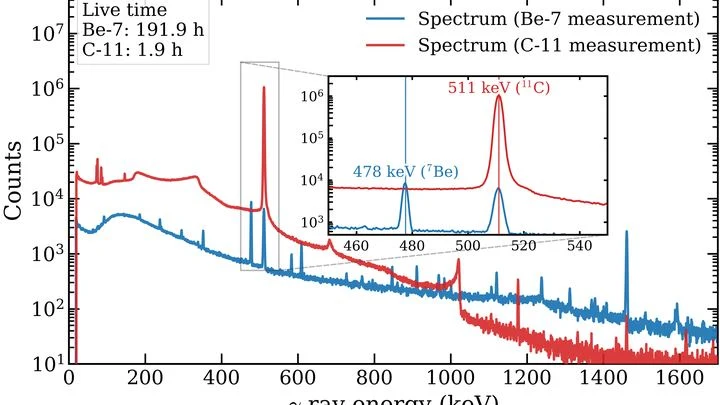
Inside the Sun, invisible nuclear transformations occur every second. One of them is the birth of boron-8: a beryllium-7 nucleus captures a passing proton and momentarily becomes a new element. This step kicks off a chain that ends with the emission of a neutrino — a particle capable of passing straight through Earth.
An ordinary nuclear reactor is like a boiler where fuel burns evenly throughout the volume. Here the picture is different: a fission wave, a narrow zone where atoms split and release heat, slowly creeps along a cylindrical rod of uranium carbide. Ahead of the wave, the fuel is untouched; behind, it is already spent. So fire runs along a candle wick, leaving wax behind.
When two atomic nuclei collide, the outcome depends on their energy and the angle at which the fragments fly apart. Typically, such calculations demand enormous computing power, and accuracy hits a wall due to approximations.
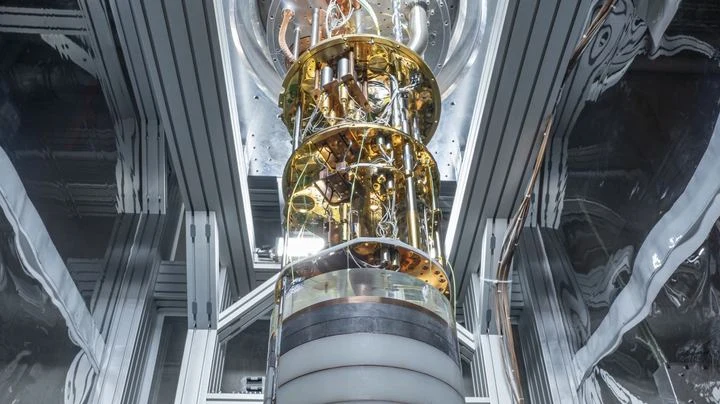
In a dark chamber where the temperature sits just four degrees above absolute zero, a sapphire crystal the size of a grain of rice lies waiting. When a neutrino, a ghostly particle that barely notices matter, flies through it, the crystal shudders and warms by a tiny fraction of a degree.
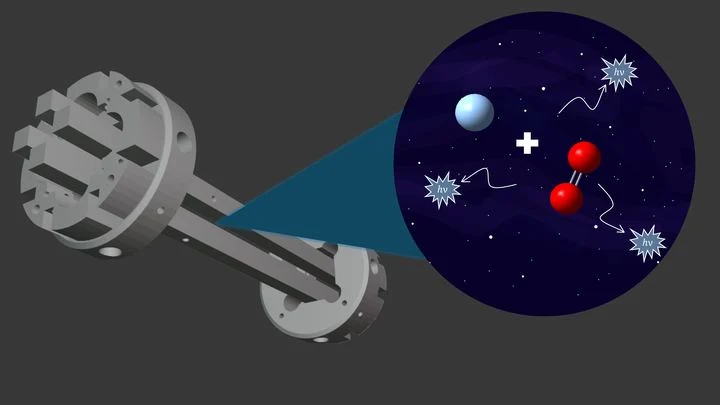
Deep inside a dying star, just before it goes supernova, nuclear reactions determine which chemical elements will be scattered across the cosmos. One such reaction is the collision of an oxygen nucleus with a proton, producing a nitrogen nucleus and an alpha particle (a helium nucleus).
Hidden in the nucleus of a gold atom lies a potential future cancer treatment. When a gold target is struck by a gamma ray with an energy of about 30 megaelectronvolts, one of the nuclei loses a proton and a neutron, transforming into a rare platinum isotope — platinum-195m.
The nucleus of a xenon-133 atom lives only a few days before it decays. Making a thin film target out of it and bombarding it with particles is out of the question: the film would vanish faster than it could be produced. So physicists did the opposite: they accelerated xenon-132 nuclei and aimed them at a target made of deuterium (heavy hydrogen).
Inside an atomic nucleus, particles aren't just tossed together any which way. Sometimes two protons and two neutrons huddle into a tight quartet — a mini-collective known as an alpha cluster. Think of it as a family that sticks together in a crowded building. Knocking this quartet out of the nucleus and seeing how it lived there is a job for a fast proton.
In the cold, sparse clouds of space, particles rarely meet, but sometimes an ion and a neutral molecule pass close enough to stick together. As they do, they emit light, like a muted flash carrying away excess energy. This process is called radiative association, and it is responsible for the formation of many molecules in interstellar space.
Aluminum-26 is an isotope that doesn't live long by cosmic standards: only about a million years. When a massive star explodes as a supernova, it flings this aluminum into space. Later, it decays, emitting gamma rays that telescopes can catch.
The authors recalculated how much aluminum-26 a star with 20 solar masses should eject.
Neutrinos are the most elusive of all known particles. Every second, trillions of neutrinos from the Sun fly through your body, but you never notice: they barely interact with matter. To catch even one, physicists build giant detectors — pools of water or liquid argon deep underground.
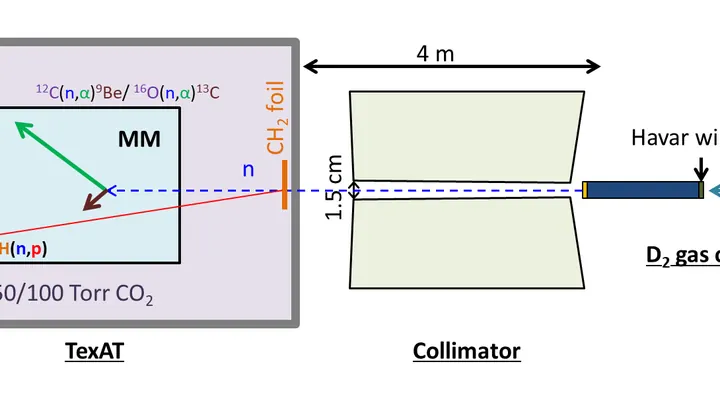
When a neutron slams into a nucleus, it can knock out a chunk — an alpha particle, which is a helium nucleus. Such collisions happen all the time in nuclear reactors, but they are hard to measure precisely: a neutron leaves no track in a regular detector, and you can only catch it by its aftermath.
For two atomic nuclei to fuse, they must overcome their fierce electric repulsion — like trying to bring two angry bulls together. Normally, only monstrous energy does the trick, as in stellar cores, where Hans Bethe explained fusion back in the 1930s.
The ATIC balloon rose over Antarctica and caught particles older than Earth itself. Among them are atomic nuclei from sulfur to chromium, and the higher their energy, the larger their fraction compared to iron. The standard 'leaky box' model predicted the opposite: heavy nuclei should dissolve like salt in water. But the data stubbornly rose.
In the stream of charged particles flying toward us from the depths of the Galaxy, iron turned out to be the odd one out. The ATIC-2 instrument, lifted on a balloon over Antarctica, compared how the fraction of nuclei from sulfur to chromium relative to iron changes with energy.