How Planets Are Born: Turbulence in the Gas Disk express
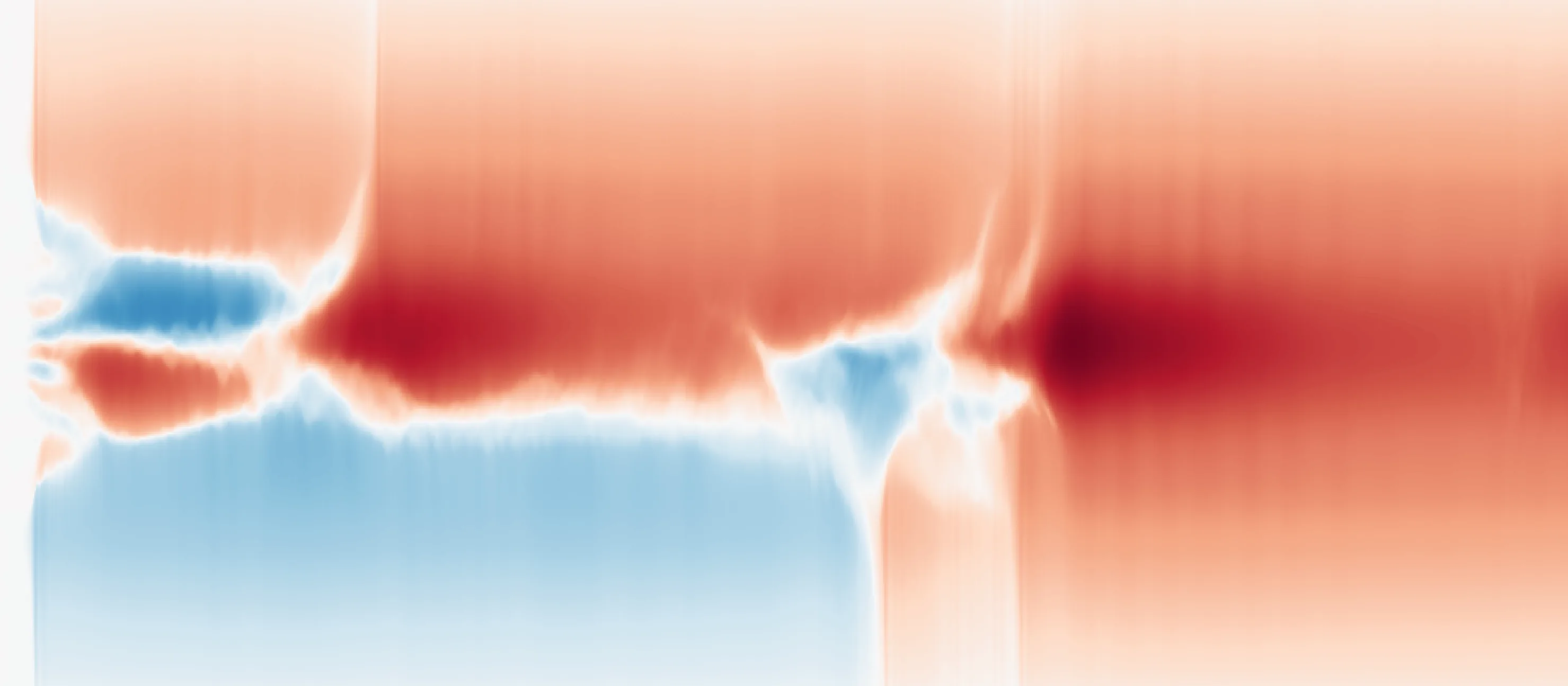
Around young stars, flat clouds of gas and dust swirl: these are the birthplaces of planets. For matter in such a disk to clump together, it must be constantly stirred. But what makes the gas move chaotically when it would otherwise be calm? Part of the answer lies in the fact that the gas in the disk barely conducts electricity: it is weakly ionized.
Scientists built a computer model of a patch of such a disk at a distance of 5 astronomical units from the star (that's like from the Sun to Jupiter). They added two effects that arise from weak ionization: Ohmic diffusion and ambipolar diffusion. It's as if in a crowd of people, some could push through others while others get stuck. It turned out that ambipolar diffusion doesn't dampen disturbances but can actually amplify them. An instability emerges, similar to ripples on water, that feeds itself.
Later, in regions where the magnetic field is weak, the magnetorotational instability could also kick in: it also stirs the gas. Together, this paints a picture: even a weakly ionized disk is not a quiet place. Turbulence there can arise from the subtle interplay between magnetic fields and gas motion. And that means dust grains have plenty of opportunities to collide and stick together to form future planets.
A distance of 5 astronomical units is roughly where Jupiter sits in our solar system. It's in such zones that gas giants are most often found around other stars.
In Arthur C. Clarke's novel '2010: Odyssey Two,' the gas giant Jupiter is turned into a star, yet giant planets really do form from the same gas disk as their stars.