Laser Brake for a Restless Ion express
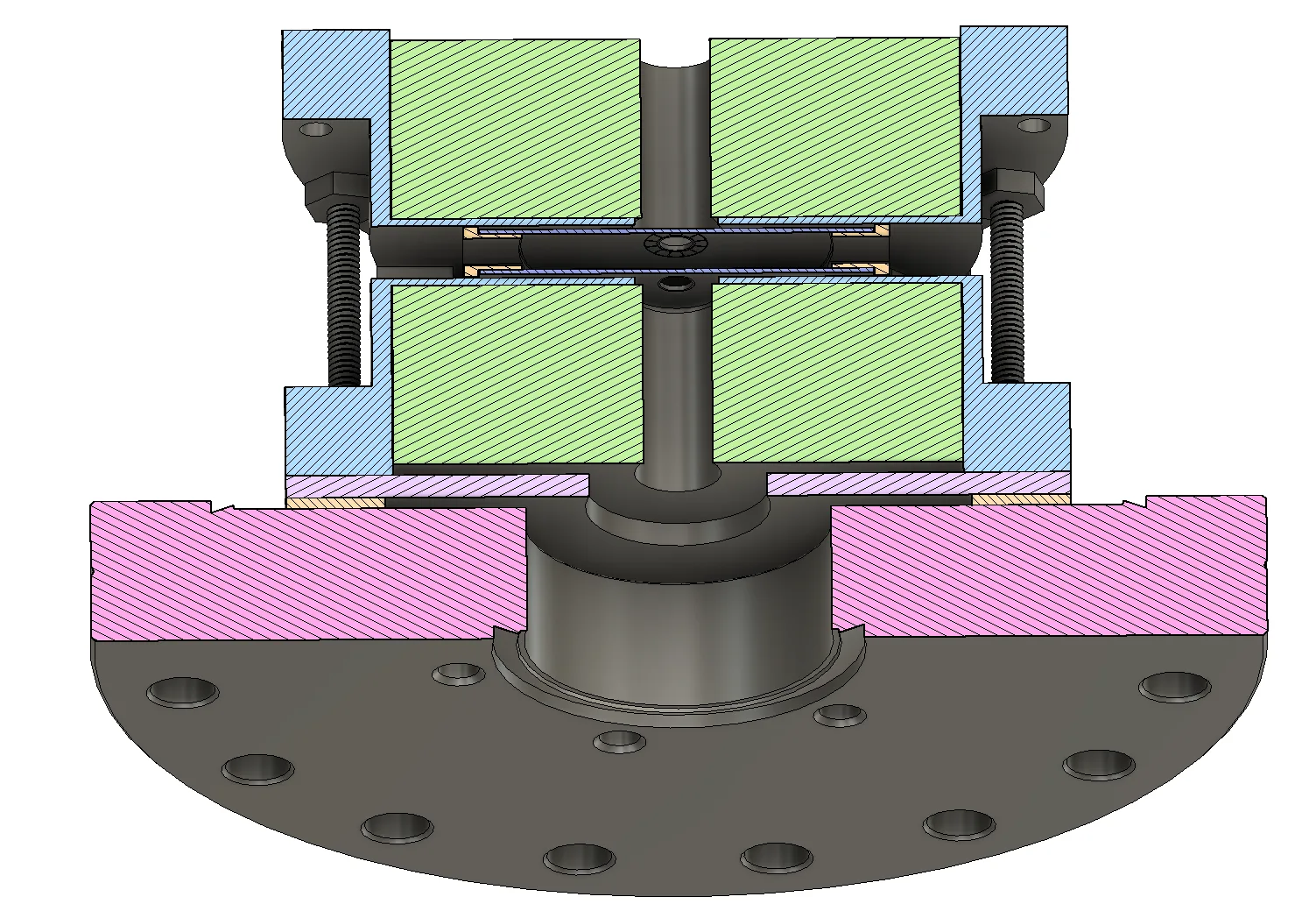
A calcium ion in a magnetic trap resembles a tiny ball that constantly trembles from heat. To make it freeze, physicists usually hit it with lasers from several sides. But in the new experiment, a single beam aimed along the trap's axis sufficed.
First, the ion is cooled the usual way — the laser slightly slows its motion, like a headwind slowing a runner. Then the laser frequency is nudged, and a dark resonance appears: the ion stops absorbing light, and its trembling abruptly weakens. In 800 microseconds, the thermal motion drops from 72 quanta of vibration to one and a half — almost a complete halt.
This method requires no extra lasers or complex optics. It works in a compact trap with a magnetic field of 0.91 tesla — about the same as in an MRI machine. That makes it convenient for future quantum devices, where every extra jiggling atom interferes with precise measurements.
The cooled ion trembles so weakly that its position can be determined to within fractions of a nanometer — smaller than the size of an atom.
In Stanisław Lem's novel "Solaris," a sentient ocean controls the motion of particles to influence people. Here, physicists control the motion of a single ion to make it work for a quantum computer.