Bubble Catapult: How Bubble Curvature Controls the Jet express
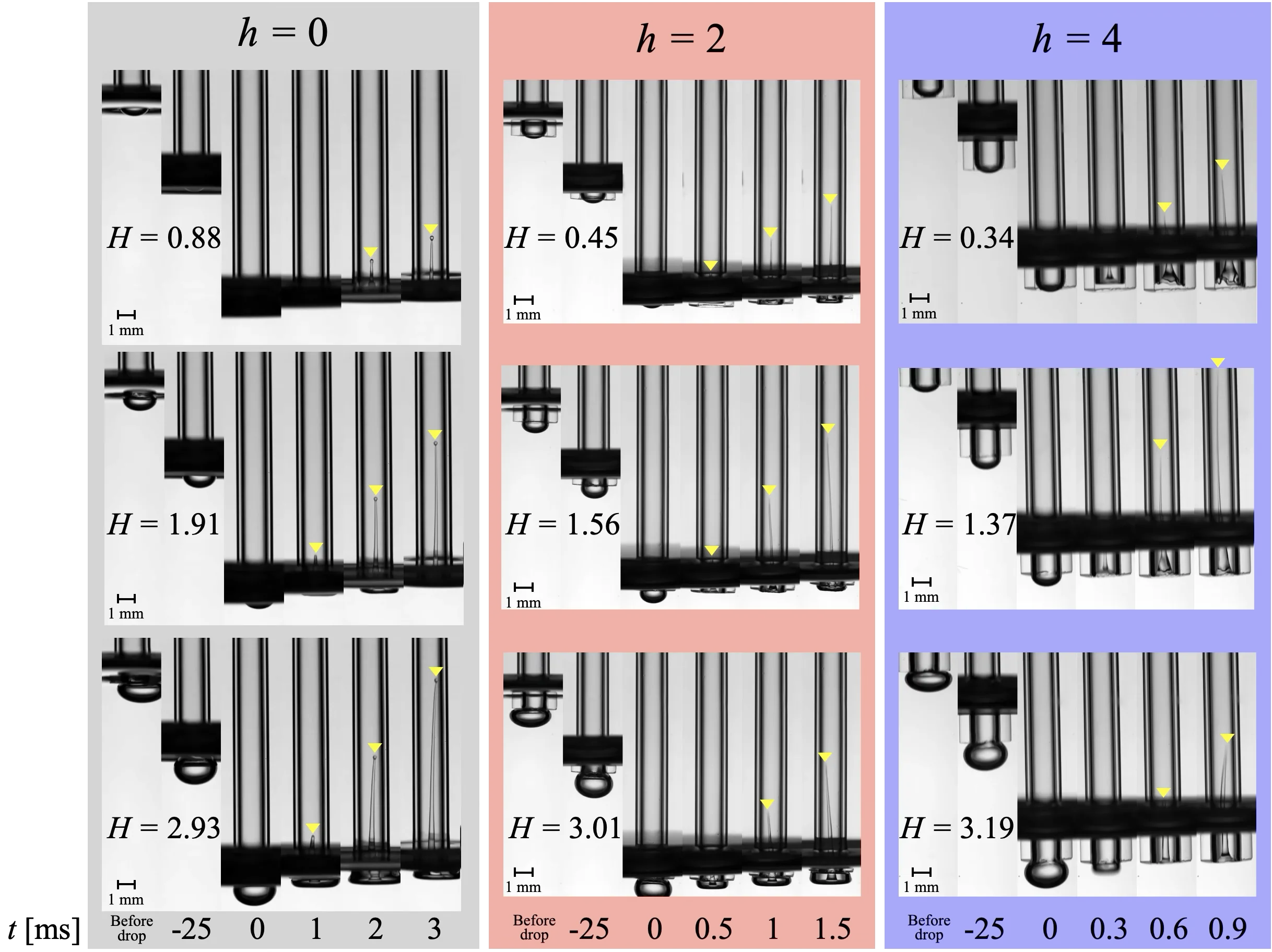
A drop falls into a glass, and a tiny jet, a thin fountain, shoots up from the surface for an instant. Something similar happens with a bubble stuck to the wall of a tube when you yank the tube downward. Water around the bubble rushes in, and a jet fires from its top. The speed of this jet depends on the bubble's shape — how much it bulges, like an umbrella dome.
When the tube is in air and the bubble sits at its end, it's simple: the more deeply the bubble is pushed in, the faster the jet. But if you submerge the tube in water, a twist appears. The water pressure around it changes the picture, and now the bubble has a best curvature. Too flat — the jet is weak. Too bulged — also weak. But the sweet spot hits hardest.
The researchers derived a formula that combines two contributions: one from the bubble's own curvature, the other from the tube's submersion depth. Experiments with real bubbles and high-speed imaging confirmed the calculations. It turned out that the optimal bubble shape shifts as the tube is submerged deeper. This isn't just a curiosity: such jets occur in nature — for example, when bubbles burst on the ocean surface and fling tiny salt droplets into the air.
When a bubble bursts on a water surface, the jet can accelerate to several meters per second — faster than a person can run.