How Two-Headed Comets Are Born express
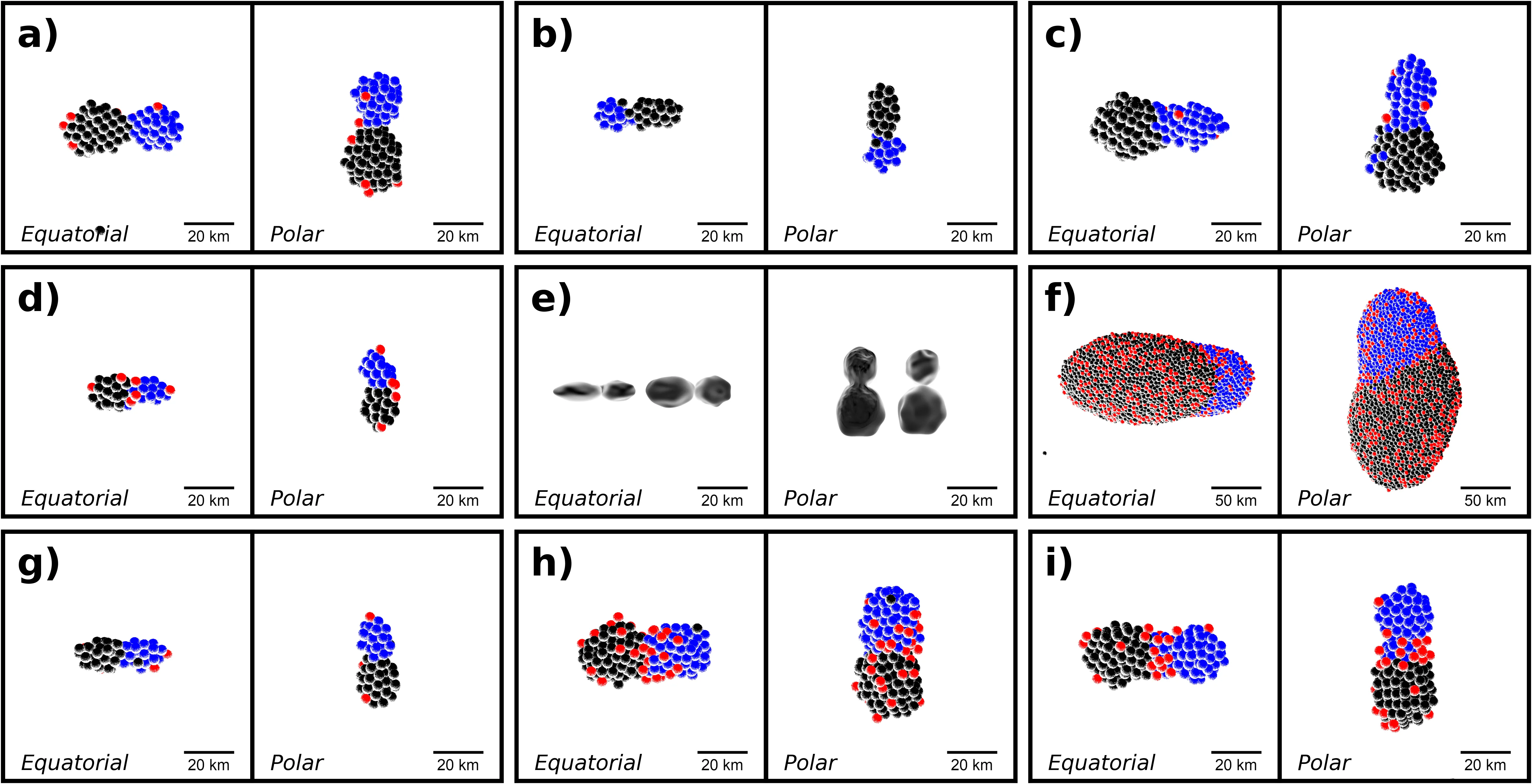
The icy body Arrokoth looks like a snowman: two spheres pressed together. Many such two-headed objects exist beyond Neptune's orbit, in the Kuiper Belt. For a long time, it was thought they formed from the slow collision of two separate bodies.
New simulations show a different path. A cloud of small pebbles around the young Sun collapses under its own gravity. The pebbles do not clump into a single sphere but into two adjacent clumps that later merge gently. Thus a snowman is born without any impact.
The calculations reproduce the shape of Arrokoth and other two-headed Kuiper Belt objects. So their appearance is not a coincidence but a record of how the first planetary embryos assembled.
The two halves of Arrokoth have nearly identical ice compositions, as if they were made from the same dough.
In Arthur C. Clarke's novel Rendezvous with Rama, the alien spacecraft also has the shape of two joined cylinders.