The First Stars Could Have Survived to This Day express
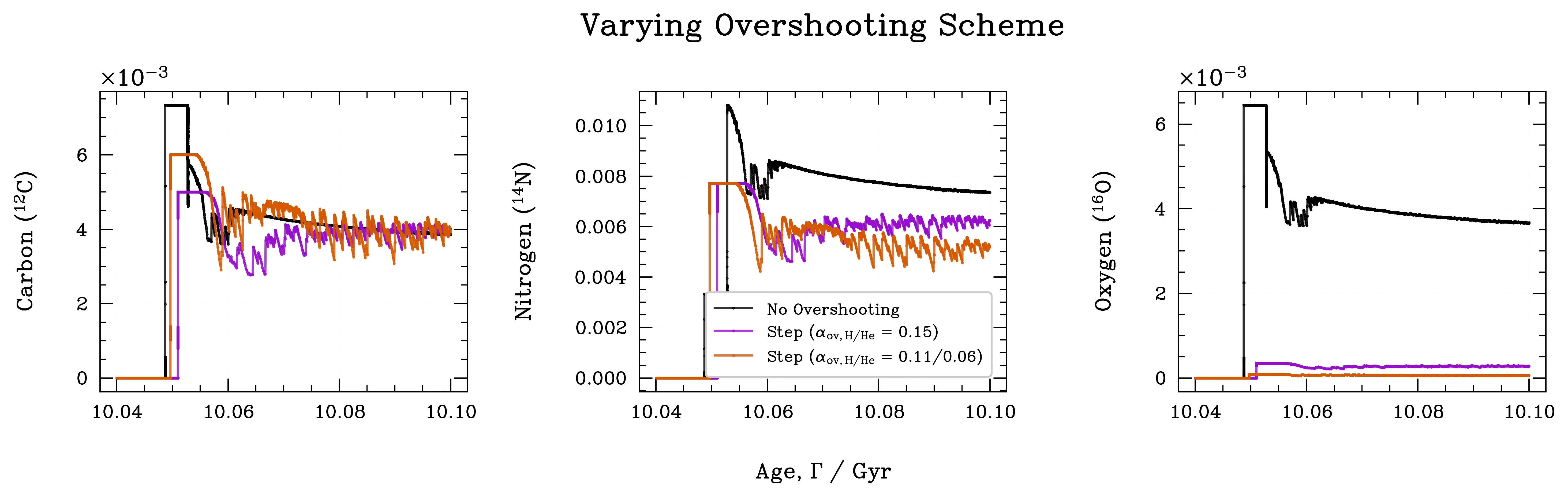
The first stars ignited from clouds that contained nothing but hydrogen and helium. Heavy elements (carbon, oxygen, iron) came later, forged inside stars. But among those pioneers, there could have been lightweight stars, with masses just below that of the Sun. Such stars live for a very long time, billions of years, and could have survived to this day.
Astrophysicists built computer models of how such stars change with age. They varied how much mass a star loses and how its layers mix. It turned out that at the end of its life, a star can shed its outer envelope and leave behind a white dwarf the size of Earth but with half the Sun's mass.
Such white dwarfs could be searched for in the outskirts of the Milky Way. Finding even one would be direct proof that not all first stars were giants. It would be like finding a house in a modern city built from stones that are billions of years old.
The models also showed that during flares, the star emits neutrinos — elusive particles that barely interact with matter. Future detectors could catch such a signal. Then we would learn about the birth of the first stars not from light, but from these 'ghosts.'
Original abstract
as written by the authors arXiv:2602.16082
The first stars likely formed from pristine clouds, marking a transformative epoch after the dark ages by initiating reionisation and synthesising the first heavy elements. Among these, low-mass Population III stars are of particular interest, as their long lifespans raise the possibility that some may survive to the present day in the Milky Way's stellar halo or satellite dwarfs. As the first paper in a series, we present hydrodynamic evolutionary models for 0.7 - 1 MSun stars evolved up to the white dwarf phase, utilising the MESA software instrument. We systematically vary mass-loss efficiencies, convective transport, and overshooting prescriptions, thereby mapping how uncertain physics influences nucleosynthetic yields; surface enrichment, including nitrogen-rich post-main sequence stars arising from convective shell mergers; remnant properties, such as low-mass helium or carbon-oxygen white dwarfs (M_WD ~ 0.45-0.55 MSun) and transient UV-bright phases; and potential observational signatures, including neutrino emission during shell mergers and helium flashes. These models establish a predictive framework for identifying surviving Pop III stars and their descendants, providing both evolutionary and observational constraints that were previously unexplored.
A white dwarf is a star compressed to the size of Earth: a teaspoon of its material would weigh as much as a truck.