Mirror World Not Found: Neutrons Don't Vanish express
The neutron, a particle inside the atomic nucleus, can live in two worlds: ours and a mirror one. The mirror world has its own neutron twin, invisible to our instruments. If an ordinary neutron sometimes hops to the mirror world and back, some neutrons in a trap would seem to dissolve into thin air.
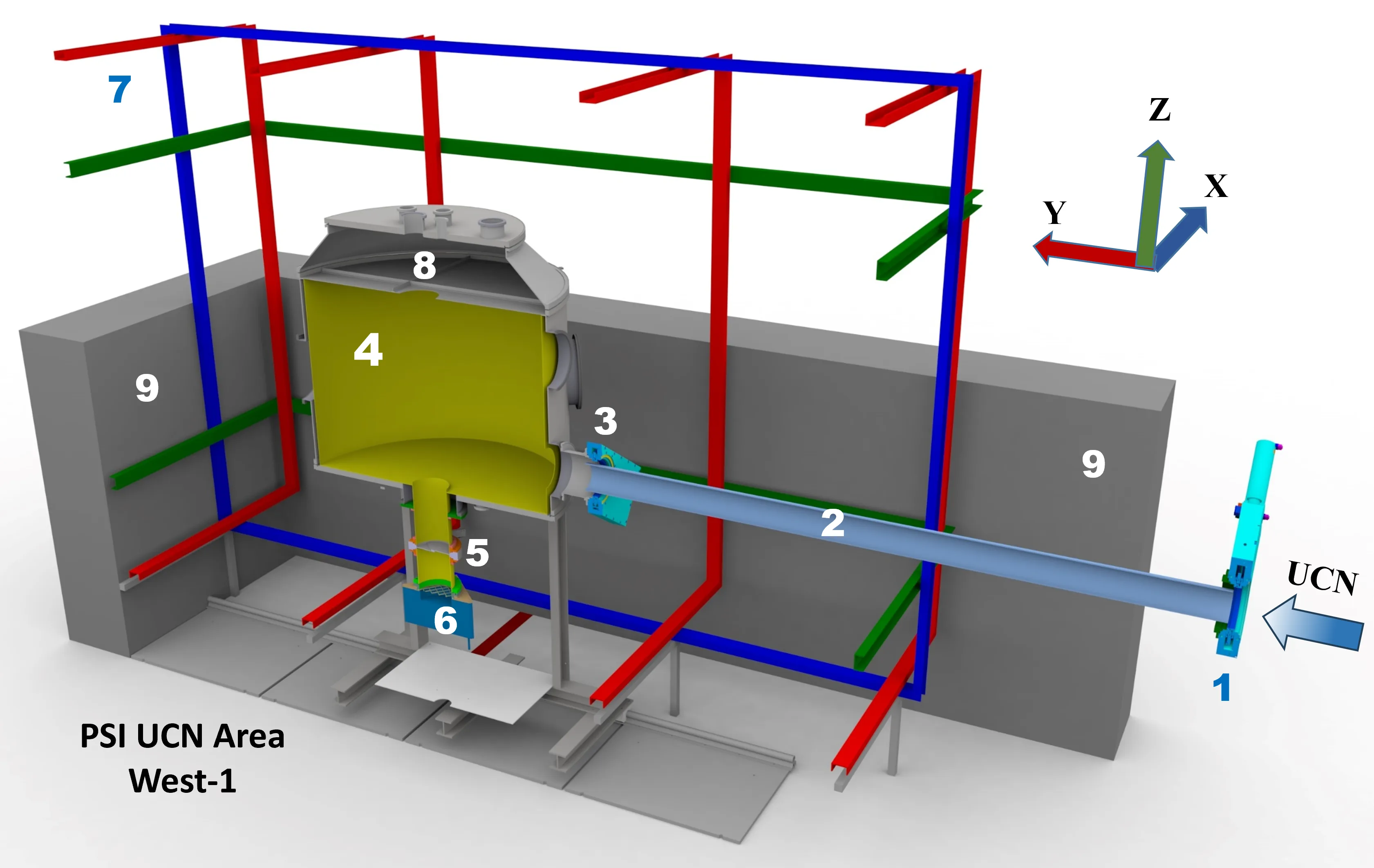
A team of physicists at the Paul Scherrer Institute built a neutron trap — a vessel where particles bounce off the walls and live longer than usual. If a neutron turned into its twin, it would pass through the wall and be lost. Then the counter would register fewer neutrons than expected. The scientists varied the magnetic field from 5 to 109 microtesla, thousands of times weaker than a fridge magnet, and watched for losses. They found no anomalous disappearances.
Earlier experiments hinted at strange neutron losses at certain fields. The new data close those hints with a probability of 99.98%. So if mirror neutrons exist, they hide even deeper than thought. The trap became the most sensitive in the world, yet it caught only silence.
A free neutron lives for about 15 minutes, but in a trap with mirror walls, you can hold it for hours, like a ball in a room with springy walls.
The mirror matter hypothesis is explored in the TV series 'Fringe': a parallel world made of the same particles exists nearby but is invisible.