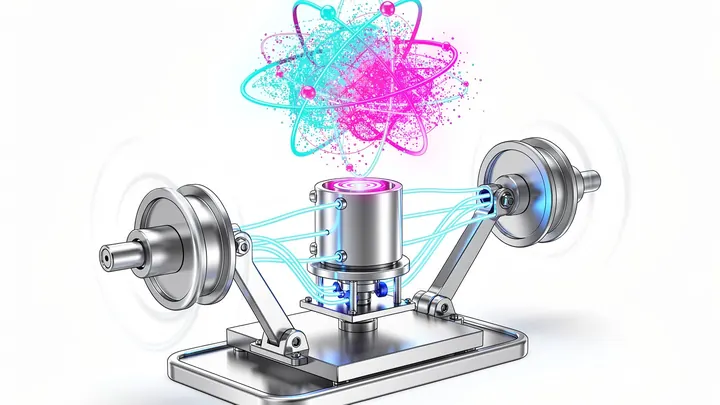
Nuclear spin spectroscopy is a set of techniques that exploit the quantum property of nuclear spin to probe the structure and dynamics of atoms, molecules, and even fundamental particles. It encompasses methods like nuclear magnetic resonance (NMR) and its variations, which use magnetic fields and radiofrequency pulses to manipulate nuclear spins and extract information about the local chemical environment. In modern physics, these techniques are also being adapted for novel applications, such as detecting dark matter particles or building quantum sensors.
History
Nuclear magnetic resonance was independently discovered by Felix Bloch and Edward Mills Purcell in 1946, earning them the Nobel Prize in Physics in 1952. The technique evolved into NMR spectroscopy, a cornerstone of chemistry and medicine (as MRI). Recent advances have pushed nuclear spin manipulation to single-atom levels and into quantum computing.
How it works
Atomic nuclei with nonzero spin behave like tiny magnets. In an external magnetic field, they align in discrete energy states. By applying radiofrequency pulses, researchers can flip these spins and observe the resulting electromagnetic signal, which depends on the nucleus's surroundings. This allows identification of molecular structures and dynamics. In quantum sensing, defects in crystals like diamond (nitrogen-vacancy centers) use nuclear spins to detect minute magnetic fields or even single particles.
In practice
Nuclear spin spectroscopy is used in medical imaging (MRI), chemical analysis, and increasingly in quantum computing and dark matter detection experiments.
Fun fact
The same physical principle behind MRI machines in hospitals is now being used in experiments to search for dark matter particles, where a single nuclear spin can act as an ultra-sensitive detector.
A courtroom interpreter catches every word, every breath, every whisper in the corner. They have no right to miss a detail, because the meaning of the whole conversation depends on it. Quantum state tomography works in much the same way: it reconstructs the full quantum state of a system from a set of measurements, leaving no detail out.
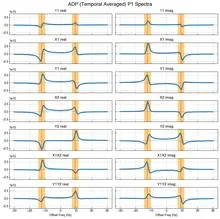
Ultra-sensitive scales try to detect the difference between two nearly identical grains of sand. One is a perfect mirror reflection of the other. In the world of elementary particles, such mirror reflection is called P-parity, and its violation is one of the great mysteries of physics.
X-ray magnetic circular dichroism is a precise tool that has long allowed the separation of spin and orbital magnetic moments. However, the classical approach resembles judging an orchestra by its volume: it relies on sum rules, reducing the entire fine structure of the spectrum to a couple of integrals.
Trying to count people in a dark room by the sound of their breathing hits a wall of background noise — individual breaths are inaudible. Scientists working with quantum spins in solids face a similar challenge. Each spin (the electron's magnetic moment) has its own "voice," but it is drowned out by the technical noise of the instruments.
The atomic nucleus rarely sits still: it often trembles, rotates, or pulses like a plucked string. Each such motion is an excited state, and describing it usually requires extremely complex calculations. Now neural networks come to the rescue: they shape the nucleus the way a musician identifies a note in a chord by ear.
In a dark room, a glass bead the size of a dust grain hangs on a laser beam. Beneath it are two mirrors: one aluminum, one silver. If axions (light, invisible particles that could make up the mysterious dark matter) whiz by, they exchange with the mirror atoms, and the bead shifts ever so slightly.
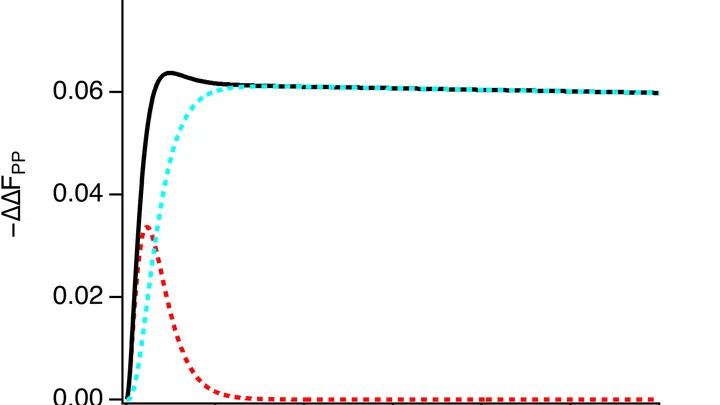
Many chemical transformations resemble assembling furniture in complete darkness: you see the starting parts and the finished cabinet, but the assembly itself remains a mystery. The intermediate states, like awkward positions of the craftsman's hands, vanish too quickly to be discerned.
Quantum bits (qubits) are like delicate music in a noisy factory. Ambient magnetic fields constantly 'drown out' their quantum state, turning a coherent signal into cacophony. Usually, this destructive process is slowed by retuning the qubits themselves to different frequencies, but that doesn't always work.
Tiny magnets inside atoms, nuclear spins, can 'freeze' for long minutes in a cold crystal. This hinders the quick tuning of quantum sensors: everything takes too long to reach the desired state. Physicists have found a way to nudge them with light.
A neutron spectrometer is like a blind geologist who taps on rock and guesses what's inside by the sound. It sends a beam of neutrons into a crystal and watches how they scatter. From this pattern, you can deduce how atomic magnets, spins, oscillate. But where exactly to dig and how long to listen used to be decided by a human.
Now, the TAS-AI algorithm has taken the helm.
A flat crystal of charged atoms suspended in an electromagnetic trap behaves like a perfectly calm pond. The slightest breeze, and ripples spread across its surface. This 'pond' catches the splashes from dark matter particles and the ripples of spacetime — high-frequency gravitational waves.
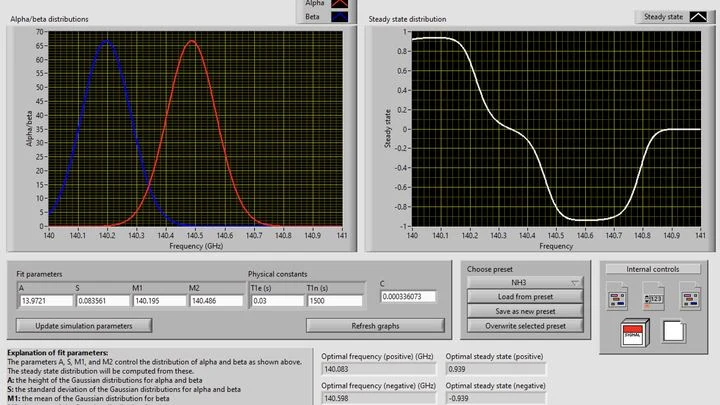
At Fermilab's accelerator, a particle beam strikes a target of frozen ammonia. The hydrogen nuclei inside are like tiny tops, and physicists need them all spinning the same way. Then the collisions reveal how the proton's spin is put together.
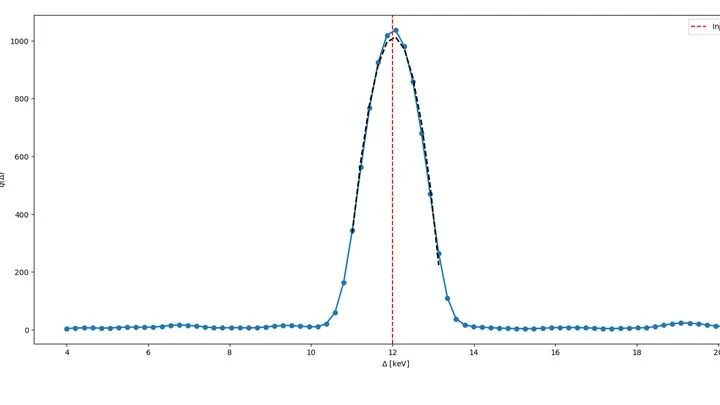
A gamma-ray spectrum looks like a picket fence: each line is the precise energy a nucleus released as a photon. But sometimes ghosts appear in that fence — faint lines shifted by the same amount from the main ones. Such a shift could mean that part of the energy went into creating a light particle we cannot yet see directly.
The edge of a magnet works like a guitar fret: a string pressed near the edge sounds different, with a richer set of overtones. Magnetic waves in a thin strip of nickel and iron behave in much the same way.
In particle scattering experiments, the target is often polarized: nuclei are aligned so that their spins point predominantly in one direction. The degree of this alignment affects the collision outcomes.
The atomic nucleus isn't a frozen ball but a seething collective of protons and neutrons. They whirl, collide, and arrange themselves into patterns that physicists see as "bands"—ladders of energy levels. In niobium and technetium nuclei, four such ladders have been found, but the last one stubbornly refused to fit the calculations.
A chunk of nuclear fuel inside a reactor is not just a solid. When heated, the uranium atoms in it start to 'wiggle' their magnetic moments, and this motion changes thermal conductivity and other properties.
To align particle spins in one direction, physicists usually cool a substance to near absolute zero and place it in a strong magnetic field. That is expensive and bulky.
A new method resembles tuning many spinning tops with a gentle touch: mediator molecules temporarily bind to target atoms and pass on their order.
A fridge magnet attracts a paperclip: we can feel that field with our hands. Now shrink that field by a billion times. Atoms inside our bodies emit such weak signals, and they are very hard to catch.
Scientists built the sensor from special molecules that themselves behave like tiny magnets.
Scientists peered into a two-dimensional magnet made of nickel atoms arranged in triangles using a method created by Isidor Isaac Rabi — nuclear magnetic resonance (similar to MRI). Inside, they found magnetic arrows that, in a strong field, froze into an 'up-up-down' pattern, like a formation of soldiers: two steps forward, one step back.
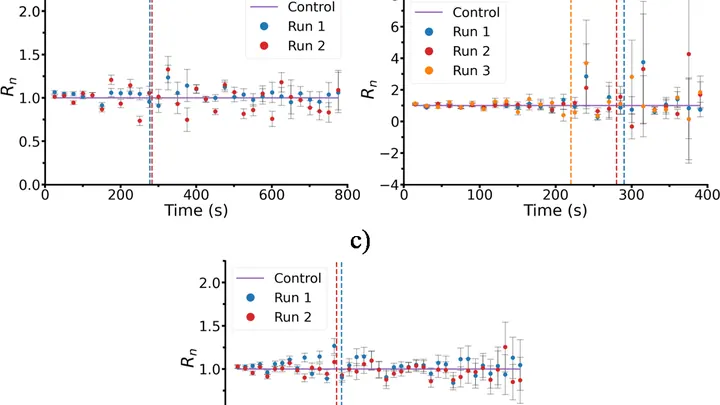
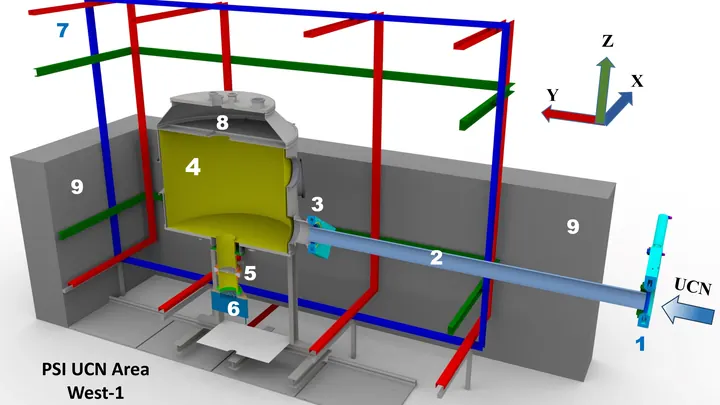
The neutron, a particle inside the atomic nucleus, can live in two worlds: ours and a mirror one. The mirror world has its own neutron twin, invisible to our instruments. If an ordinary neutron sometimes hops to the mirror world and back, some neutrons in a trap would seem to dissolve into thin air.
The antiproton is the proton's twin, only with a negative charge. When such a twin approaches a nucleus, it doesn't just bounce off: a whole dance of attraction and repulsion unfolds between them.
A quantum computer is like an orchestra where electrons and nuclei play different instruments. Usually, the conductor needs two batons: microwaves for electrons and radio waves for nuclei.
For years, an X-ray telescope in orbit recorded how binary systems shine, where an ordinary star orbits a black hole or a neutron star. Matter from the companion falls onto the compact object, heats up to millions of degrees, and emits X-rays.
Quantum computers demand reliable memory. In a diamond crystal — carbon — information is stored as the orientation of microscopic magnetic needles (spins) at special defects. Reading these arrows with light was inconvenient: optics are bulky for chips. The new method works like developing photographic film.
Inside every living cell, chemical transformations are constantly taking place. Some of them create unstable particles whose electrons behave like paired magnets. Their interaction resembles a dance: each movement of the pair responds to external magnetic fields, as if to a changing rhythm.
A crowd of thirty-one quantum sensors whispers within a diamond slab. Previously, this whisper was drowned out by the roar of floodlights: the random photon bursts used to read out the spin states masked the ensemble's own quantum noise. Now physicists have learned to switch off the floodlights and listen to the crowd itself.
Among the fundamental symmetries of nature, mirror parity holds a special place. The Standard Model already knows one violation of it, in the weak interaction, but hypothetical long-range forces that don't conserve left and right could reveal a lot about dark matter.
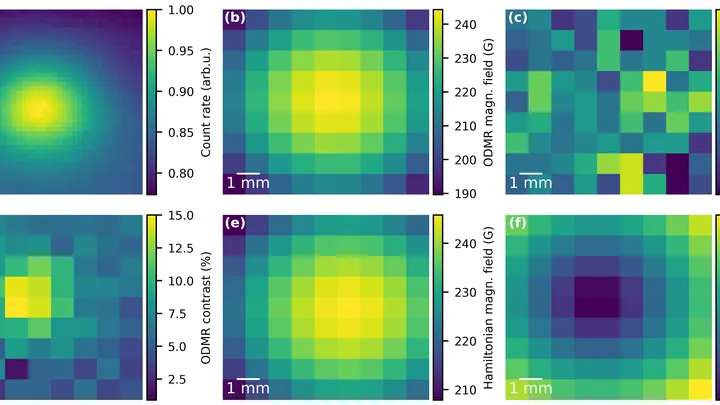
Inside a diamond, you sometimes find tiny flaws — a spot where a carbon atom is replaced by nitrogen, with a vacancy right next to it. Physicists call this an NV center (a nitrogen-vacancy defect). Such a defect acts like a magnetic needle that can store information in its spin.