Why a species thrives where it doesn't belong express
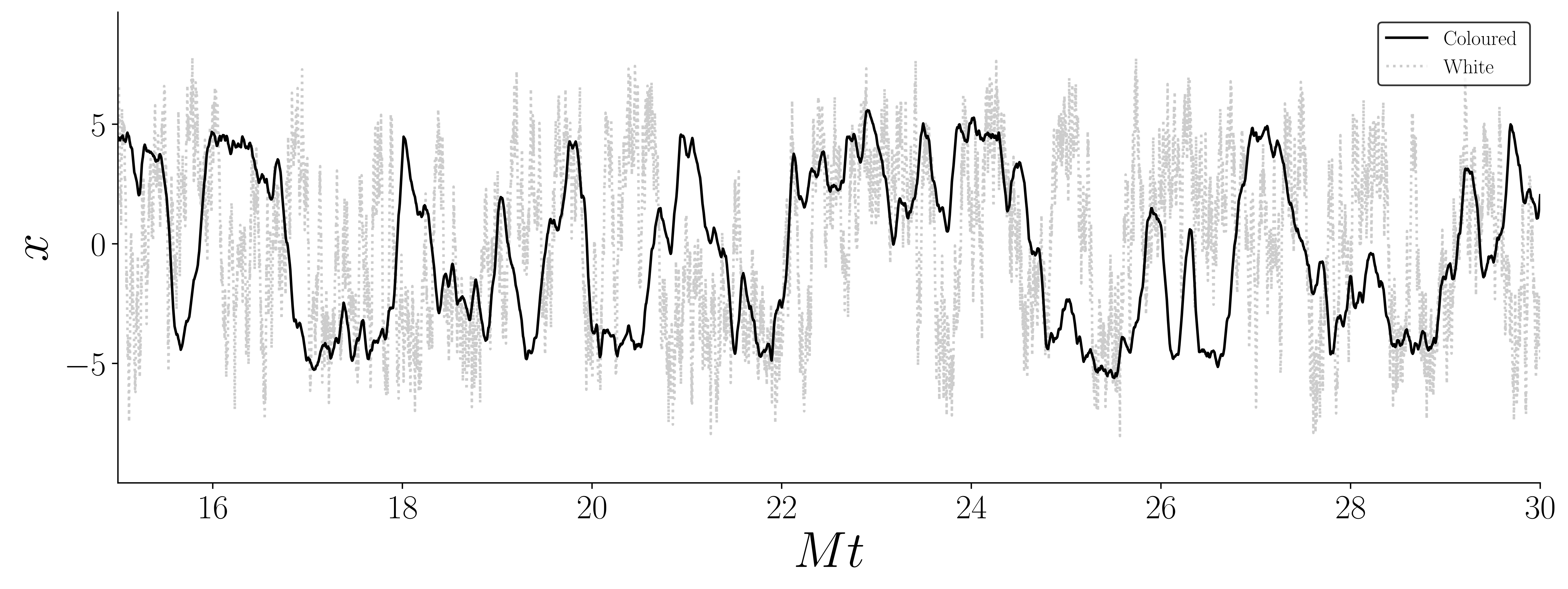
In two neighboring ponds, the same microorganisms swim. Food appears now in one, now in the other — randomly, with no rule. After a month, there are a hundred times more of them in the first pond than in the second. No one chose where to live. Just luck.
This is how disequilibrium works. While the environment keeps changing, abundances don't have time to even out. The scientists took the simplest model: several patches, neutral species (on average, all have equal chances), but each patch has its own fluctuations in conditions. It turned out that the difference in abundance between a pair of patches follows clear laws. If environmental changes last a long time and migration between patches is rare, the difference can become huge and even bimodal: most often you get either very few or very many, with intermediate values almost never occurring.
For living organisms, this is not just statistics. If the environment changes slowly and unpredictably, it pays not to migrate too readily. Limited migration allows a species to 'sit out' an unfavorable period in one patch and then spread when conditions improve. Thus randomness turns into a strategy.
In a model with an infinite number of patches, the inequality between two randomly chosen patches is described by the same formulas as the temperature difference between different points of a non-uniformly heated body.