How a Tumor Grows Back After an Electric Shock express
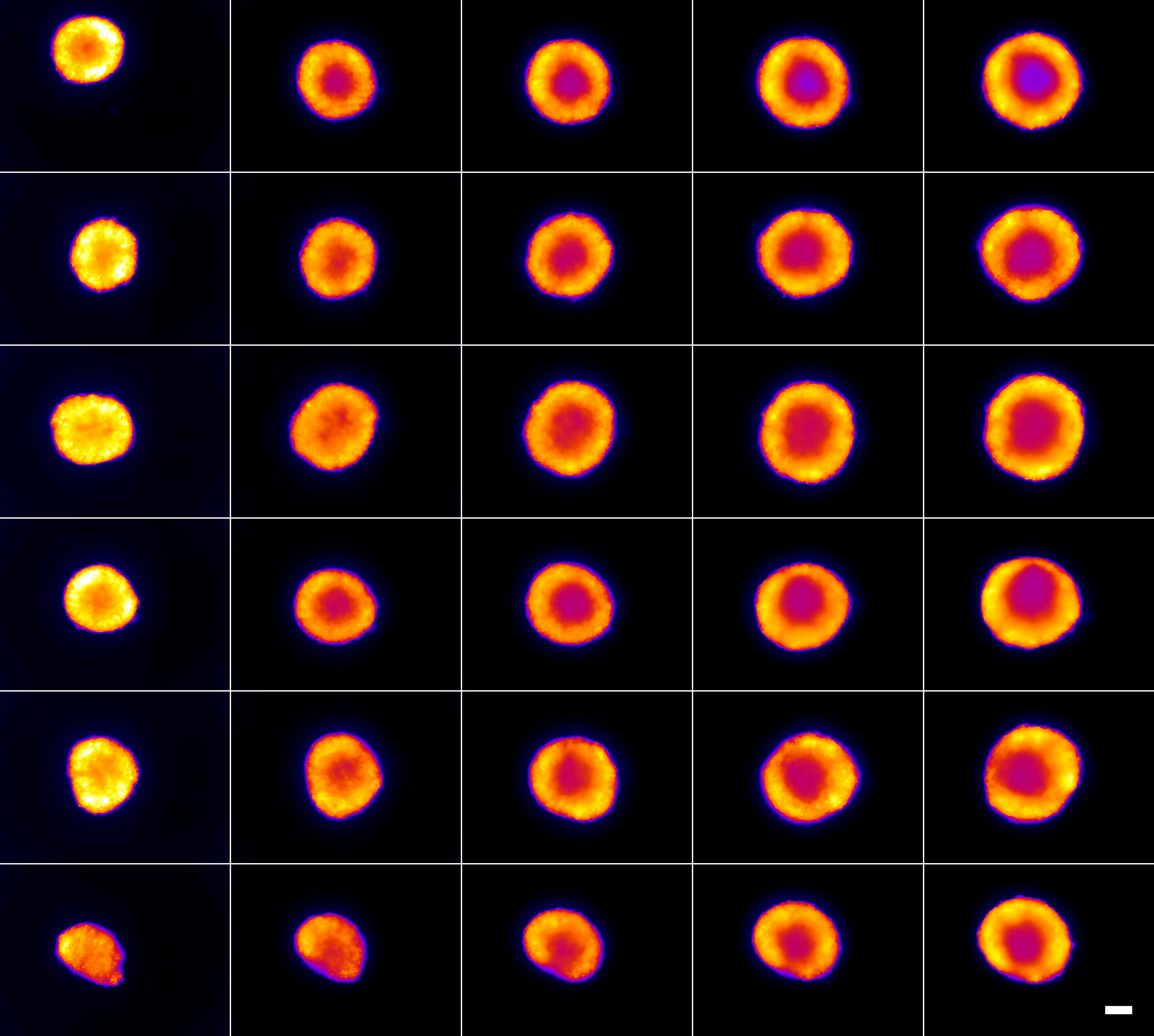
A lightning bolt strikes an anthill. Some ants die instantly, some freeze, and a few days later the survivors start rebuilding the tunnels. That's roughly how a tumor behaves after electroporation — a method where short electric pulses are passed through tissue to poke holes in cancer cell membranes and kill them.
In the lab, researchers grew balls of tumor cells — three-dimensional spheroids that resemble a real tumor more than a flat layer in a dish. They zapped them with pulses of varying strength and watched what happened. After weak pulses, many cells survived and the spheroid quickly regrew. After strong ones, almost all died, and the survivors released signaling molecules: ATP and HMGB1. These molecules are like a cry for help that can wake up the immune system and make it finish off the remaining tumor.
But it's not that simple. Among tumor cells there are 'sleeping' ones — those that have temporarily stopped dividing. Some of them are killed by the pulse, freeing up space and resources. Others survive and, given free space, start multiplying again. So after the procedure, the tumor can come back.
The scientists built a computer model that mimics the spheroid's behavior after a pulse. It showed that the tumor's fate depends on the pulse strength and on how many sleeping cells survived. If treatment ignores these 'quiet ones,' they can undo all the effect.
So an electric shock to a tumor is not just burning it out. It's a complex conversation with cells, where it's important not only to kill but also to properly wake up the immune system and not let survivors start building again.
Original abstract
as written by the authors arXiv:2603.06087
Electroporation is increasingly used as a percutaneous ablation technique for tumours located near vital structures. Although effective, tumour regrowth may still occur. At the same time, in vitro studies on cell monolayers have shown that electroporation can trigger immunogenic cell death (ICD) through the release of damage-associated molecular patterns (DAMPs). These molecules can stimulate the immune system and could counteract tumour regrowth. To fully exploit electroporation, two key questions must be addressed: (1) what dynamics drive tumour regrowth, and (2) how ICD unfolds in space and time within three-dimensional cellular structures, which better mimic in vivo conditions than 2D cultures. Here, we combine in vitro experiments with a hybrid individual-based/continuous computational model to explore tumour spheroid regrowth and ICD potential under different pulse intensities. Experiments quantify spheroid viability, growth rate, and the release of ATP and HMGB1. In parallel, the hybrid model predicts the dynamics of proliferative, quiescent, and necrotic cells. Both approaches show that cell death and DAMP release scale with pulse intensity. The model, validated against experimental data, further highlights the dual role of quiescent cells: some die and free space and resources, while others survive and resume proliferation. Together, these findings demonstrate how spheroid fate depends on pulse strength and emphasize the importance of accounting for quiescent cells when designing electroporation-based therapies.
ATP is a molecule that cells use as a battery for their needs. But when a cell dies and releases ATP outside, it becomes a danger signal for the immune system.